Amitai Etzioni argues for a new liberal communitarian approach as an effective
response to populism. The book considers national security versus privacy,
private sector responsibility, freedom of the press, campaign finance reform,
regulatory law and the legal status of terrorists, offering a timely
discussion of key issues.
What should American policies be toward liberated countries such as Iraq and Afghanistan, or rogue states like North Korea and Iran? What must be done to protect America from nuclear terrorism? The author asserts that providing basic security must be the first priority in all foreign policy considerations.
The President of the Federal Republic of Germany, Roman Herzog, and four internationally renowned scholars from different cultural backgrounds and academic disciplines argue about ways to prevent the scenario of a clash of civilizations from becoming reality. Recognizing that scenario as an intellectual projection with considerable influence on policy-makers across the world, they agree on the necessity to mobilize ideas of cooperation as countervailing forces against mindsets of conflict and violence; to respect the diversity of cultures, but avoid moral relativism; to recognize the danger of fundamentalist instrumentalization of religion for purposes of political power; to cope with economic and social disequilibria that may lead to eruptions of conflict and violence; and to focus on commonalities between cultures as a strategy of peace in a globalized world.
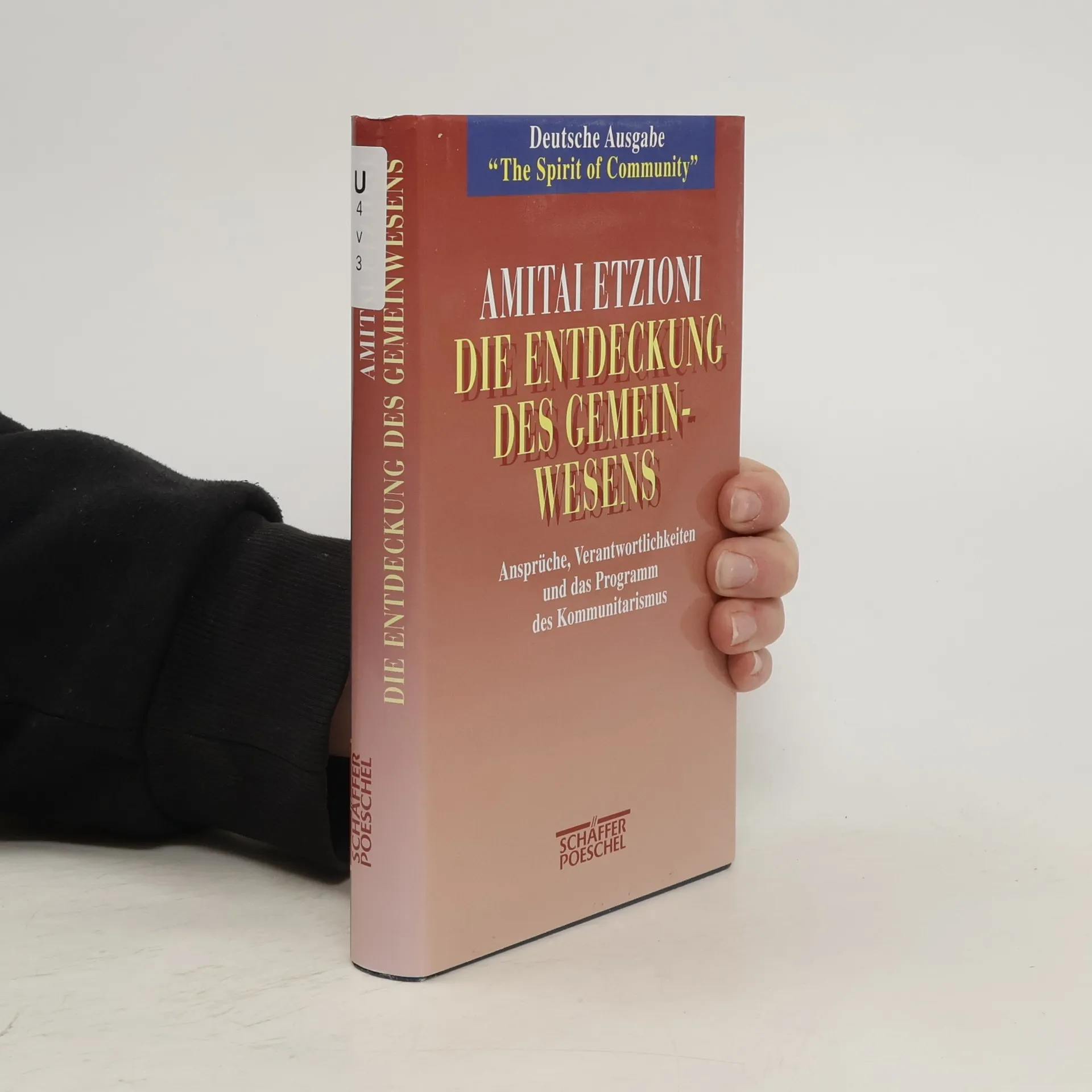
Der Sozialstaat wird unter dem Druck des internationalen Wettbewerbs schleichend demontiert, die Arbeitslosigkeit steigt. Auch die angeblichen Alternativen Staat oder Markt versagen. Entweder wird dem Individuum durch den Wohlfahrtsstaat alle Eigenverantwortung abgenommen, oder aber der Markt verkommt zum Kampf aller gegen alle. In seinem neuen Buch plädiert Etzioni für eine soziale Ordnung, die den Gegensatz von individueller Autonomie und sozialer Verpflichtung auflöst. Ohne gemeinschaftliche Bindungen und geteilte Werte, so Etzioni im ultimativen Grundlagenwerk des kommunitaristischen Denkens, führen die garantierten Freiheitsrechte des Individuums zu verantwortungslosem Handeln und untergraben somit die Solidar- gemeinschaft sowie die Demokratie. »Die Verantwortungsgesellschaft« weist einen Weg, der beides erreicht: moralische Verbindlichkeiten, ohne zu moralisieren, und individuelle Freiheit, die nicht auf Kosten anderer geht. Etzionis Vorschläge, die an aktuellen Beispielen aus Politik und Gesellschaft anschaulich erläutert werden, haben nicht nur den amerikanischen Präsidenten Bill Clinton, seinen Stellvertreter Al Gore und den britischen Labour-Chef Tony Blair maßgeblich beeinflußt, sondern auch deutsche Politiker wie Kurt Biedenkopf (CDU), Rudolf Scharping (SPD) und Joschka Fischer (Bündnis 90/Die Grünen) setzen sich rundum mit seinen Thesen auseinander.
Das zentrale Glaubensbekenntnis der neoliberalen Wirtschaftsideologie lautete: je ungehemmter sich der Individualismus entfalten kann, desto grösserer Nutzen entsteht für die Gemeinschaft. Aber die Frage, wieviel Egoismus eine Gesellschaft ertragen kann, ohne zu zerfallen, wird immer drängender. Der Autor, ein US-Ökonom und Präsidentenberater, behauptet deshalb: Dem einzelnen kann und muss sehr wohl Gemeinschaftssinn und gesellschaftliche Verantwortung zugestanden und abverlangt werden -- und zwar nicht im Sinne einer platten Restauration überholter Werte, sondern im Rahmen einer verantwortlichen Gemeinschaft von Individuen.
Wachsende Scheidungsraten, steigende Jugendkriminalität, soziale Verwahrlosung, die Auflösung der Familie als Leb ensform - das sind Befunde, die in den Vereinigten Staaten eine Gruppe von Sozialforschern und Philosophen vor einigen Jahren veranlaßt hat, ein 'Kommunitaristisches Programm' zu verabschieden. Der prominenteste Vertreter dieser Gruppe, der amerikanische Soziologe Amitai Etzioni, erläutert die vieldiskutierten Thesen und zeigt an konkreten Beispielen, wie verantwortungsbereites Handeln eine Gesellschaft 'von unten' verändern kann.
Renowned scholar Amitai Etzioni probes the actual relationship between human behavior, an efficient, innovative economy, and a just society as he presents a bold new vision, "socio-economics".