

The trial of Adolf Eichmann began in 1961 under a deceptively simple label, "criminal case 40/61." Hannah Arendt covered the trial for the <i>New Yorker</i> magazine and recorded her observations in <i>Eichmann in Jerusalem: The Banality of Evil</i>. Harry Mulisch was also assigned to cover the trial for a Dutch news weekly. Arendt would later say in her book's preface that Mulisch was one of the few people who shared her views on the character of Eichmann. At the time, Mulisch was a young and little-known writer; in the years since he has since emerged as an author of major international importance, celebrated for such novels as <i>The Assault</i> and <i>The Discovery of Heaven</i>. Mulisch modestly called his book on case 40/61 a report, and it is certainly that, as he gives firsthand accounts of the trial and its key players and scenes (the defendant's face strangely asymmetric and riddled by tics, his speech absurdly baroque). Eichmann's character comes out in his incessant bureaucratizing and calculating, as well as in his grandiose visions of himself as a Pontius Pilate-like innocent. As Mulisch intersperses his dispatches from Jerusalem with meditative accounts of a divided and ruined Berlin, an eerily rebuilt Warsaw, and a visit to the gas chambers of Auschwitz, <i>Criminal Case 40/61, the Trial of Adolf Eichmann</i> becomes as a disturbing and highly personal essay on the Nazi extermination of European Jews and on the human capacity to commit evil ever more efficiently in an age of technological advancement. Here presented with a foreword by Deb�rah Dwork and translated for the first time into English, <i>Criminal Case 40/61</i> provides the reader with an unsettling portrait not only of Eichmann's character but also of technological precision and expertise. It is a landmark of Holocaust writing.
Debórah Dwork Knihy
Táto autorka je poprednou historičkou holokaustu. Jej práca sa zameriava na hlboké pochopenie historických udalostí a ich dopadu. Prostredníctvom svojho výskumu prispieva k nášmu porozumeniu zložitosti ľudského utrpenia a odolnosti. Jej prístup je založený na dôkladnom štúdiu a analytickej reflexii.




In Auschwitz, young children often had young guardians, as illustrated by a sixteen-year-old girl who became a mother figure for twins Evichka and Hanka. This poignant narrative highlights the extraordinary resilience and bond formed amidst unimaginable hardship. This compelling work by Deborah Dwork uniquely focuses on the experiences of Jewish children during the Holocaust, a perspective often overlooked in historical accounts. Drawing from hundreds of survivor testimonies, diaries, letters, photographs, and archival records, Dwork intricately portrays the lives, emotions, and daily realities of these vulnerable children. Initially, many lived at home, facing escalating anti-Semitism, while others sought refuge in hiding or tried to navigate life on false papers. As the war progressed, countless children were forced into transit camps, ghettos, and extermination sites. While nearly ninety percent of Jewish children perished, this narrative emphasizes their lives rather than their tragic ends. Dwork's work significantly enhances our understanding of the Nazi era, illustrating how European society operated during these dark times and the varied responses of both Jewish victims and their gentile neighbors. By examining the role of women who aided Jewish children, it broadens the concept of resistance and challenges the notion that victims deserved their fate. Ultimately, this exploration of childhood experiences during the
No symbol of the Holocaust is more profound than Auschwitz. Yet the sheer, crushing number of murders - over 1,200,000 - the overwhelming scale of the crime, and the vast, abandoned site of ruined chimneys and rusting barbed wire isolate Auschwitz from us. How could an ordinary town become a site of such terror? Why was this particular town chosen? Who conceived, created, and constructed the camp? This unprecedented history reveals how an unremarkable Polish village was transformed into a killing field. Using architectural designs and planning documents recently discovered in Poland and Russia and over 200 illustrations, Auschwitz tells how this town became the epicenter of the Final Solution.
Drawing on oral histories recorded by the authors over 15 years across Europe and the United States, as well as on documents, letters and diaries never before analyzed, this volume aims to change to way we look at the greatest crime in history.
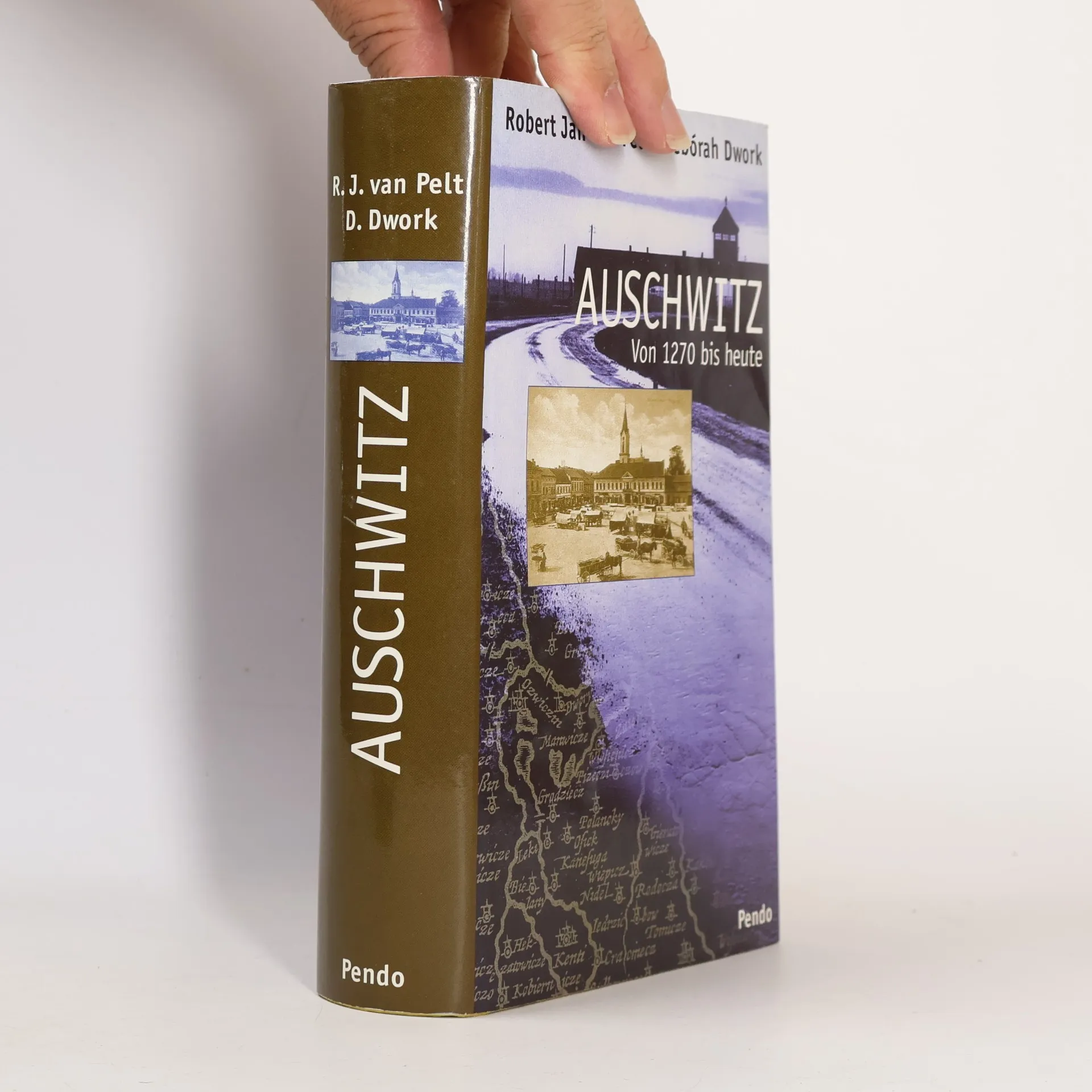
Der Name Auschwitz ist wie kein anderer zum Synonym für die Ermordung der europäischen Juden geworden. Debórah Dwork und Robert Jan van Pelt verfolgen im ersten Teil des Buches die Geschichte der 1270 gegründeten Stadt. Im zweiten Teil werden Entstehung und Expansion des Lagers sowie Organisation und Durchführung der Judenvernichtung dokumentiert. In diesem grundlegenden Standardwerk widerlegen die Autoren selbst den letzten Zweifel an der grauenhaften Realität des Holocaust ein für allemal.
Kinder mit dem gelben Stern, Europa 1933 - 1945
- 384 stránok
- 14 hodin čítania