


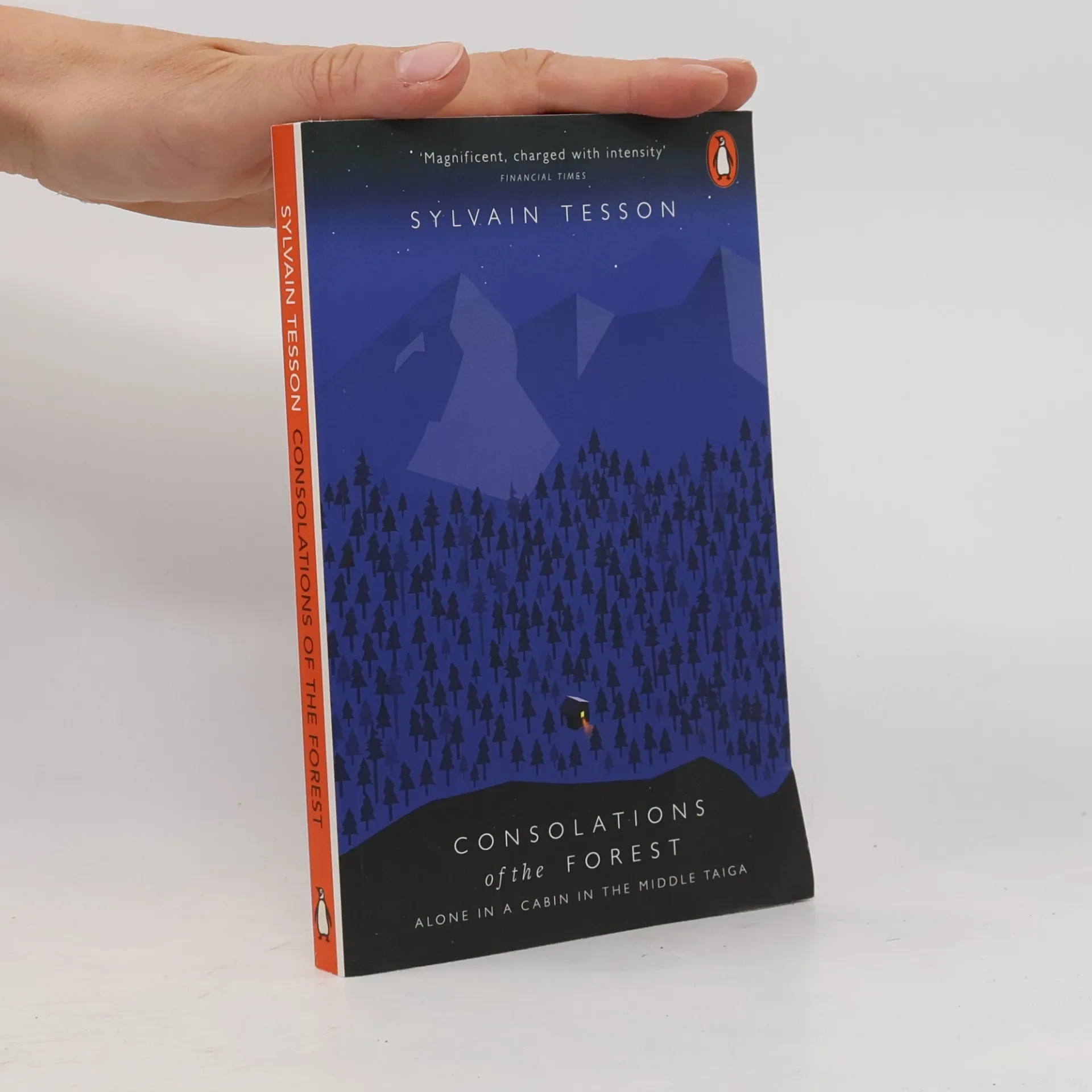
Consolations of the Forest. In den Wäldern Sibiriens, englische Ausgabe
- 256 stránok
- 9 hodin čítania
Sylvain Tesson, found a radical solution to his need for freedom, one as ancient as the experiences of the hermits of old Russia: he decided to lock himself alone in a cabin in the middle taiga, on the shores of Baikal, for six months. Noting carefully his impressions of the silence, Sylvain Tesson shares with us an extraordinary experience. 'Contagiously joyous and very funny.' Martin Hemmings, Sunday Times, Books of the Year 'Tesson lasted six months in the wilderness, a log cabin on the shores of Lake Baikal in Siberia . . . Why do it? To fulfil a dream of going to ground in a forest. To surround himself in silence. To escape ugliness, traffic and the telephone. To sample an existence reduced to bare essentials . . . the brainiest, daftest, sternest, funniest, most companionable hermit you'll ever meet.' Blake Morrison, Guardian 'An alternately rapt and sardonic diary of solitude, fortified by vodka and books.' Steven Poole, Guardian 'For anyone who secretly dreams of a life that's both simpler and more physically demanding, Tesson's descriptions of bruised-looking Siberian sunsets and Baikal in the rain are a draft of cool air . . . There's humour and humanity here, but also a serious attempt to answer the question, 'How should a person live?'.' Jessica Holland, Guardian 'An unapologetic heir to Henry Thoreau's Walden . . . Written with great charm and beauty, and humour.' Anthony Sattin, Sunday Times