

Frank is a young lad growing up in pre-Second World War Manchester. He is called up and serves in the last months of the war. What he experiences affects him for the rest of his life and leads him into a series of challenges that he struggles to confront. Following Franks life, this book is a combination of a love story, military adventure, personal awakening, and ethical puzzle.
Allan C. Hutchinson Knihy
Ron Hutchinson je oceňovaný írsky scenárista a dramatik, ktorý sa preslávil svojimi scenármi k významným filmom a televíznym projektom. Jeho tvorba sa vyznačuje prenikavým pohľadom na ľudské vzťahy a spoločenské otázky, často zasadená do napínavých alebo dramatických situácií. Hutchinson majstrovsky kombinuje psychologickú hĺbku postáv s pútavým dejom, čo z jeho diel robí nezabudnuteľný zážitok pre divákov aj čitateľov. Jeho scenáre skúmajú komplexnosť ľudskej povahy a morálne dilemy, ktoré formujú naše životy.


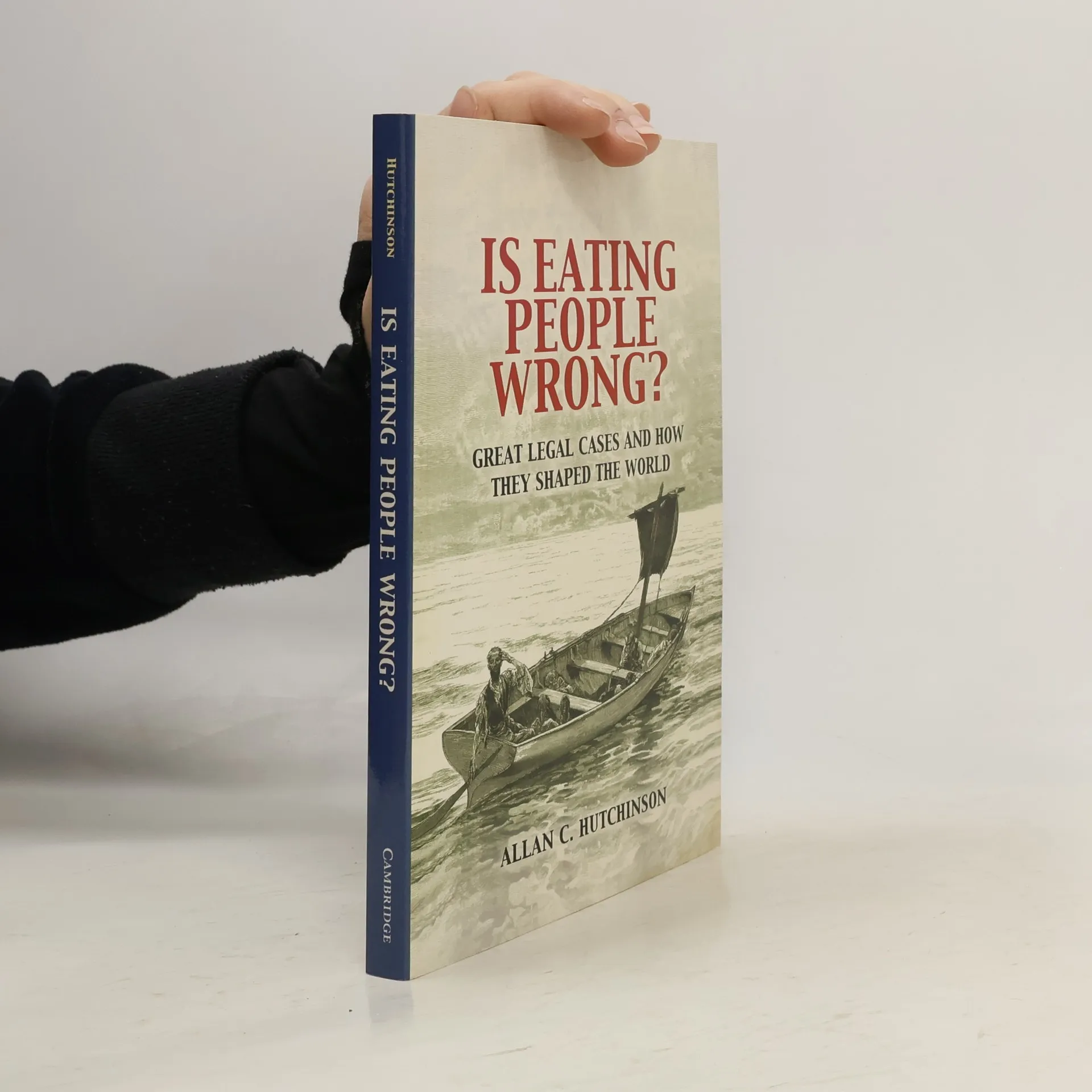
Is Eating People Wrong?
- 260 stránok
- 10 hodin čítania
This book explores the consequences of eight exemplary cases around which the common law developed to reveal the diverse and uncoordinated attempts by the courts to adapt the law to changing conditions.
Cryptocurrencies and the Regulatory Challenge
- 156 stránok
- 6 hodin čítania
Focusing on the regulation of cryptocurrency, the book advocates for a balanced approach that acknowledges its innovative and transformative potential while addressing its negative aspects and implications. It aims to create a framework that fosters growth and innovation in the cryptocurrency space, ensuring that regulatory measures do not stifle its development.
Like Confessing a Murder: Darwin, Religion and the Oxford Debate
- 254 stránok
- 9 hodin čítania
Set against the backdrop of the 1860 Oxford meeting of the Association for the Advancement of Science, this book explores the intense debates sparked by Darwin's revolutionary ideas on evolution. The discussions not only challenged scientific beliefs but also questioned social authority in a rapidly changing society. By examining these historical exchanges, the book reveals their lasting impact on the ongoing conflict between science and religion, making it a relevant commentary on contemporary cultural conflicts.
Bold and unconventional, this book advocates for an institutional turn-about in the relationship between democracy and constitutionalism.