

This was Pufendorf's first work, published in 1660. Its appearance effectively inaugurated the modern natural-law movement in the German-speaking world. The work also established Pufendorf as a key figure and laid the foundations for his major works, which were to sweep across Europe and North America. Pufendorf rejected the concept of natural rights as liberties and the suggestion that political government is justified by its protection of such rights, arguing instead for a principled limit to the state's role in human life.
Samuel Freiherr von Pufendorf Poradie kníh (chronologicky)
8. január 1632 – 26. október 1694
Samuel Pufendorf bol nemecký právnik a politický filozof, ktorého dielo sa sústredilo na revíziu a komentár teórií prirodzeného práva od Thomasa Hobbesa a Huga Grotia. Jeho myslenie ovplyvnilo rozvoj moderného prirodzeného práva a politickej filozofie. Jeho analýzy právnych a morálnych princípov formovali intelektuálny diskurz svojej doby. Pufendorfov odkaz spočíva v jeho dôraze na rozum a prirodzený zákon ako základ pre spoločenské usporiadanie.

Of the Nature and Qualification of Religion in Reference to Civil Society
- 178 stránok
- 7 hodin čítania
Exploring the themes of toleration and the separation of politics and religion, this work emerges in response to the 1685 revocation of the Edict of Nantes. Pufendorf, a key figure in modern natural law, argues against the sovereign's authority to dictate the religion of subjects, emphasizing that state and religion serve distinct purposes. The book is enriched with an introduction, selected bibliography, notes, and an index, providing a comprehensive understanding of its historical context and philosophical implications.
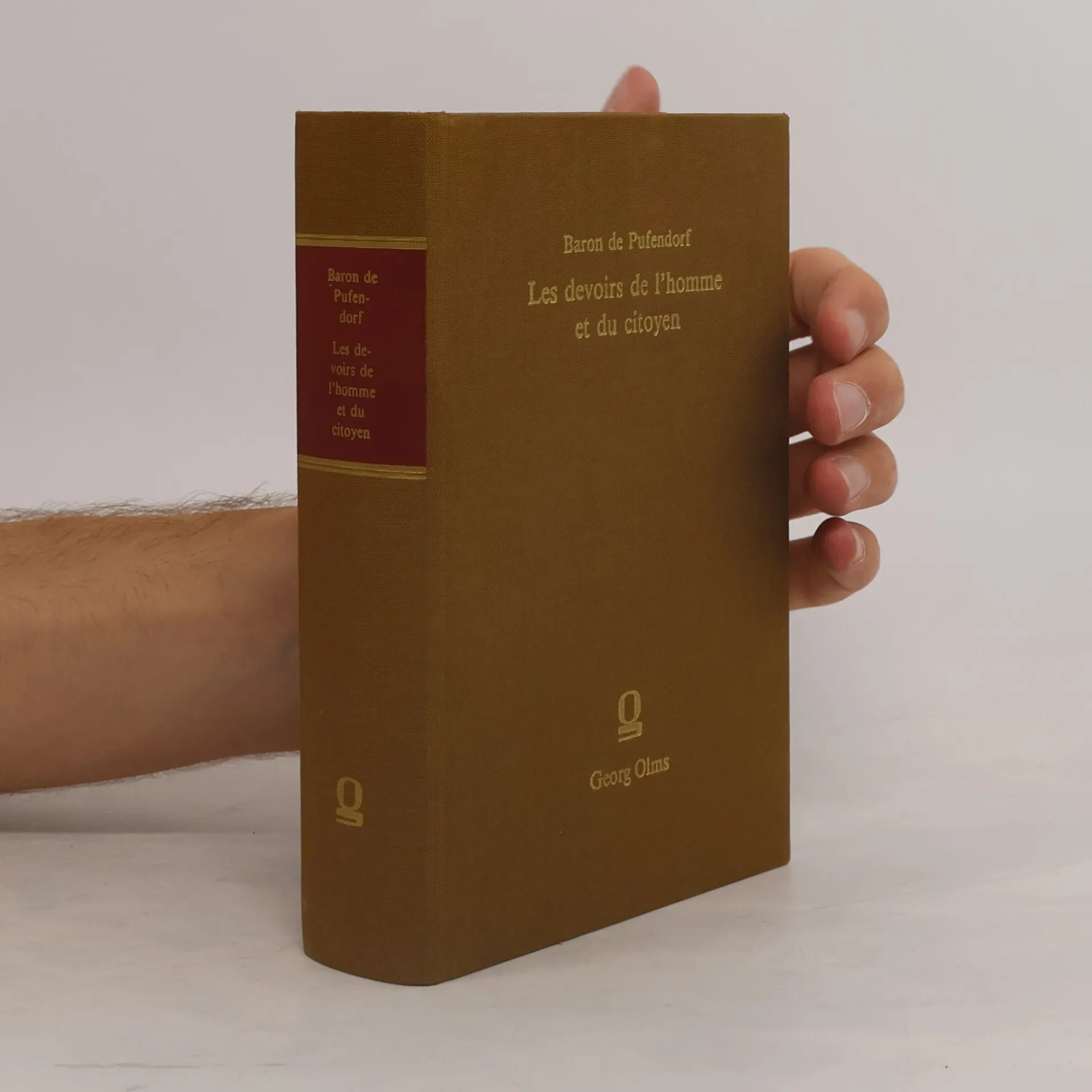
Les devoirs de l'homme et du citoyen, tels qu'ils lui sont préscrits par la loi naturelle
- 523 stránok
- 19 hodin čítania
The Present State of Germany
- 273 stránok
- 10 hodin čítania
"The Present State of Germany, one of Samuel Pufendorf's earliest and most important works, was first published in 1667 under the pseudonym Severinus de Monzambano. Its blunt, colorful, and unapologetic challenge to mainstream German constitutional law made it enormously controversial as soon as it appeared, and its author was both vilified and exalted in the acrimonious debate that followed. It became one of the most reprinted books of the late seventeenth century.