


Viac o knihe
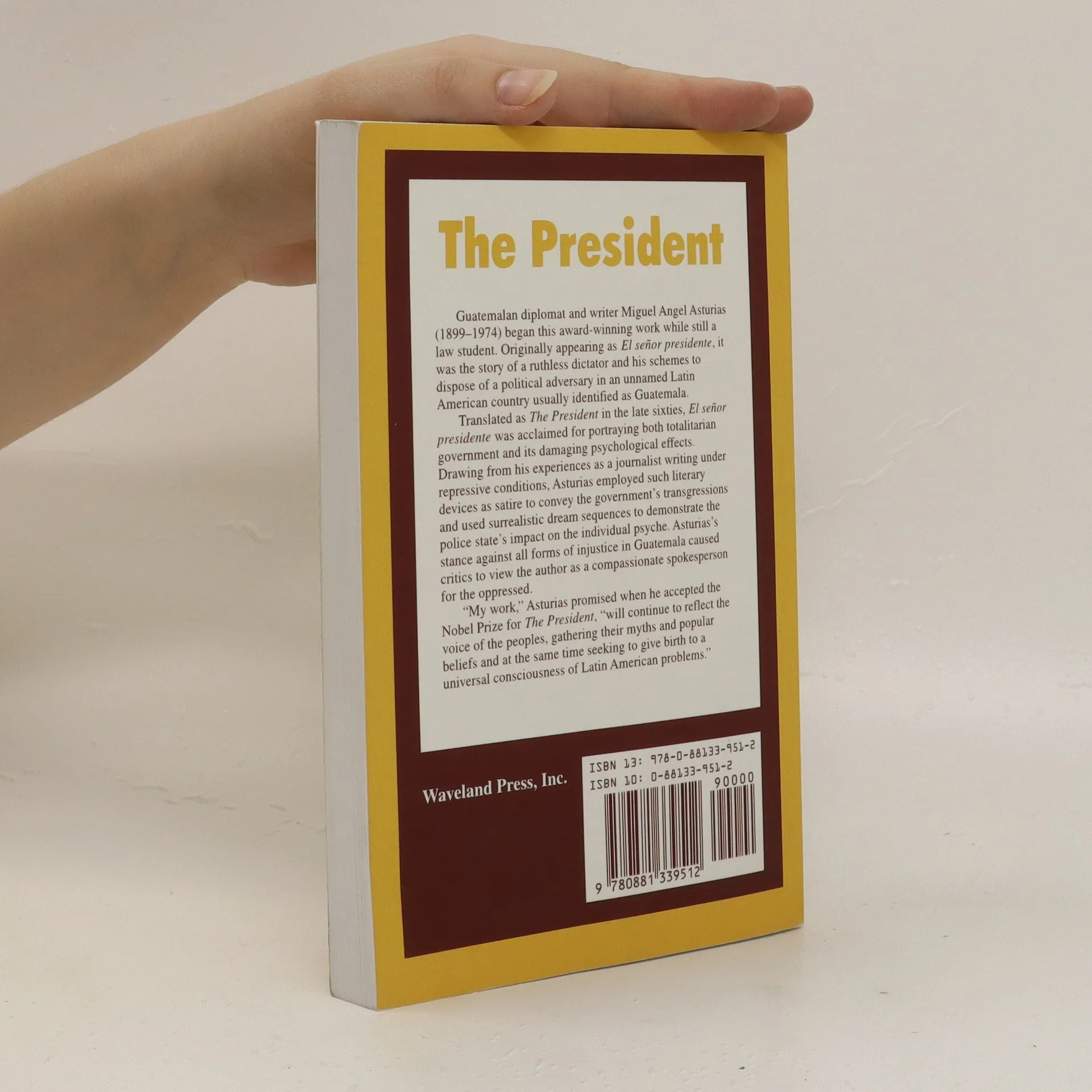
Guatemalan diplomat and writer Miguel Ángel Asturias (1899–1974) began this award-winning work while still a law student. It is a story of a ruthless dictator and his schemes to dispose of a political adversary in an unnamed Latin American country usually identified as Guatemala. The book has been acclaimed for portraying both a totalitarian government and its damaging psychological effects. Drawing from his experiences as a journalist writing under repressive conditions, Asturias employs such literary devices as satire to convey the government’s transgressions and surrealistic dream sequences to demonstrate the police state’s impact on the individual psyche. Asturias’s stance against all forms of injustice in Guatemala caused critics to view the author as a compassionate spokesperson for the oppressed. My work,” Asturias promised when he accepted the Nobel Prize for Literature, “will continue to reflect the voice of the people, gathering their myths and popular beliefs and at the same time seeking to give birth to a universal consciousness of Latin American problems.”




Nákup knihy
The President, Miguel Ángel Asturias
- Jazyk

- Rok vydania
- 1997
- Väzba
- (mäkká)
Tu nám chýba tvoja recenzia
- Titul
- The President
- Jazyk
- anglicky
- Autori
- Miguel Ángel Asturias
- Vydavateľ
- Waveland Press
- Rok vydania
- 1997
- Väzba
- mäkká
- Počet strán
- 287
- ISBN10
- 0881339512
- ISBN13
- 9780881339512
- Série
- Štítky
- Mágia, Španielska literatúra, Magický realizmus, Osud, Nobelova cena, Hispanoamerická literatúra, Mučenie, Diktatúra
- Hodnotenie
- 3,95 z 5
- Anotácia
- Guatemalan diplomat and writer Miguel Ángel Asturias (1899–1974) began this award-winning work while still a law student. It is a story of a ruthless dictator and his schemes to dispose of a political adversary in an unnamed Latin American country usually identified as Guatemala. The book has been acclaimed for portraying both a totalitarian government and its damaging psychological effects. Drawing from his experiences as a journalist writing under repressive conditions, Asturias employs such literary devices as satire to convey the government’s transgressions and surrealistic dream sequences to demonstrate the police state’s impact on the individual psyche. Asturias’s stance against all forms of injustice in Guatemala caused critics to view the author as a compassionate spokesperson for the oppressed. My work,” Asturias promised when he accepted the Nobel Prize for Literature, “will continue to reflect the voice of the people, gathering their myths and popular beliefs and at the same time seeking to give birth to a universal consciousness of Latin American problems.”