



Hodnotenie knihy
Viac o knihe
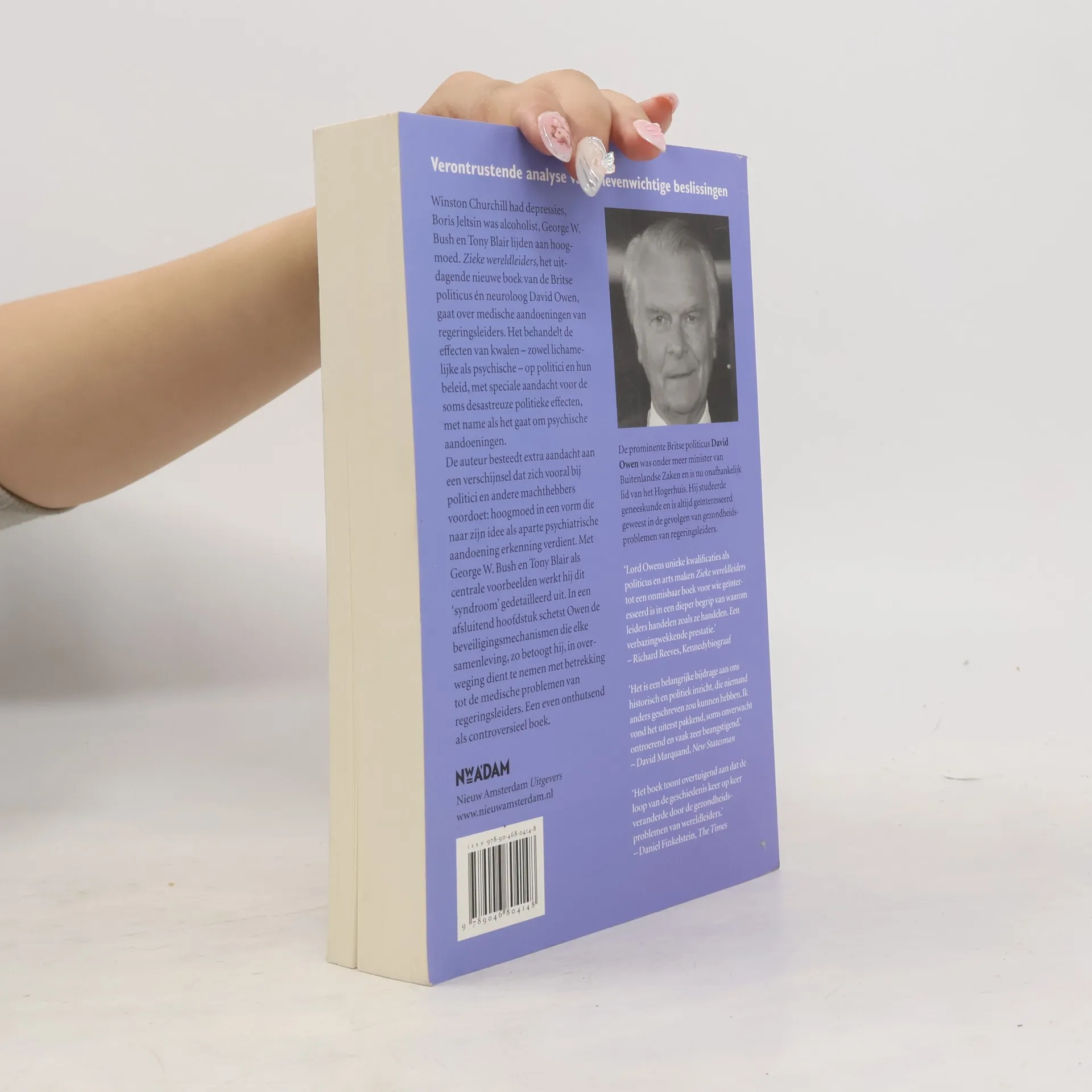
The course of modern world history has been significantly influenced by the physical and mental illnesses of heads of state, often concealed from the public. Notable democratic leaders, including Woodrow Wilson, Franklin D. Roosevelt, and others, have misrepresented their health. Between 1906 and 2008, several U.S. Presidents were deemed mentally ill while in office, with conditions ranging from bipolar disorder to major depressive disorder. Many dictators, such as Hitler and Stalin, have also been labeled as mentally ill, though some argue that they were not "mad" in a medical sense. The phenomenon known as "the intoxication of power" can destabilize leaders' mental health, leading to hubristic behavior characterized by excessive self-confidence and isolation. This hubris can manifest in a medically definable condition termed Hubris Syndrome, which affects leaders the longer they remain in power or after significant events like 9/11. Recent figures, including George W. Bush and Tony Blair, have shown symptoms such as reckless behavior and delusions of infallibility. The author argues for the need for democratic societies to establish new protocols for addressing the health of their leaders and to empower international bodies to remove despots whose hubris threatens their nations or the world.

Nákup knihy
Zieke wereldleiders, Bart Voorzanger, David Owen
- Jazyk

- Rok vydania
- 2008
- Väzba
- (mäkká),
- Stav knihy
- Dobrá
- Cena
- 21,99 €
Tu nám chýba tvoja recenzia
- Titul
- Zieke wereldleiders
- Podtitul
- hoe overmoed, depressie en andere aandoeningen politieke beslissingen sturen
- Jazyk
- holandsky
- Autori
- Bart Voorzanger, David Owen
- Vydavateľ
- Nieuw Amsterdam
- Rok vydania
- 2008
- Väzba
- mäkká
- Počet strán
- 352
- ISBN10
- 9046804143
- ISBN13
- 9789046804148
- Série
- Hodnotenie
- 2,65 z 5
- Anotácia
- The course of modern world history has been significantly influenced by the physical and mental illnesses of heads of state, often concealed from the public. Notable democratic leaders, including Woodrow Wilson, Franklin D. Roosevelt, and others, have misrepresented their health. Between 1906 and 2008, several U.S. Presidents were deemed mentally ill while in office, with conditions ranging from bipolar disorder to major depressive disorder. Many dictators, such as Hitler and Stalin, have also been labeled as mentally ill, though some argue that they were not "mad" in a medical sense. The phenomenon known as "the intoxication of power" can destabilize leaders' mental health, leading to hubristic behavior characterized by excessive self-confidence and isolation. This hubris can manifest in a medically definable condition termed Hubris Syndrome, which affects leaders the longer they remain in power or after significant events like 9/11. Recent figures, including George W. Bush and Tony Blair, have shown symptoms such as reckless behavior and delusions of infallibility. The author argues for the need for democratic societies to establish new protocols for addressing the health of their leaders and to empower international bodies to remove despots whose hubris threatens their nations or the world.