


Parametre
- 200 stránok
- 7 hodin čítania
Viac o knihe
Roger Lass is concerned about the nature of argumentation within linguistics and the status of its data and theoretical constructs. Through an examination of standard strategies of explanation in historical linguistics (particularly of phonological change), in the light of past approaches to scientific epistemology, Dr Lass convincingly demonstrates that attempts to model explanations of linguistic change on those of the physical sciences are failures both in practice and in principle. Linguists can neither assimilate their discipline crudely to the natural or the other human sciences nor, at the other extreme, shelter behind the notion of a private self-validating paradigm. Although Dr Lass outlines some tentative paths towards an alternative epistemology, his main concern is that linguists should confront the philosophical implications of their subject, and he raises questions which both linguists and philosophers will need to consider.
Nákup knihy
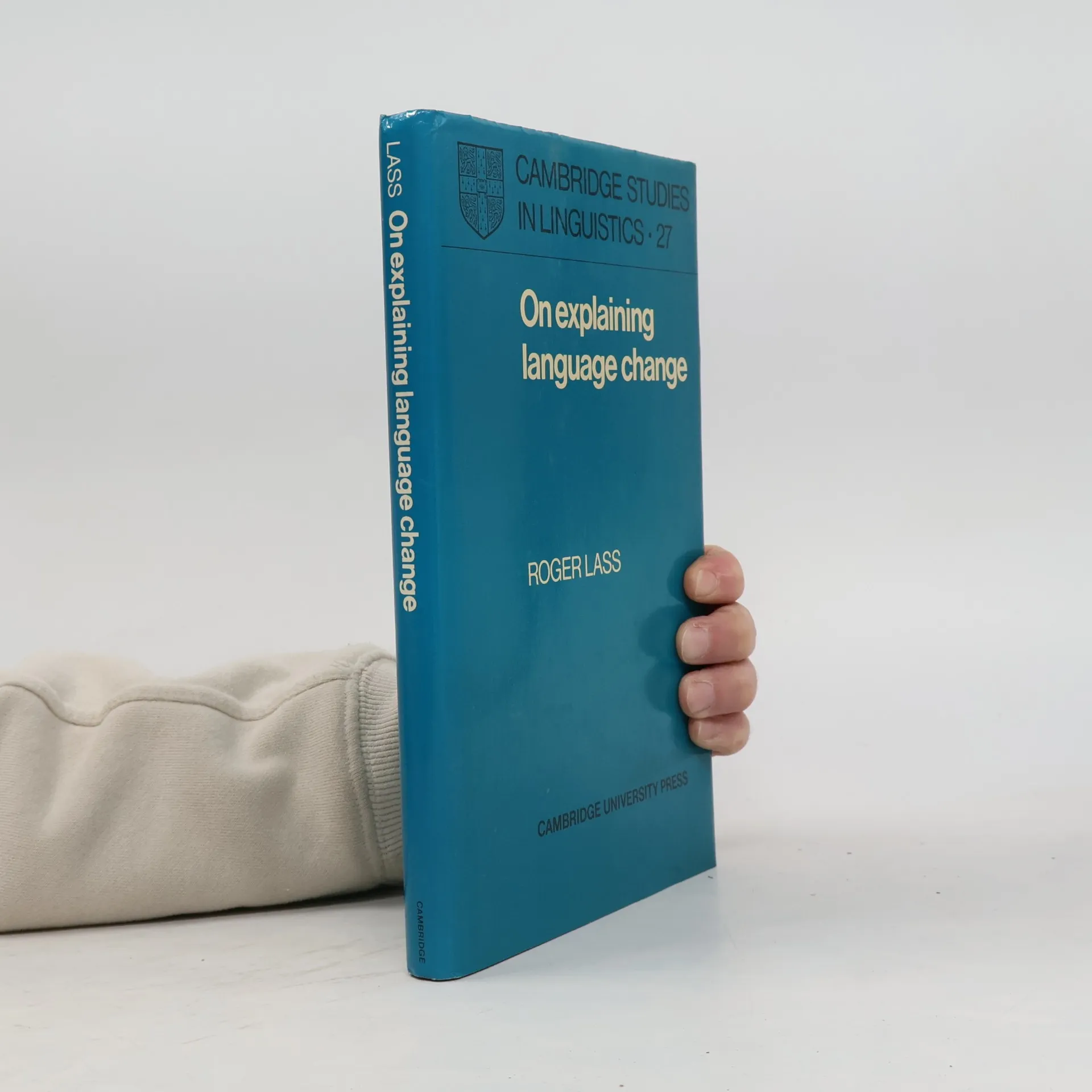
Cambridge Studies in Linguistics - 27: On Explaining Language Change, Roger Lass
- Jazyk

- Rok vydania
- 1980
- Väzba
- (pevná),
- Stav knihy
- Dobrá
- Cena
- 37,99 €
Doručenie
Platobné metódy
Nikto zatiaľ neohodnotil.
- Titul
- Cambridge Studies in Linguistics - 27: On Explaining Language Change
- Jazyk
- anglicky
- Autori
- Roger Lass
- Vydavateľ
- Cambridge University Press
- Rok vydania
- 1980
- Väzba
- pevná
- Počet strán
- 200
- ISBN10
- 0521228360
- ISBN13
- 9780521228367
- Série
- Štítky
- Anotácia
- Roger Lass is concerned about the nature of argumentation within linguistics and the status of its data and theoretical constructs. Through an examination of standard strategies of explanation in historical linguistics (particularly of phonological change), in the light of past approaches to scientific epistemology, Dr Lass convincingly demonstrates that attempts to model explanations of linguistic change on those of the physical sciences are failures both in practice and in principle. Linguists can neither assimilate their discipline crudely to the natural or the other human sciences nor, at the other extreme, shelter behind the notion of a private self-validating paradigm. Although Dr Lass outlines some tentative paths towards an alternative epistemology, his main concern is that linguists should confront the philosophical implications of their subject, and he raises questions which both linguists and philosophers will need to consider.