

Bookbot

James Gussen

    Katharina Sieverding
    Jazzlife
    • Jazzlife

      • 552 stránok
      • 20 hodin čítania

      En 1960, le photographe William Claxton et le musicologue allemand Joachim Berendt ont parcouru les États-Unis à la recherche de la musique jazz. Leur collaboration a donné lieu à une incroyable collection de photographies et d'enregistrements d'artistes légendaires ainsi que de musiciens de rue inconnus. Le livre Jazzlife, fruit de leur travail, est devenu un objet de collection très prisé parmi les amateurs de jazz et de photographie. Cette collection importante de matériel, accompagnée de nombreuses images en couleur inédites de ces voyages, est rassemblée dans ce volume mis à jour. Les fans de jazz seront ravis de pouvoir faire un voyage dans le temps à travers la musique, la découvrant comme Claxton et Berendt l'ont vécue à l'origine. Il présente des photographies de Charlie Parker, Count Basie, Duke Ellington, Muddy Waters, Gabor Szabo, et d'autres.

      Jazzlife
      4,4
    • Katharina Sieverding

      Mal D'Archive

      • 151 stránok
      • 6 hodin čítania

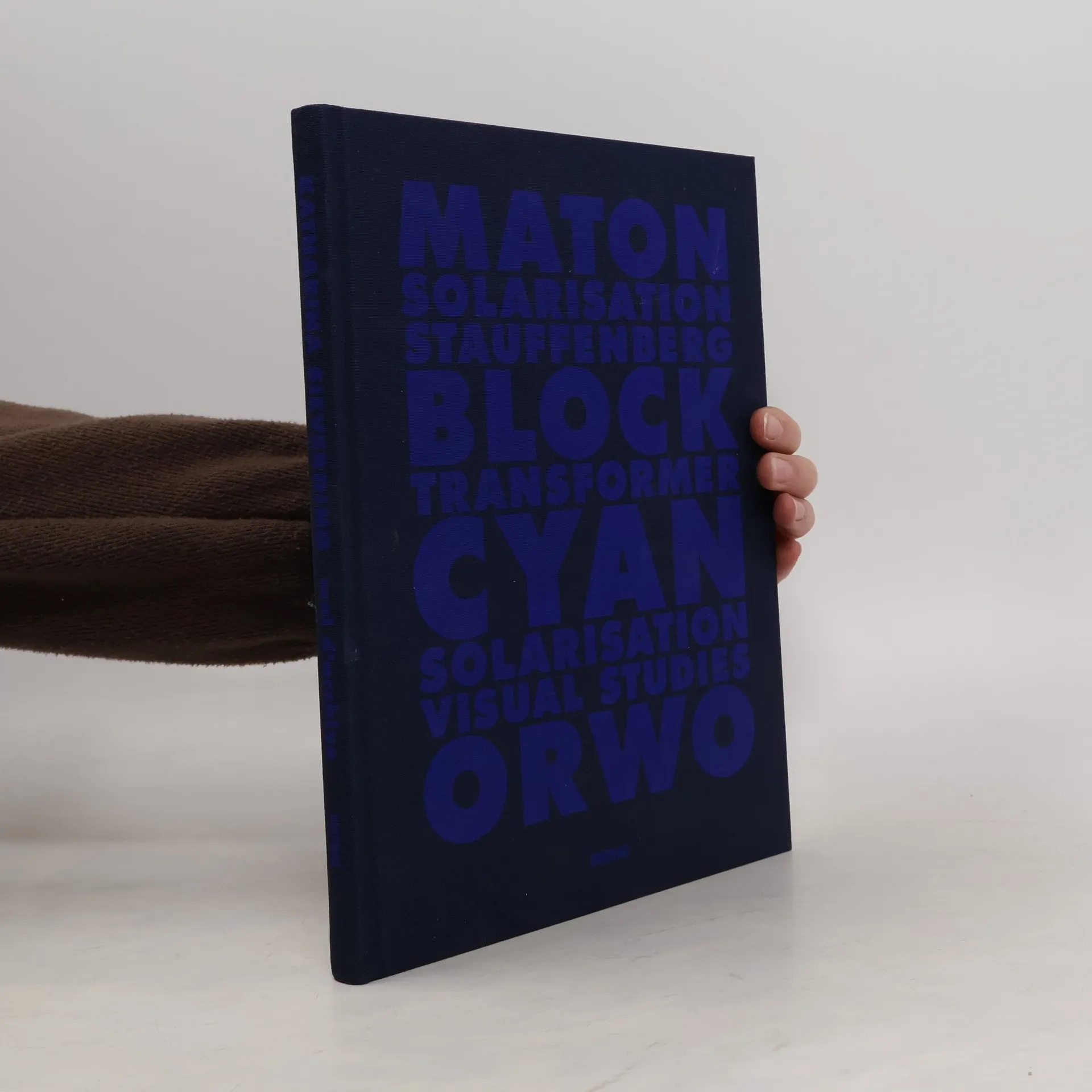
      Over the course of more than four decades, Katharina Sieverding (b. Prague, 1944; lives and works in Düsseldorf) has built an oeuvre that has charted a wide terrain between the poles of individuality and society, sentiment and critique, presence and withdrawal. The book, designed by Sieverding and her studio, presents a novel documentation of the work Stauffenberg-Block. Created in 1969, Stauffenberg-Block consists of sixteen large-format color photographs and is dedicated to Claus Stauffenberg, a member of the resistance against Hitler who was executed in 1944 after his failed attempt to assassinate the dictator. The book combines it with the series F (1969) and Transformer-Cyan-Solarisation (1973/74). The three ensembles of works are based on the conceptual use of the artist’s self-portrait. Its serial repetition and continual transformation calls the capacity of the individual portrait to record the subject’s identity in question. Two works from the series Visual Studies (2002) and the archival storage unit ORWO (2014), presented as a spatial object, round out the selection. They hint at the wide-ranging visual archive on which Katharina Sieverding’s work draws. With an introductory essay on feminism, antifascism, and psychedelia by Diedrich Diederichsen.

      Katharina Sieverding