Bookbot

Zong-Qi Cai

    How to Read Chinese Poetry Workbook
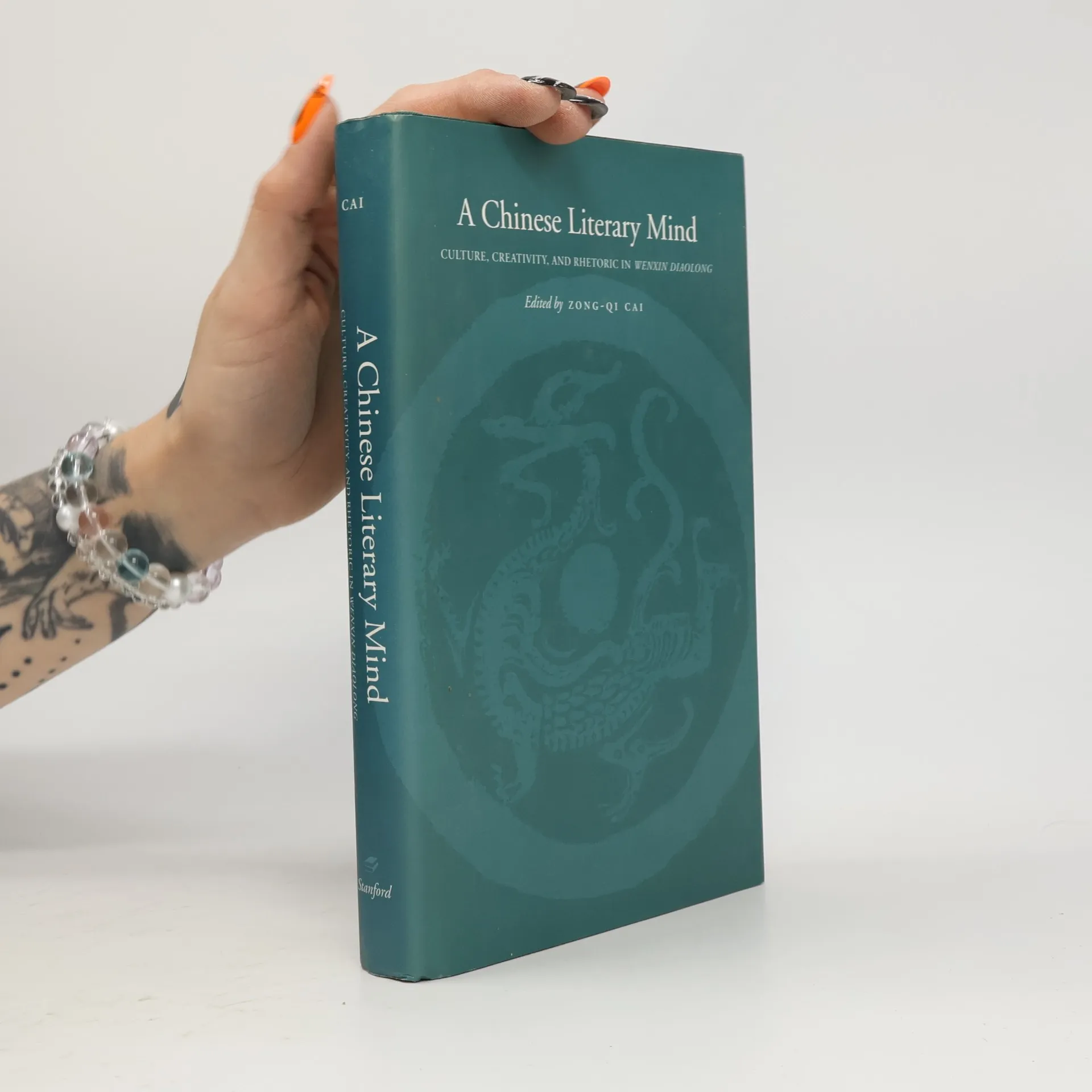
    A Chinese Literary Mind
    • How to Read Chinese Poetry Workbook

      • 232 stránok
      • 9 hodin čítania

      Designed to work with the acclaimed course text How to Read Chinese Poetry: A Guided Anthology, the How to Read Chinese Poetry Workbook introduces classical Chinese to advanced beginners and learners at higher levels, teaching them how to appreciate Chinese poetry in its original form. Also a remarkable stand-alone resource, the volume illuminates China's major poetic genres and themes through one hundred well-known, easy-to-recite works. Each of the volume's twenty units contains four to six classical poems in Chinese, English, and tone-marked pinyin romanization, with comprehensive vocabulary notes and prose poem translations in modern Chinese. Subsequent comprehension questions and comments focus on the artistic aspects of the poems, while exercises test readers' grasp of both classical and modern Chinese words, phrases, and syntax. An extensive glossary cross-references classical and modern Chinese usage, characters and compounds, and multiple character meanings, and online sound recordings are provided for each poem and its prose translation free of charge. A list of literary issues addressed throughout completes the volume, along with phonetic transcriptions for entering-tone characters, which appear in Tang and Song-regulated shi poems and lyric songs.

      How to Read Chinese Poetry Workbook2012
    • A Chinese Literary Mind

      Culture, Creativity, and Rhetoric in Wenxin Diaolong

      • 336 stránok
      • 12 hodin čítania

      Wenxin diaolong by Liu Xie (ca. 465-ca. 521) is arguably the most complex and comprehensive work of literary criticism in ancient China. For centuries it has intrigued and inspired Chinese literati, and modern English-speaking scholars have also found it an important source for inquiries into traditional Chinese poetics and aesthetics. The present volume of ten essays is the first book-length study in English of this classic work. The first two parts of the book focus on cultural traditions, showing how Liu canonized the Chinese literary tradition, assessing where Liu's work stands in that tradition, and demonstrating his debts to the intellectual currents of his time. The third part explores Liu's theory of literary creation by using contemporary critical perspectives to analyze Liu's conception of imagination. The fourth part presents three detailed studies of Liu's views on a close reading of his chapter on rhetorical parallelism, a discussion of his own use of parallelism as a means of analysis and textual production, and an investigation of his views on changes and continuities in Chinese literary styles. The book concludes with a critical survey of Asian-language scholarship on Wenxin diaolong in this century. The contributors are Zong-qi Cai, Kang-i Sun Chang, Ronald Egan, Wai-yee Li, Shuen-fu Lin, Richard John Lynn, Victor H. Mair, Stephen Owen, Andrew H. Plaks, Maureen Robertson, and Zhang Shaokang.

      A Chinese Literary Mind2001