

Bookbot

Giuliano Ciarimboli

    Organic cation transport
    Organic Cation Transporters
    • Organic Cation Transporters

      Integration of Physiology, Pathology, and Pharmacology

      • 279 stránok
      • 10 hodin čítania

      This innovative text explores the cellular transport of organic cations, from functional and structural properties to pharmacological implications and psychiatric developments. The authoritative chapters introduce organic cation transporters and then proceed to discuss their mechanisms such as binding of substrates and inhibitors; their drug dispositions and toxicity; their relationships to genetic and pathophysiological variability; and their roles in endocrine, metabolic, and neurological systems. The final chapters delve into the use of animal models for the study of organic cation transporter function and their possible use in environmental cycling of pharmaceutical residues. This comprehensive volume unites integrative transporter physiology with structural and molecular biology, genetics, pharmacology and pathophysiology, offering a holistic approach to utilizing this novel technique in physiological contexts. It will prove invaluable reading for researchers and students in various areas of integrative, organ, cell and molecular physiology as well as pharmacologists and neurologists.

      Organic Cation Transporters2015
    • Organic cation transport

      • 132 stránok
      • 5 hodin čítania

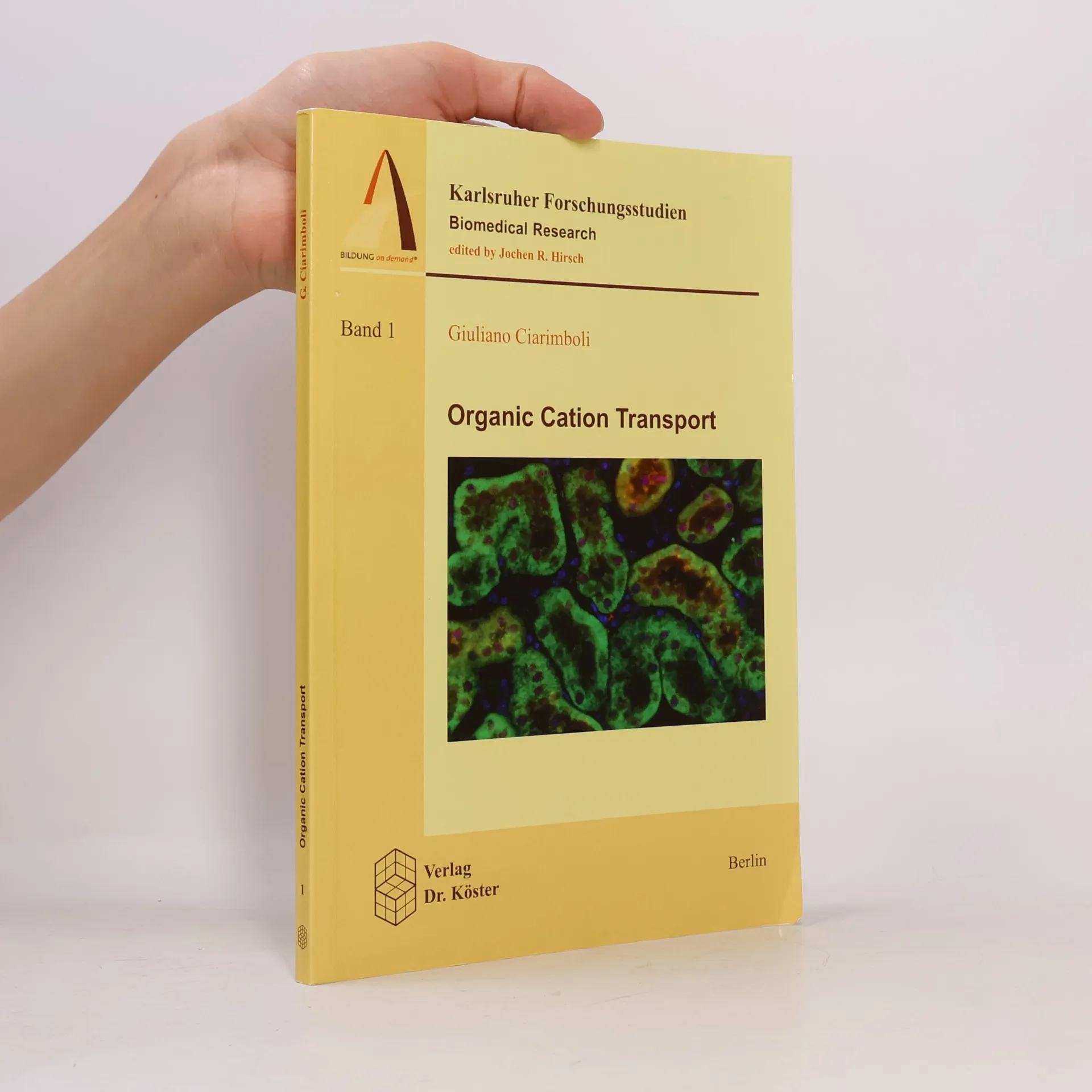
      Organic cation transporters (OCTs) contribute to homeostasis of endogenous organic cations like choline and monoamine neurotransmitters. Moreover, as demonstrated in studies with knockout animals, the OCTs are of pivotal importance for hepatic and renal excretion of cationic drugs, and also play a significant role for the modulation of substrate distribution in brain and heart. Since the cloning of the first organic cation transporter in 1994, the knowledge about biochemistry, physiology, genetics and pharmacology of these transporters has increased impressively. Three OCT isoforms with species-specific organ distribution have been identified to date. This book will for the first time put together the informations available in the literature on the OCTs, from genetics to pharmacology, from evolution to physiology, in the attempt to furnish the reader with a global understanding of the meaning of these transporters for life. The detailed knowledge of regulatory pathways, possible drug-interactions and the genetics behind the OCTs will help to establish appropriate therapeutic protocols for patients, in order to minimize adverse drug reactions, achieve the maximum drug effect using the minimal doses and to develop drugs with optimized bio-distribution.

      Organic cation transport2007