

Z Knihobotu sa stal Bookbot!
Bookbot

Robert Bresson

    25. september 1901 – 18. december 1999

    Robert Bresson bol francúzsky filmový režisér známy svojim duchovným, asketickým a estetickým štýlom, ktorý významne prispel k umeniu filmu a ovplyvnil vzostup francúzskej novej vlny. Jeho prístup k filmárčine bol často označovaný za najvýznamnejšieho francúzskeho filmára po Jeanovi Renoirovi. Bressonov vplyv bol taký zásadný, že ho Jean-Luc Godard kedysi opísal slovami: „Robert Bresson je francúzska kinematografia, rovnako ako Dostojevskij je ruský román a Mozart je nemecká hudba.“ Jeho diela sa vyznačujú hlbokou introspekciou a jedinečným naratívnym štýlom.

    Robert Bresson
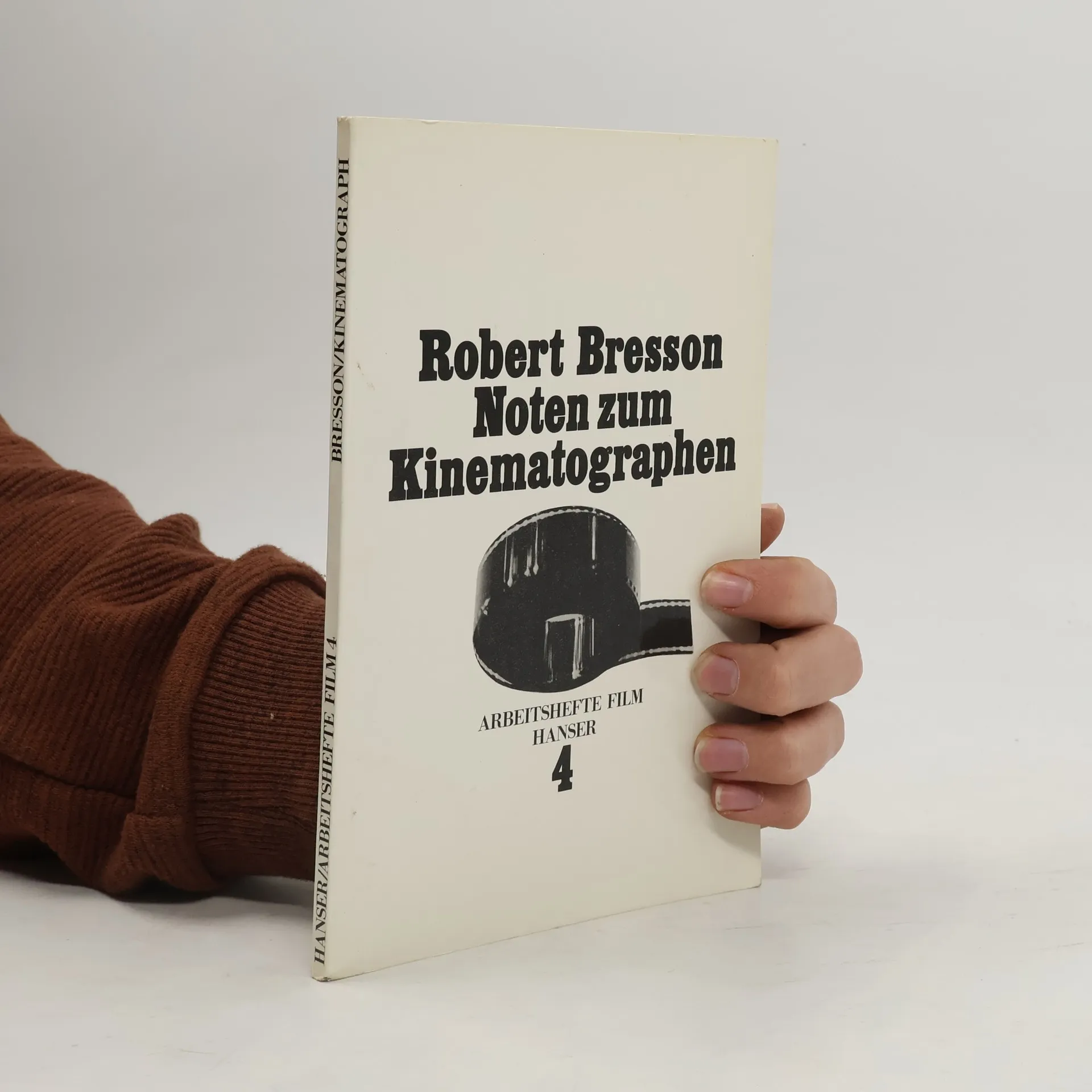
    Noten zum Kinematographen
    Bresson on Bresson: Interviews, 1943-1983
    Participation
    Bresson On Bresson
    Notes On The Cinematograph
    • Notes On The Cinematograph

      • 128 stránok
      • 5 hodin čítania
      4,0(330)Ohodnotiť

      The French film director Robert Bresson was one of the great artists of the twentieth century and among the most radical, original, and radiant stylists of any time. He worked with nonprofessional actors—models, as he called them—and deployed a starkly limited but hypnotic array of sounds and images to produce such classic works as A Man Escaped, Pickpocket, Diary of a Country Priest, and Lancelot of the Lake. From the beginning to the end of his career, Bresson dedicated himself to making movies in which nothing is superfluous and everything is always at stake. Notes on the Cinematograph distills the essence of Bresson’s theory and practice as a filmmaker and artist. He discusses the fundamental differences between theater and film; parses the deep grammar of silence, music, and noise; and affirms the mysterious power of the image to unlock the human soul. This book, indispensable for admirers of this great director and for ­students of the cinema, will also prove an inspiration, much like Rilke’s Letters to a Young Poet, for anyone who responds to the claims of the imagination at its most searching and rigorous.

      Notes On The Cinematograph
    • Bresson On Bresson

      • 285 stránok
      • 10 hodin čítania
      4,2(99)Ohodnotiť

      Robert Bresson, renowned for films like Pickpocket and A Man Escaped, stands as a pivotal figure in French cinema, known for his unique approach and steadfast principles. He favored nonprofessional actors, rejected cinematic trends like Cinerama and Cinema-Scope, and criticized the detrimental effects of capitalism and the studio system on the art of film. This collection assembles key interviews from Bresson's forty-year career, revealing the coherence and exploratory nature of his work. Each chapter focuses on one of his fourteen films, addressing topics such as literary adaptation, soundtracks, and his influential book, Notes on the Cinematograph. His reflections are punctuated by memorable insights, including the idea that "Sound ... invented silence in cinema" and the belief that "It's the film that ... gives life to the characters." Bresson's integrity and originality garnered respect from filmmakers like Jean-Luc Godard and Jacques Rivette. His films, characterized by meticulous deliberation, are equally fueled by a deep respect for audience intuition, emphasizing that "It's always ready to feel before it understands." This collection offers a profound glimpse into the mind of a director whose work continues to inspire.

      Bresson On Bresson
    • The members of two seemingly conflicting reading groups--Love and Anti-Love--connect in surprising ways after climate catastrophe upends their routines in this new novel from Anna Moschovakis.

      Participation
    • Robert Bresson, renowned for his films like *Pickpocket* and *A Man Escaped*, was a pivotal figure in French cinema, known for his distinctive approach. He preferred nonprofessional actors, rejected advancements like Cinerama, and critiqued capitalism's impact on film. *Bresson on Bresson* compiles significant interviews from his forty-year career, showcasing the coherence and exploratory nature of his work. Each chapter focuses on one of his fourteen films, discussing literary adaptation, sound design, and his influential treatise, *Notes on the Cinematograph*. Bresson’s reflections are marked by insightful mantras, such as “Sound...invented silence in cinema” and “It’s the film that...gives life to the characters.” His integrity and originality garnered respect from contemporaries like Jean-Luc Godard and Jacques Rivette. While his films exhibit meticulous thought, these interviews reveal his deep faith in intuition—both his own and that of the audience, which he believed is primed to feel before fully understanding. This belief underscores the profound connection he sought to establish through his art.

      Bresson on Bresson: Interviews, 1943-1983