




Viac o knihe
This is the first novel in Jens Bjorneboe's "History of Bestiality" trilogy. Bjorneboe and his narrator explore the evil inherent in the human race itself. In a vague middle-European principality the narrator, a servant of justice, is employed to brush gowns and fill inkwells, to be a daily witness to injustice masquerading as a court of law. The experience sets him off on an odyssey through human experience which he keeps a careful record of in his History of Bestiality, a monumental twelve-volume exploration of man's cruelty to man and his own past, asking what went wrong with mankind. With echoes of Nietzsche and Sartre, we see him striving to live uncoerced by power, unpersuaded by friends, to take for himself the liberty of stating his critique in order to live in his own moment of truth, to stand "far out at the edge of the abyss, "for it is only there where one can truly experience their personal "moment of freedom."




Nákup knihy
Der Augenblick der Freiheit, Jens Bjorneboe
- Jazyk

- Rok vydania
- 1968
- Väzba
- (mäkká),
- Stav knihy
- Dobrá
- Cena
- 20,99 €
Tu nám chýba tvoja recenzia
- Titul
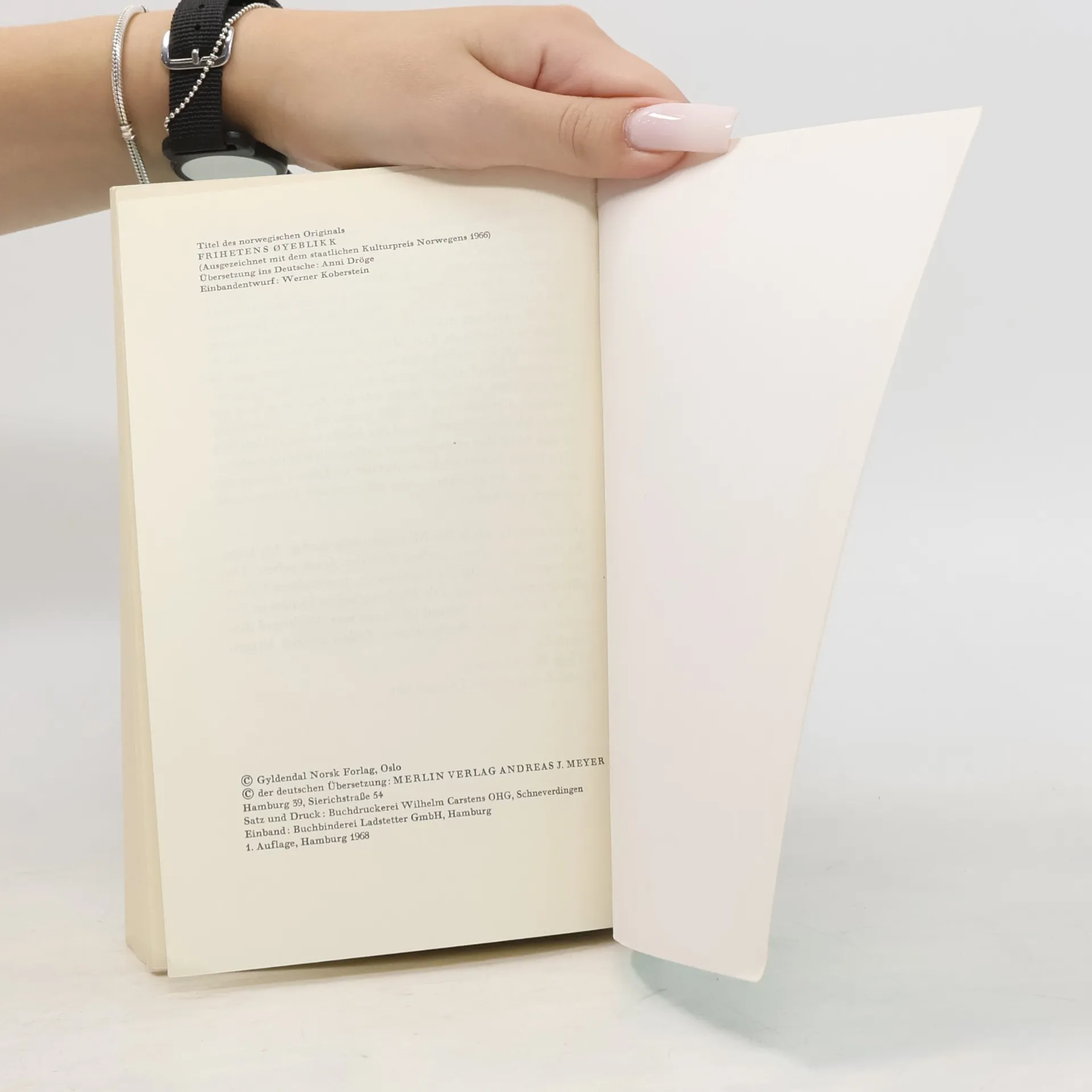
- Der Augenblick der Freiheit
- Jazyk
- nemecky
- Autori
- Jens Bjorneboe
- Vydavateľ
- Merlin Verlag
- Rok vydania
- 1968
- Väzba
- mäkká
- Prvé vydanie
- 1966
- Pôvodný názov
- Frihetens øyeblikk
- Hodnotenie
- 4,1 z 5
- Anotácia
- This is the first novel in Jens Bjorneboe's "History of Bestiality" trilogy. Bjorneboe and his narrator explore the evil inherent in the human race itself. In a vague middle-European principality the narrator, a servant of justice, is employed to brush gowns and fill inkwells, to be a daily witness to injustice masquerading as a court of law. The experience sets him off on an odyssey through human experience which he keeps a careful record of in his History of Bestiality, a monumental twelve-volume exploration of man's cruelty to man and his own past, asking what went wrong with mankind. With echoes of Nietzsche and Sartre, we see him striving to live uncoerced by power, unpersuaded by friends, to take for himself the liberty of stating his critique in order to live in his own moment of truth, to stand "far out at the edge of the abyss, "for it is only there where one can truly experience their personal "moment of freedom."