Táto filozofická séria skúma vzťah medzi mocou, právom a životom. Zameriava sa na koncept 'nahého života' – života, ktorý je vylúčený z politického poriadku, ale zároveň je jeho základom. Séria analyzuje, ako sú ľudia v modernej spoločnosti podrobení a kontrolovaní prostredníctvom suverénnej moci a právnych systémov. Ide o hlboký ponor do politickej teórie a jej dôsledkov pre ľudskú existenciu.
Offers Agamben's genealogy of power in terms of political, philosophical and
legal thought. This book investigates the genealogy of the strife between the
Polis and its population with particular regard to the Greek concept of stasis
and the strife with the commonwealth of Hobbes' Leviathan.
In this book, Agamben investigates monasticism from its beginnings up through
the Franciscan movement in an attempt to find a new form-of-life that escapes
from the logic of Western politics as put forth in his Homo Sacer series.
One of Italy's most original philosophers aims to connect the problem of pure
possibility, potentiality, and power with the problem of political and social
ethics in a context where the latter has lost its previous religious,
metaphysical, and cultural grounding.
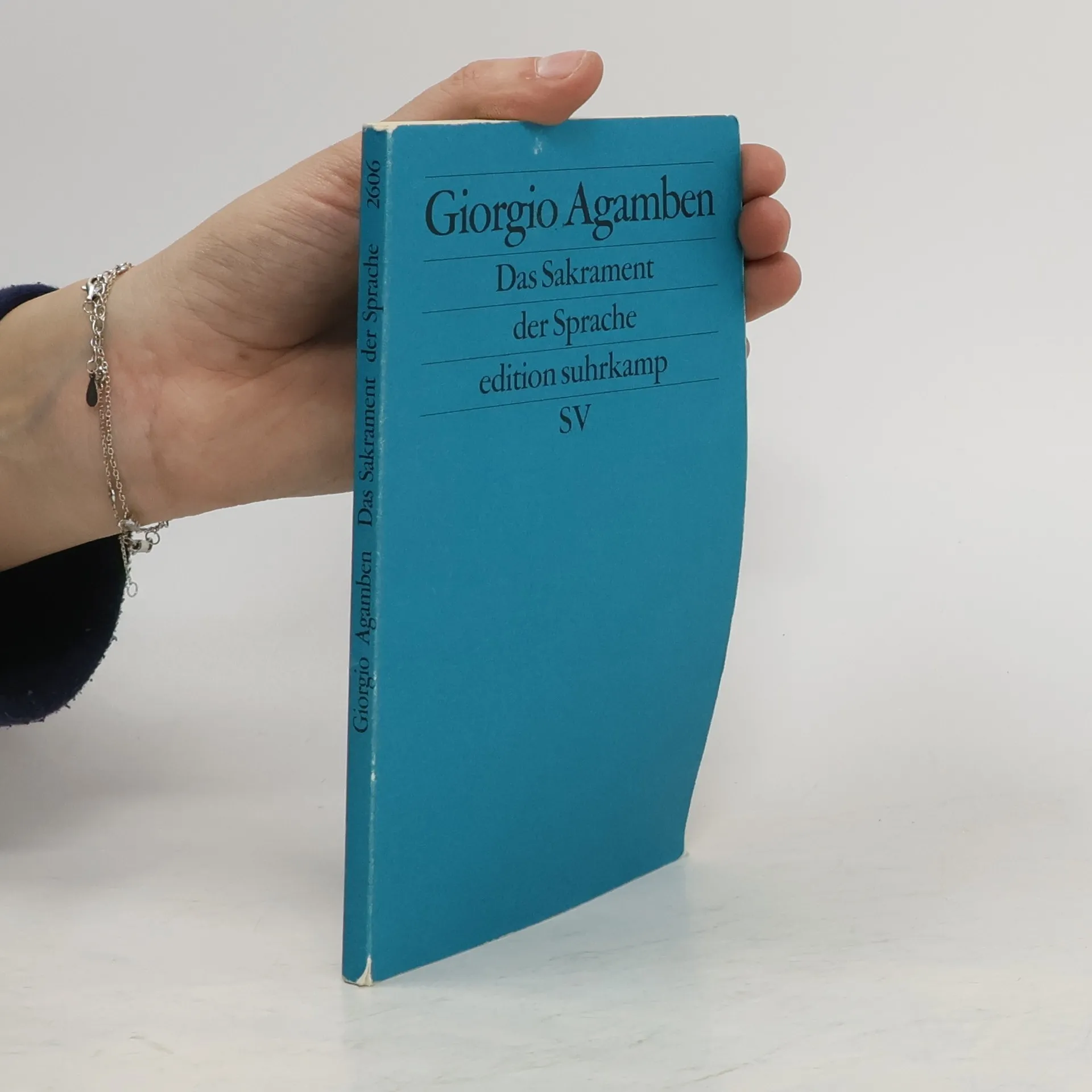
Exploring the oath's pivotal role in political and religious history, this book delves into its strategic significance at the crossroads of law, religion, and politics. Agamben conducts an archaeological analysis of Greek and Roman texts, revealing the oath as a foundational event in human development. He argues that the oath serves as both a 'sacrament of power' and a 'sacrament of language,' highlighting how humanity's ability to speak intertwines with the commitments made through oaths, shaping individual and collective identity.
Insofern der Ausnahmezustand zur Regel zu werden droht, sind die Institutionen des demokratischen Rechtsstaats und das verfassungsgemäße Gleichgewicht der Gewalten gefährdet, und die Grenze zwischen Demokratie und Diktatur verschwimmt. In Auseinandersetzung mit verschiedenen theoretischen Annäherungen an das Phänomen des Ausnahmezustands - zu nennen sind in erster Linie Walter Benjamin und Carl Schmitt, aber auch Autoren wie Theodor Mommsen, Adolphe Nissen und Jacques Derrida - vermißt Agamben das von den meisten Theoretikern gemiedene Niemandsland zwischen Politik und Recht, zwischen der Rechtsordnung und dem Leben und wirft ein neues Licht auf jene verborgene Beziehung, die das Recht an die Gewalt bindet.
Dem Eid kommt als" Sakrament der Macht"in der Geschichte der abendländischen Politik und Religion eine grundlegende Rolle zu. Dennoch fehlt - ungeachtet zahlreicher linguistischer, anthropologischer und historischer Studien - ein all diese Aspekte umfassender Versuch, den systematisch-strategischen Ort zu bestimmen, den die Institution des Eides am Schnittpunkt von Recht, Religion und Politik einnimmt. Hier setzt Giorgio Agamben mit seiner" Archäologie des Eides"an - und trifft mitten ins Zentrum der Existenz des Menschen als sprechendes sowie als politisches Tier. Im Rückgriff auf griechische und römische Quellen stellt Agamben den Konnex her zwischen dem Eid einerseits und archaischer Gesetzgebung, Fluch und Götternamen andererseits. Dabei gewinnt er eine völlig neuartige Perspektive auf den Ursprung des Eides: Der Eid wird zum entscheidenden Moment in der Anthropogenese; als Sakrament der Macht hat er sich etablieren können, weil er zuallererst das Sakrament der Sprache ist. Indem sich der Mensch als sprechendes Wesen entdeckt, bindet er sich auch an die Sprache und setzt in ihr sein Schicksal aufs Spiel
In this book the Italian philosopher Giorgio Agamben looks closely at the literature of the survivors of Auschwitz, probing the philosophical and ethical questions raised by their testimony
Two months after the 9/11 attacks, the Bush administration authorized the indefinite detention of noncitizens suspected of terrorism and their trials by military commission, viewing the situation as a state of emergency. In this context, distinguished Italian philosopher Giorgio Agamben explores the concept of "state of exception," a powerful strategy that can transform democracies into totalitarian regimes. This work serves as a sequel to Agamben's Homo Sacer: Sovereign Power and Bare Life and is the first to theorize the state of exception within a historical and philosophical framework. Agamben critiques legal scholars and policymakers in Europe and the U.S. for dismissing the need for such a theory, arguing that what was intended as a temporary measure has become a normative model of governance throughout the twentieth century. He examines the state of exception's history across various national contexts in Western Europe and the U.S., engaging with the ideas of Carl Schmitt, Derrida, Benjamin, and Arendt. Ultimately, Agamben presents original insights on the future of democracy and highlights the complex relationship between law and violence.