

Federico Maria Sardelli, a professional baroque flautist and recorder-player, offers insights into the diverse sizes and tunings of the recorder and transverse flute families in relation to Antonio Vivaldi's compositions. Drawing extensively from primary documents, he analyzes the surprisingly progressive instrumental techniques in Vivaldi's music. The text discusses the debated chronology of Vivaldi's works, utilizing both internal and external evidence. Each piece featuring the flute or recorder is thoroughly evaluated from historical, biographical, technical, and aesthetic perspectives. This work appeals not only to Vivaldi scholars and enthusiasts but also to players of these instruments, organology students, and those interested in late baroque music. Vivaldi's oeuvre continues to reveal surprises, with new pieces being discovered and old ones reinterpreted. The new English edition incorporates recent findings and developments since the original Italian publication, providing a richer understanding of the composer and his era. Readers will gain valuable insights from the detailed examination of his music for these wind instruments, which also hold broader relevance for his overall work. Generous music examples and illustrations enhance the book's arguments, bringing Sardelli's analysis to life.
Zber Séria
Tento pozoruhodný séria preniká do životov a diel hudobných géniov s mimoriadnou hĺbkou. Každý zväzok presahuje iba hudobnú analýzu a ponára sa do osobných histórií skladateľov a sociálneho kontextu ich tvorby. Séria ponúka pútavé portréty inšpirácií, vplyvov a životných skúseností týchto umelcov, doplnené prístupným hodnotením ich hudobného odkazu. Je to neoceniteľný zdroj pre hudobných bádateľov aj nadšených milovníkov hudby, ktorý ponúka nielen životopisné dáta, ale aj komplexný pohľad na ich umenie a dobu.

Published in its first edition in 1983, Boyd's treatment of this canonical composer is essential reading for students, scholars, and everyone interested in Baroque music. In this third edition, biographical chapters alternate with commentary on the works, to demonstrate how the circumstances of Bach's life helped to shape the music he wrote at various periods. We follow Bach as he travels from Arnstadt and Muhlhausen to Weimar, Cöthen, and finally Leipzig, these journeys alternating with insightful discussions of the great composer's organ and orchestral compositions. As well as presenting a rounded picture of Bach, his music, and his posthumous reputation and influence, Malcolm Boyd considers the sometimes controversial topics of "parody" and arrangement, number symbolism, and the style and meaning of Bach's late works. Recent theories on the constitution of Bach's performing forces at Leipzig are also present. The text and the appendixes (which include a chronology, personalia,bibliography, and a complete catalogue of Bach's works) were thoroughly revised in this edition to take account of more recent research undertaken by Bach scholars, including the gold mine of new information uncovered in the former USSR.
"Johannes Brahms has often been regarded as a conservative composer, his music dismissed as old-fashioned compared with the work of such contemporaries as Liszt and Wagner. In a major reevaluation of his life and artistry, Malcolm MacDonald incorporates twenty-five years of new research to demonstrate convincingly that Brahms combined his understanding of Classical principles with a profound appreciation of Romantic emotions and ideals. Through his study of early music and folk song, Brahms forged links with his predecessors while applying their craft in the service of a new expressiveness. Book jacket."--Jacket
Franz Liszt lived as he composed -- on the grand scale -- the quintessential, flamboyant romantic. Born in Hungary in 1811 to poor farm parents, he received his onyl education from his father who was a well-known amateur musician. Although a virtuous at age 13, he was tormented by his lack of formal education. Denied entrance to the Paris Conservatory because of his young age, he surrounded himself with the most celebrated men of letters and music of his time. This impressive volume encompasses Franz Liszt's entire legendary career -- the virtuous tours, the composition of piano works and transcriptions which revolutionized the instrument, the period as conductor at Weimar, and the creation of brilliant new forms of orchestral and choral music. -- From publisher's description
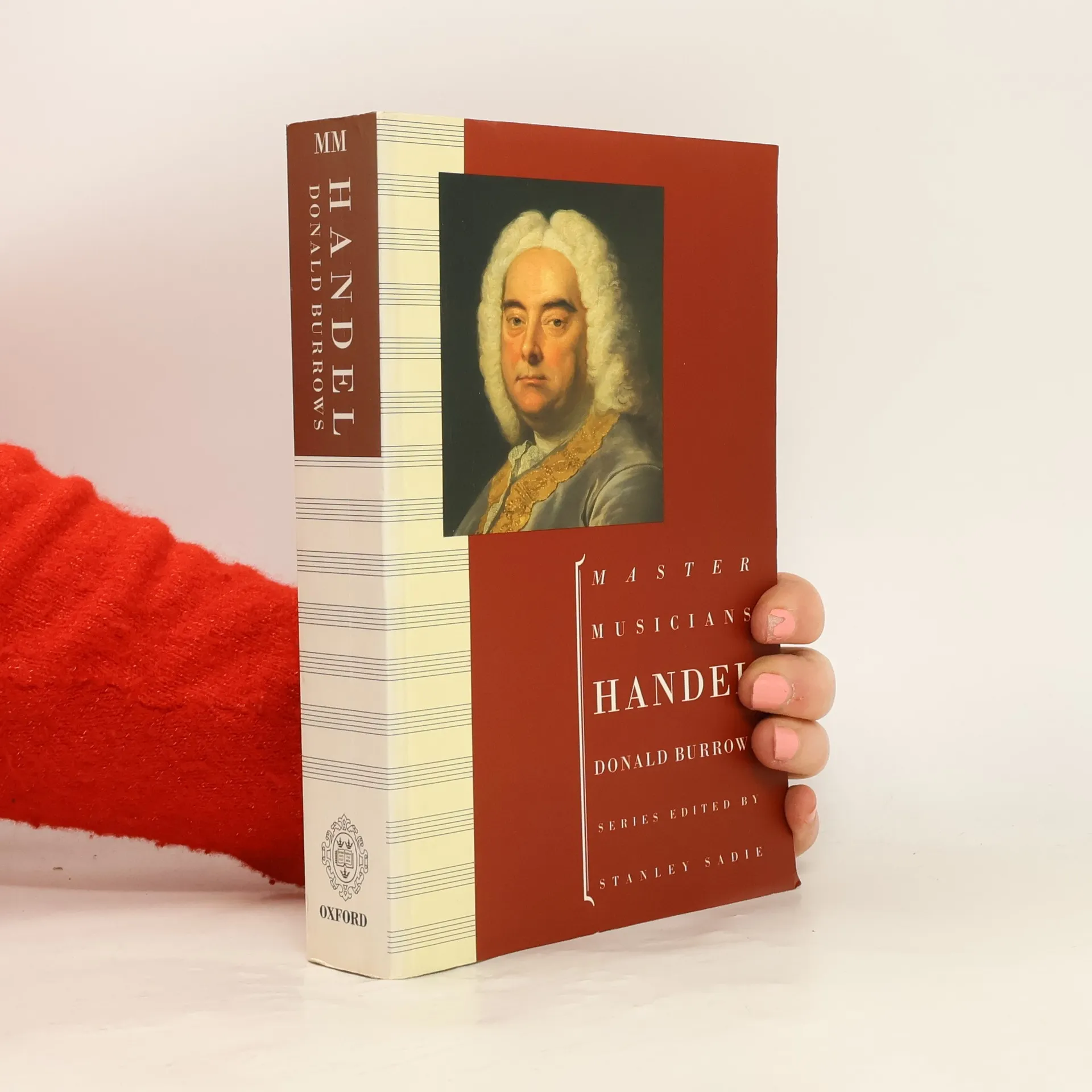
Handel
- 492 stránok
- 18 hodin čítania
Celebrating its 100th anniversary, this extraordinary series continues to captivate readers with detailed insights into the lives and work of music's geniuses. Unlike typical composer biographies that focus solely on music, this series delves into the personal histories of each composer and the social contexts of their creations. Each volume, approximately 300 pages long, provides a vivid portrait of the musicians' inspirations, influences, life experiences, and even their weaknesses, alongside accessible discussions of their works. Additionally, each volume includes valuable reference materials such as a detailed chronology, a complete list of works, a glossary of significant individuals in the composer's life, and a select bibliography. Under the guidance of series general editor Stanley Sadie, this collection continues to delight music scholars, serious musicians, and music lovers alike. In this volume, Donald Burrows examines Handel's life and music, focusing on two pivotal moments: his evolution from a church-trained musician in Germany to a successful opera composer in London, and the shift in his theater career from opera to oratorio. Burrows illustrates how Handel skillfully combined large-scale construction techniques and aria writing with his early choral music experience, resulting in timeless works that continue to captivate audiences today.
Mozart
- 306 stránok
- 11 hodin čítania
Synthesizes existing research into a chronologically based narrative. This volume on Wolfgang Amadeus Mozart (1756 - 1791) takes the work and the life in parallel; for the vents of Mozart's life cannot be separated from his existence as a musical creator and performer.