'Eurocentrism' is a classic of radical thought by one of the world's foremost political economists. His new introduction and concluding chapter make this provocative essay about one of the great 'ideological deformations' of our time even more compelling.
A collection of Samir Amin’s ten most influential essays of the 21st century Radical political economist Samir Amin left behind a cherished oeuvre of Marxist writings. Amin’s intellectual range—from economics to culture—was admirable, and his lessons remain essential. Monthly Review Press is honored to publish this volume, culled from the Monthly Review magazine, of ten of Samir Amin’s most significant essays written in the twenty-first century. The collection is introduced by Amin’s friend and comrade, the Marxist philosopher Aijaz Ahmad, who provides a comprehensive survey of Amin’s life and path-breaking work. Ahmad also offers a contextual focus by which to read such stunningly astute pieces as “Revolution or Decadence?” and “Contemporary Imperialism.” Only People Make Their Own History is a loving and enlightening look at what the work of Samir Amin has meant—and will mean— to millions of people the world over.
Is it possible for the Third World to escape from the constraints imposed by the world's economic system? What room for manoeuvre do these states have, and are they condemned to dependence?These are some of the questions Samir Amin confronts in Delinking . He argues that Third World countries cannot hope to raise living standards if they continue to adjust their development strategies in line with the trends set by a fundamentally unequal global capitalist system over which they have no control.The only alternative, he maintains, is for Third World societies to 'delink' from the logic of the global system - each country submitting its external economic relations to the logic of domestic development priorities, which in turn requires a broad coalition of popular forces in control of the state. Delinking, he shows, is not about absolute autarchy, but a neutralizing of the effects of external economic interactions on internal choices.
In this second volume of his memoirs and final writings based on his life,
Samir Amin describes his thoughts and experiences with an array of countries,
primarily in the Arab World, Africa, Asia, and Latin America, recounting in
detail the stages of his ongoing dialogue over several decades with popular
movements struggling for a better future--
Analyzing the interconnected crises of our time, Samir Amin argues that financial turmoil, the Eurozone's challenges, the rise of BRIC nations, and political Islam reveal a deep systemic crisis within monopoly capitalism. He revises classical concepts of social classes and political movements to highlight the unsustainability of the current capitalist system. Amin's compelling conclusion presents a dire outlook, emphasizing the necessity for a more humane global order as humanity confronts stark choices for the future.
Out of early twentieth-century Russia came the world's first significant
effort to build a modern revolutionary society. According to Marxist economist
Samir Amin, the great upheaval that once produced the Soviet Union has also
produced a movement away from capitalism - a long transition that continues
even today.
According to renowned Marxist economist Samir Amin, the recent Arab Spring
uprisings comprise an integral part of a massive second awakening of the
Global South. From the self-immolation in December 2010 of a Tunisian street
vendor, to the consequent outcries in Cairo's Tahrir Square
In this slim, insightful volume, noted economist Samir Amin returns to the core of Marxian economic thought: Marx’s theory of value. He begins with the same question that Marx, along with the classical economists, once pondered: how can every commodity, including labor power, sell at its value on the market and still produce a profit for owners of capital? While bourgeois economists attempted to answer this question according to the categories of capitalist society itself, Marx sought to peer through the surface phenomena of market transactions and develop his theory by examining the actual social relations they obscured. The debate over Marx’s conclusions continues to this day. Amin defends Marx’s theory of value against its critics and also tackles some of its trickier aspects. He examines the relationship between Marx’s abstract concepts—such as “socially necessary labor time”—and how they are manifested in the capitalist marketplace as prices, wages, rents, and so on. He also explains how variations in price are affected by the development of “monopoly- capitalism,” the abandonment of the gold standard, and the deepening of capitalism as a global system. Amin extends Marx’s theory and applies it to capitalism’s current trajectory in a way that is unencumbered by the weight of orthodoxy and unafraid of its own radical conclusions.
Permanent War and the Americanization of the World
128 stránok
5 hodin čítania
The book explores the global impact of the American model, analyzing how its economic and political systems are being adopted worldwide. It delves into the resulting consequences, providing insights into the challenges and changes that arise from this imposition. Through a critical lens, it highlights the implications for various nations and cultures as they navigate the influence of American ideologies.
The central concept of the book is that theory must be grounded in the historical analysis of capitalism, challenging abstract bourgeois thinking that detaches economics from reality. The author explores the globalization of the law of value, examining the connections between capital and land ownership, modernity and religious interpretations, and the global expansion of capitalism, particularly in Russia and China. This anthology builds on previous work that emphasizes capitalism's imperialist nature, providing a nuanced understanding of its evolution in different contexts.
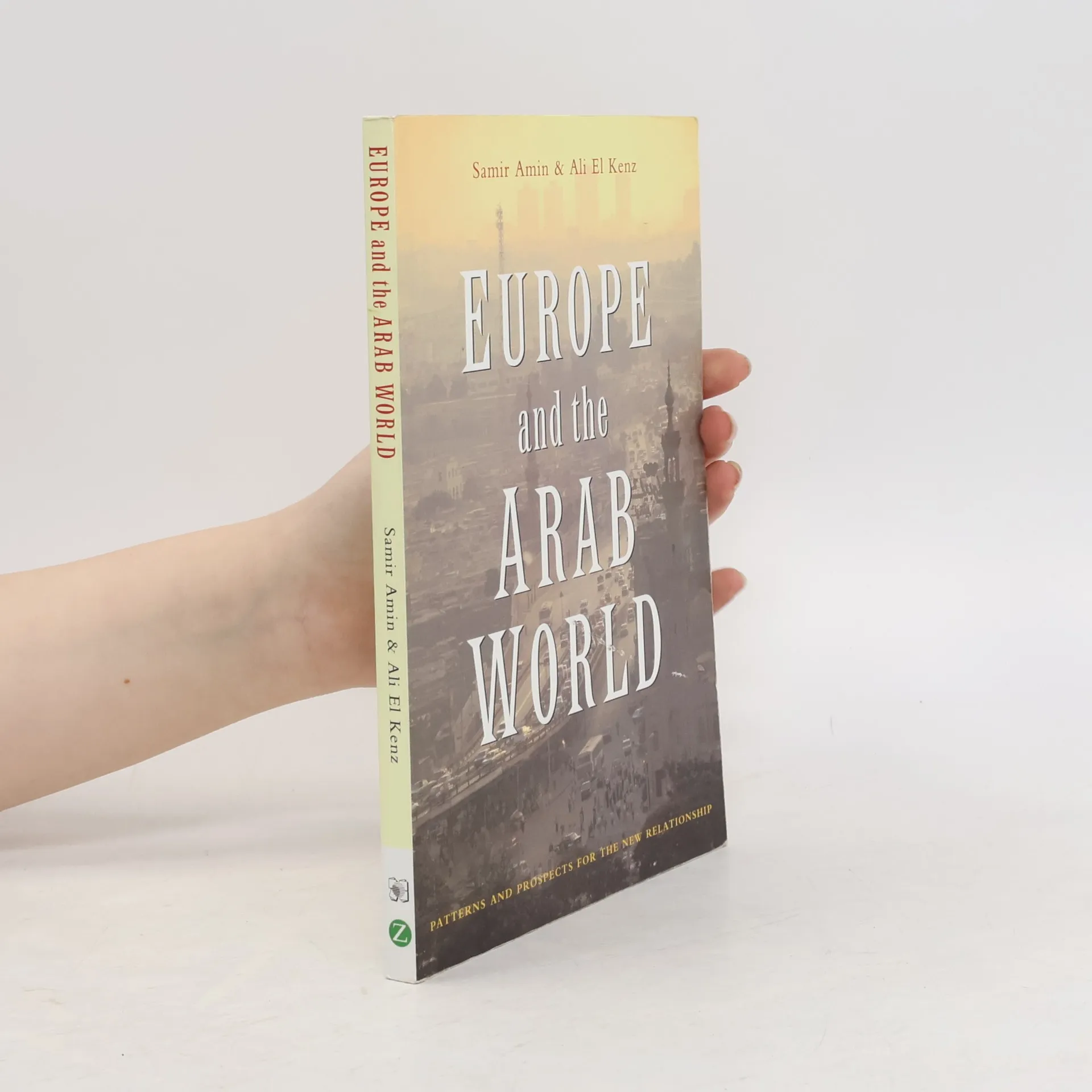
This assessment explores the evolving relationship between Europe and the Arab world, focusing on the shifting political dynamics within Arab countries, including the rise of political Islam and civil society. The authors, Samir Amin and Ali El Kenz, argue that U.S. global hegemony significantly influences Euro-Arab relations. They examine the European Union's initiative, initiated in Barcelona, aimed at establishing equal and mutually beneficial cooperation with Mediterranean and Gulf Arab nations. Their analysis includes a detailed empirical account of this initiative, alongside a historically contextualized and politically insightful critique of the various realities affecting it. Despite efforts toward dialogue and institution-building to overcome the colonial legacy of inequality, the authors conclude that little has been achieved in transforming the fundamental economic and political ties between the Arab Islamic and European Christian worlds. They identify several obstacles, including the adverse effects of globalized capitalism and the U.S. imposition of its political goals in the Middle East. The relevance of their argument is underscored by the tensions arising from the U.S. military occupation of Iraq and the Bush administration's attempts to promote democracy in the region.
Die in Europa entstandene Moderne, die Vernunft und Emanzipation verband und auf säkularen Grundlagen den Weg zur Demokratie erschloss, befindet sich in einer tödlichen Krise. Die Widersprüche der kapitalistischen Globalisierung, aus der sie hervorging – mit der in diesem Rahmen unaufhebbaren Polarisierung der Welt in Zentren und Peripherien – führen zu einer Abkehr von ihren universalistischen Prinzipien und zur Flucht in einen Kulturalismus, der das jeweils »Besondere« betont. Samir Amin entwickelt ein neues Verständnis der Moderne, das auf wirklich universellen Prinzipen beruht, indem er die historischen Grundlagen ihres auf Europa zentrierten, ideologisch verzerrten Denkens freilegt. Die erweiterte Neuausgabe dieses inzwischen klassischen Versuchs einer nicht-eurozentrischen Kritik der politischen Ökonomie hebt die verkannte Bedeutung der islamischen Kultur für die Geschichte der »westlichen« Zivilisation hervor. Vom Standpunkt einer wirklich universellen Moderne kritisiert sie zugleich die »umgekehrten Eurozentrismen« der ehemals Dritten Welt, vor allem am Beispiel des politischen Islam.
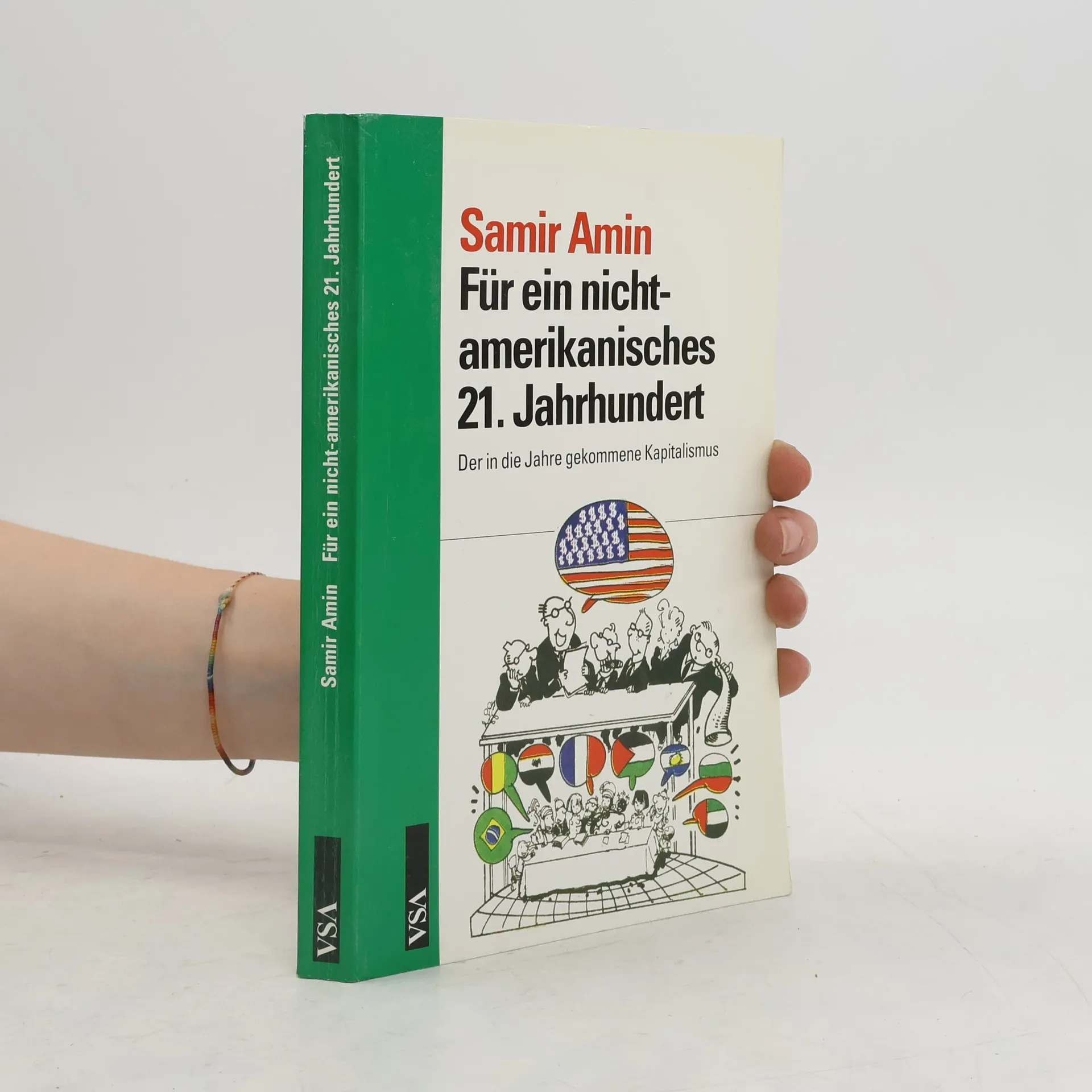
Das gegenwärtige System ist kein anonymer, autonomer „Markt“, der nach ökonomischen „Gesetzen“ funktioniert, sondern ein imperialistischer, real existierender Kapitalismus, der sowohl politisch als auch ökonomisch ist. Es dient vor allem dem Hegemoniestreben der US-Oligopole, während die anderen Mitglieder der Triade USA – EU – Japan sich weitgehend unterordnen. Diese Ordnung, die keinen nachhaltigen Aufschwung mehr verspricht, wird durch überlegene Waffen gesichert. Samir Amin fordert, die weltweit wachsenden, aber zersplitterten Gegenströmungen zu vereinen. Es zeichnen sich zunehmend Wege zu „Konvergenzen in der Vielfalt“ ab. Der Blick aus der Dritten Welt verdeutlicht sowohl Gefahren als auch Chancen für die Menschheit, die in den manipulierten öffentlichen Meinungen des Nordens oft nicht erkannt werden. Amins jüngste Schrift ist das Ergebnis seiner Arbeit für das Weltforum für Alternativen (FMA), das als Inspirationsquelle für die soziale Weltbewegung für alternative Globalisierung dient. Diese Bewegung hat sich von einer bescheidenen Pressekonferenz eines „Anderen Davos“ zu bedeutenden Manifestationen in Seattle, Washington, Prag, Göteborg, Genua und dem Europäischen Sozialforum in Florenz sowie den Weltsozialforen in Porto Alegre entwickelt.
Plädoyer für eine antikapitalistische nationale Entwicklung
144 stránok
6 hodin čítania
In den drei Kapiteln seines Buches diskutiert Samir Amin die Volkssouveränität als Alternative zur liberalen Globalisierung sowie die Notwendigkeit einer bäuerlichen Landwirtschaft zur Herstellung von Ernährungssicherheit und analysiert die Blockaden für eine soziale Transformation im „globalen Norden“, die es zu überwinden gilt.