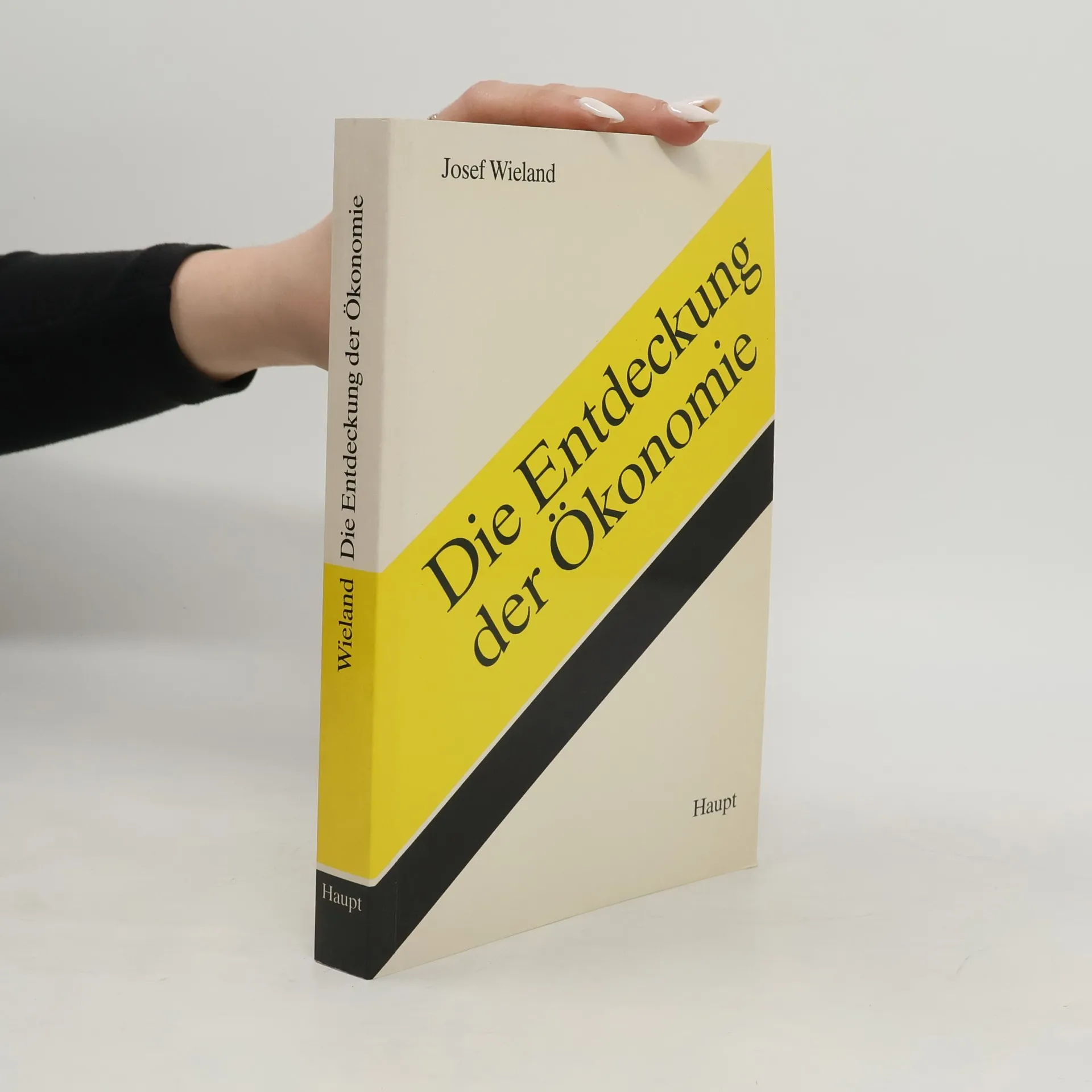
Focusing on relational economics, this book explores how local and global economic transactions are governed in contemporary societies. It delves into global value creation and production networks, emphasizing the importance of cooperation within and between firms, stakeholder management across sectors, and the role of transcultural leadership. Through this analysis, it provides insights into the mechanisms that drive economic interactions and collaborative strategies in a globalized context.
Josef Wieland Poradie kníh (chronologicky)
14. máj 1951



Luther 2017: protestantische Ressourcen der nächsten Moderne
- 207 stránok
- 8 hodin čítania
2017 feiert die Evangelische Kirche in Deutschland das 500-jährige Gedenken an Martin Luthers Reformation. Diese religiöse Erneuerung entfaltete enorme Energien für Kultur, Politik, Recht, Wirtschaft und Sozialgestaltung und kann nicht nur als religiöser Paradigmenwechsel, sondern auch theologisch und gesellschaftstheoretisch interpretiert werden. Die Reformation und der Protestantismus haben die funktionale Ausdifferenzierung gesellschaftlicher Sphären wie Politik, Wirtschaft, Kultur und Zivilgesellschaft maßgeblich geprägt. Der Band zeigt, dass die Reflexion über grundlegende Kategorien des Protestantismus und des Christentums eine Ressource darstellt, die uns nicht nur die Grundlagen unseres Existenzrahmens verdeutlicht, sondern auch Potenziale zur Gestaltung einer globalen Moderne bietet. Renommierte Wissenschaftler und Experten aus Europa, China und den USA beleuchten, wie protestantische Perspektiven auch heute noch relevant sind. Im Fokus stehen dynamische Faktoren der protestantischen Mentalität, wie Traditions- und Autoritätskritik sowie Aspekte der Selbstverwirklichung und Sozialität im Glauben. Diese Themen werden in Verbindung zu einer globalen Gesellschafts-, Wirtschafts- und Führungsethik diskutiert, was einen zentralen Aspekt der Beiträge dieses Herausgeberbands darstellt.
Handbuch Compliance-Management
Konzeptionelle Grundlagen, praktische Erfolgsfaktoren, globale Herausforderungen
- 790 stránok
- 28 hodin čítania
Nachhaltige Compliance ist ein wesentlicher Aspekt erfolgreicher Unternehmensführung und damit Führungs- und Managementaufgabe. Diese Grundüberzeugung steht im Fokus dieses Handbuchs. Die Verfasser erläutern, welchen Charakter und welche Mindestanforderungen ein erfolgreiches Compliance-Management in Wirtschaft und Verwaltung heute erfüllen muss, um glaubwürdig, effizient und effektiv zu sein. Darüber hinaus thematisieren die konzeptionellen und zugleich praxisorientierten Beiträge auch die noch offenen Fragen an das Compliance-Management. Das Buch beschreibt Rolle und Aufgaben von Compliance in Organisationen, bietet aber auch praktische Lösungen für täglich anfallende Managemententscheidungen im In- und Ausland an. Das Besondere an diesem Werk: - es bereitet wichtige Themen so auf, dass Unternehmen die Ergebnisse praktisch hervorragend umsetzen können - die Beiträge stammen von namhaften Wissenschaftlern wie auch von erfahrenen und innovativen Praktikern im In- und Ausland
Governanceethik im Diskurs
- 281 stránok
- 10 hodin čítania
Eine moderne Ethik mit praktischen Ambitionen sollte theoretische Konsistenz, empirischen Gehalt und gestalterischen Anwendungsbezug kombinieren, was ohne Interdisziplinarität nicht möglich ist. Diese ist entscheidend für die Entwicklung einer Wirtschafts- und Unternehmensethik. Moral ist stets die einer Gesellschaft als Kooperationsprojekt, und ethische Begründungen benötigen gesellschaftliche Legitimationskraft. In der Wirtschafts- und Unternehmensethik fließen zudem Erkenntnisse aus Ökonomik, Organisationstheorie und Management ein. Der von Josef Wieland entwickelte Ansatz zur Ethik der Governance versucht, diese Ansprüche in ein einheitliches Modell zu integrieren. Die in diesem Band versammelten Beiträge zur Governanceethik reflektieren den Stand der Diskussion und bieten Vorschläge zur Weiterentwicklung aus philosophischer, ökonomischer und betriebswirtschaftlicher Perspektive. Es wird der Zusammenhang von ethischer Begründung und moralischer Praxis thematisiert, sowie die Entwicklung der Governanceethik zu einer Wirtschaftsethik. Wichtige Forschungsgebiete sind Organisation, Wissen, Kommunikation und dynamische Innovation, die für eine zeitgemäße Ethik im Wirtschaftsbereich zentral sind. Die Beiträge umfassen verschiedene Aspekte der Governanceethik und deren Anwendung in der Praxis.
The articles in this volume explore how moral values and ethical demands can be integrated into economic and corporate decisions in a credible and comprehensible way for society. Best practices and minimum requirements for codes of conduct are essential, as they codify values such as integrity, fairness, openness, honesty, truthfulness, solidarity, and justice, which must be reflected in daily business operations. There is a pressing need to establish criteria for seriousness and credibility to evaluate and control standards of conduct and the managerial systems designed for this purpose. In the international context, terms like Ethics management system, Ethics program, Values program, Ethics audit, and Social audit are employed to describe these systems. The European perspective emphasizes a values-driven integration of corporate governance (including risk management and compliance), quality management (focusing on human capital and supply chain), and corporate citizenship (addressing human rights, ecology, social responsibility, and community) into a cohesive management decision framework. The core value uniting these areas is sustainability, distinguishing it from compliance programs that are primarily law-driven, a distinction highlighted by Lynn S. Paine.
Die Ethik der Governance
- 128 stránok
- 5 hodin čítania
Die Herausbildung einer voll entfalteten Weltökonomie und die damit einhergehende neue Rolle von Unternehmen in der Gesellschaft haben eine ganze Reihe neuartiger ethischer Fragestellungen aufgeworfen. So etwa die nach der globalen sozialen Verantwortung der Unternehmen oder aber die nach dem Management der Differenzen zwischen multinationalen Wertesystemen. Das Buch analysiert und untersucht diese Entwicklungen unter dem Gesichtspunkt, ob und mit welchen Konsequenzen sich darin eine veränderte Beziehung von ökonomischer Theorie und Ethik, von Unternehmen und moralischer Kommunikation der Gesellschaft zeigen lässt. Diese entscheidende Entwicklung, so die zentrale These, liegt dabei in der Kontextualisierung individueller Tugenden durch die Ehtik der Governance. Die Wirkungsweise moralischer Regeln und Werte werden zu endogenen Elementen von Governancestrukturen für wirtschaftliche und gesellschaftliche Transaktionen. Aus der Perspektive der Institutionenökonomik wird dafür der Begriff der Governanceethik ins Spiel gebracht.
Sankt Galler Beiträge zur Wirtschaftsethik: Die Entdeckung der Ökonomie
Kategorien, Gegenstandsbereiche und Rationalitätstypen der Ökonomie an ihrem Ursprung
- 327 stránok
- 12 hodin čítania