Electoral Laws and Their Political Consequences
- 352 stránok
- 13 hodin čítania
The aim of this book is to provide an overview of recent research on electoral laws and their political consequences by scholars who have helped shape the field.






The aim of this book is to provide an overview of recent research on electoral laws and their political consequences by scholars who have helped shape the field.
Power Sharing and Majority Rule in Theory and Practice
Renowned for his significant contributions to the study of democracy and comparative politics, Arend Lijphart has established himself as a leading figure in political science. His influential research and theories have shaped the understanding of democratic systems and their variations across different contexts, making him a key reference for scholars and students alike.
American democracy differs greatly from other democracies around the world. But is the American way more or less efficacious than comparable democracies in Asia, Latin America, or Europe? What if the United States had a prime minister instead of (or in addition to) a president, or if it had three or more parties in Congress instead of two? Would there be more partisan animosity and legislative gridlock or less? These are the kinds of questions that thinking about U.S. government in comparative perspective helps us to analyze. This valuable contribution to political studies takes a unique approach to a much-studied subject, looking at the U.S. government from a comparative point of view. Four distinguished scholars in the field examine the Constitution, the two-party system, the division of power between state and federal governments, and other major features of the American political system in terms of how they differ from other democracies, and they explore what those differences ultimately mean for democratic performance. By merging two important fields of study, American government and comparative political systems, this essential text offers a new and refreshingly insightful view of American exceptionalism.
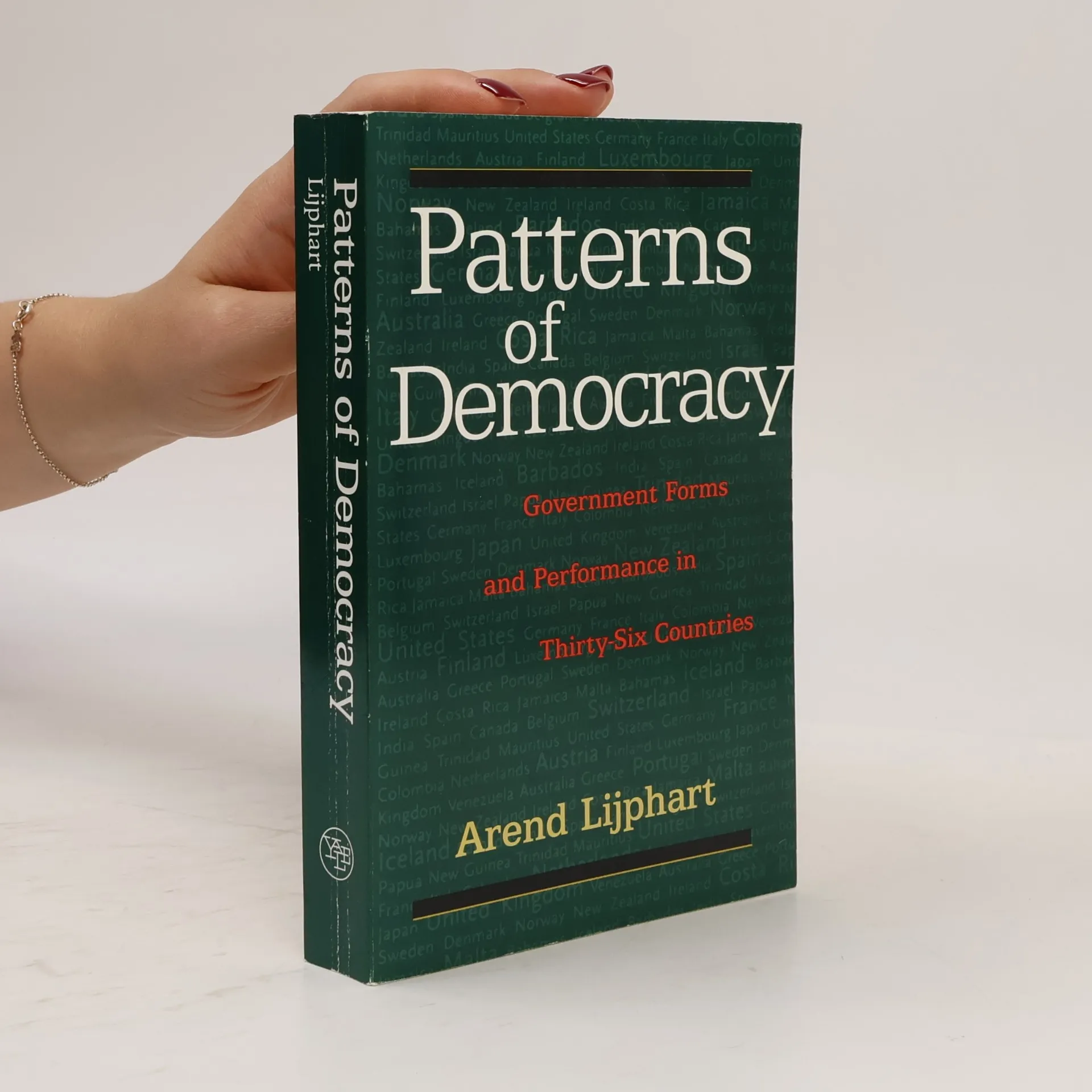
Government Forms and Performance in Thirty-Six Countries
In this updated and expanded edition of his classic text, Arend Lijphart offers a broader and deeper analysis of worldwide democratic institutions than ever before. Examining thirty-six democracies during the period from 1945 to 2010, Lijphart arrives at important—and unexpected—conclusions about what type of democracy works best. Praise for the previous edition : "Magnificent. . . . The best-researched book on democracy in the world today."—Malcolm Mackerras, American Review of Politics "I can't think of another scholar as well qualified as Lijphart to write a book of this kind. He has an amazing grasp of the relevant literature, and he's compiled an unmatched collection of data."—Robert A. Dahl, Yale University "This sound comparative research . . . will continue to be a standard in graduate and undergraduate courses in comparative politics."— Choice
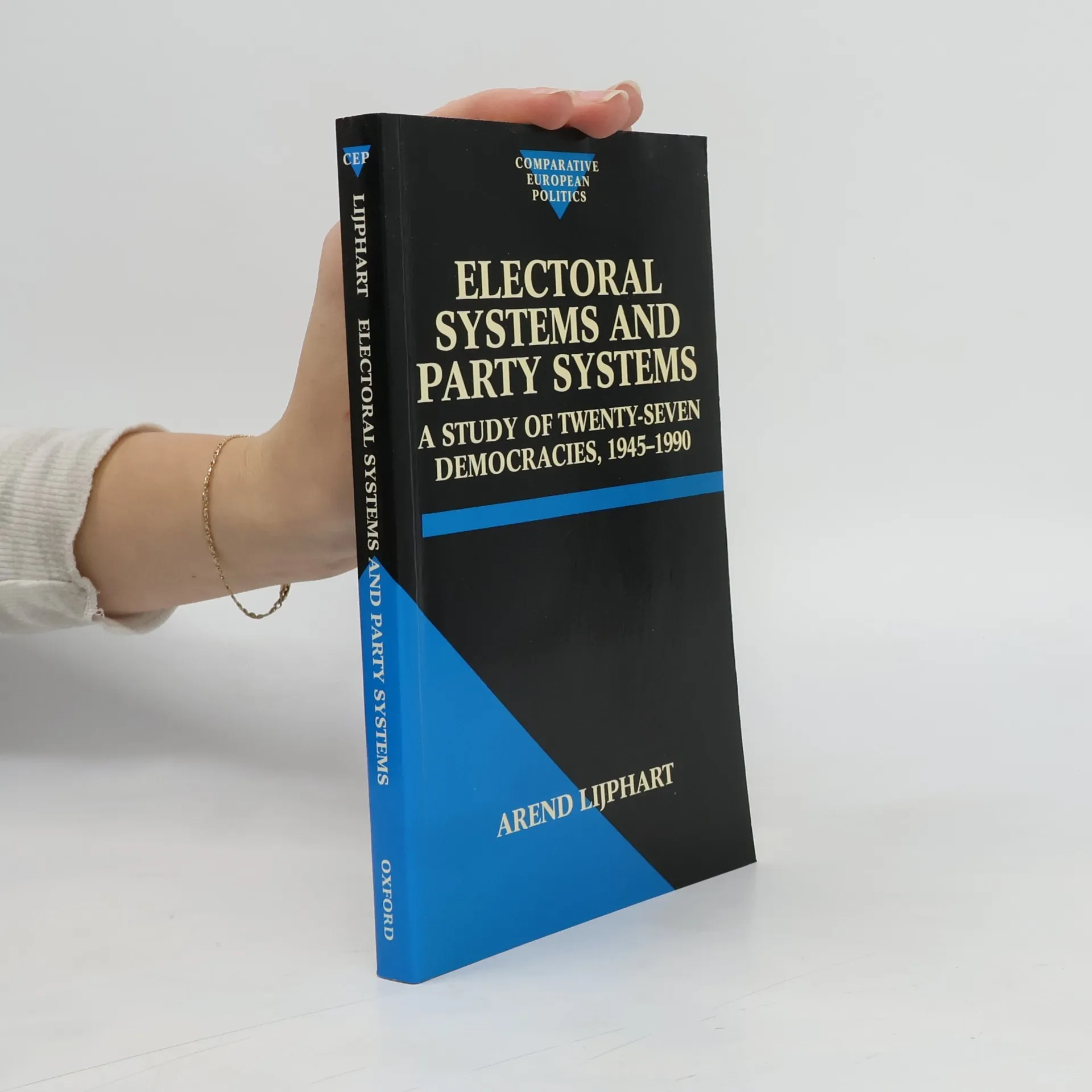
A Study of Twenty-Seven Democracies, 1985-1990
An electoral system is the most fundamental element of representative democracy, translating citizen's votes into representatives' seats. It is also the most potent practical instrument available to democratic reformers. This systematic and comprehensive study describes and classifies the 70 electoral systems used by 27 democracies - including those of Western Europe, Australia, Canada, the USA, Costa Rica, India, Israel, Japan, and New Zealand - for 384 national legislative and European Parliament elections between 1945 and 1990. Using comparative and statistical analyses of these systems, Arend Lijphart demonstrates the effect of the electoral formula used, the number of representatives elected per district, electoral thresholds, and of five other key features of electoral systems on the proportionality of the election outcome, the degree of multipartism, and the creation of majority parties. In the process he reveals that electoral systems are neither as diversenor as complex as is often assumed. Electoral Systems and Party Systems represents the most definitive treatment of the subject since Rae's classic study in 1967, based as it is on more accurate and comprehensive data (covering more countries and over a longer time span), and using stronger hypotheses and better analytical methods. The unique information and analysis it offers will make it essential reading for everyone working in the field.
Patterns of Majoritarian and Consensus Government in Twenty-One Countries
Democracies: Patterns of Majoritarian and Consensus Government in Twenty-One Countries.
German