




Dapper, dynamic, overarchingly ambitious, Guido Schmidt was Austria's youngest and most controversial Foreign Minister. Corresponding secretly with Gö ring while betraying Axis secrets to Sir Robert Vansittart at the British Foreign Office, Schmidt ducked and weaved across a European landscape of increasing menace and treachery. Accompanying the Austrian Chancellor to Berchtesgaden in February 1938, Schmidt alone kept his nerve and negotiated an agreement with Ribbentrop which neutralised many of Hitler's bullying demands. When Hitler invaded Schmidt was one of the very few Austrian ministers to escape the clutches of the SS. In a curious gesture of protection, Gö ring sent a plane to Vienna to rescue him from the wrath of the Austrian Nazis. This enigmatic move by Hitler's greatest of paladins came back to haunt Schmidt after the war when he was put on trial for high treason. Acquitted in 1947 for " lack of evidence", Schmidt's reputation never recovered. Accessing invaluable family papers hitherto unseen by any historian, Richard Bassett has produced a fascinating account of an important personality who played a pivotal role in the European crisis in the run-up to the Second World.
Richard Bassett Poradie kníh


- 2022
- 2020
Prague Stories
- 400 stránok
- 14 hodin čítania
The Golden City of Prague has long been an intellectual centre of the western world. The writers collected here range from the early nineteenth century to the present and include both Prague natives and visitors from elsewhere. Here are stories, legends, and scenes from the city's past and present, from the Jewish fable of the golem, a creature conjured from clay, to tales of German and Soviet invasions. The international array of writers ranges from Franz Kafka to Ivan Klima to Bruce Chatwin, and includes the award-winning British playwright Tom Stoppard and former American Secretary of State Madeleine Albright, both of whom have Czech roots. Covering the city's venerable Jewish heritage, the glamour of the belle-epoque period, World War II, Communist rule, the Prague Spring, the Velvet Revolution, and beyond, Prague Stories weaves a remarkable selection of fiction and nonfiction into a literary portrait of a fascinating city
- 2020
Last days in old Europe : Trieste '79, Vienna '85, Prague '89
- 192 stránok
- 7 hodin čítania
In 1979, Richard Bassett embarked on adventures in central Europe, experiencing the last echoes of the Hapsburg lands and witnessing the decline of communist rule. Traveling from Trieste to Prague and Vienna to Warsaw, he encountered fading aristocrats, charming gangsters, fractious diplomats, and glamorous informants, offering a unique perspective on life behind the Iron Curtain as a musician and foreign correspondent. The narrative reveals familiar events and places through unexpected lenses: dilapidated mansions, boarding-houses, train carriages, and cafes, often serving as backdrops for espionage between East and West. Bassett shares surprising encounters with figures such as Shirley Temple, Fitzroy Maclean, Lech Walesa, and the last Empress of Austria. He attends King Nicola of Montenegro's funeral, plays bridge with the last recipient of an Austrian imperial decoration, and observes the KGB's final rites for the Soviet empire in Prague. The book intertwines music, art, architecture, food, wine, friendship, and history, reflecting Bassett's romantic inclination towards the values of a bygone era. He vividly captures the essence of Mitteleuropa during a pivotal decade in its history.
- 2019
Last Days in Old Europe
- 224 stránok
- 8 hodin čítania
Part memoir, part reflection, this book brings to life central Europe during the last ten years of the Cold War. It begins in Trieste in 1979 where the resonances of the Habsburg Empire are still strong. The second part moves to the darker, claustrophobic world of Vienna in 1985, where the atmosphere of the Cold War seemed to infiltrate every brick of a city hovering between two worlds, and even the most seemingly harmless of culinary establishments masked the game of espionage between East and West. In the third part, the story shifts to Prague in 1989 during the dramatic, intoxicating days of the 'velvet revolution' and the long-awaited opening up of the east. Revolution, when it came was from above rather than below: Moscow was far more engaged with events during those turbulent November weeks than is generally appreciated. Throughout the book we encounter a diverse array of glittering characters: penniless aristocrats, charming gangsters, even Amazonian blondes in the service of Eastern European spy agencies; fractious diplomatists and disinherited royalty supply a colourful supporting cast. With charm, wit and insight, Richard Bassett recreates through his personal encounters the elegy, farce and tragedy of Central Europe in the last days of communism.
- 2016
Šéf Hitlerovy špionáže
- 356 stránok
- 13 hodin čítania
Admirála Canarise, šéfa německé vojenské špionážní služby, charakterizoval jeho sovětský protějšek jako „nejnebezpečnějšího zpravodajce na světě“. Canaris byl loajální vůči starému Německu – dobyvačný a rasistický režim Adolfa Hitlera jej však odpuzoval. Po neúspěšném atentátu na Vůdce v červnu 1944 byl Canaris zatčen a týden před koncem války popraven. Do jaké míry se podílel na přípravách samotného atentátu, zůstává dosud nejasné, tvrdí se však, že koordinoval několik předchozích pokusů o odstranění Hitlera, a že se dokonce snažil s Brity vyjednat obdobu separátního míru. V napínavém a věrohodném líčení spletitého souboje špionážních sítí Richard Bassett odhaluje, jak se Canarisově cílevědomému úsilí podařilo ovlivnit průběh druhé světové války.
- 2015
For God and Kaiser
- 591 stránok
- 21 hodin čítania
The definitive history of Austria's multinational army and its immense role during three centuries of European military history Among the finest examples of deeply researched and colorfully written military history, Richard Bassett's For God and Kaiser is a major account of the Habsburg army told for the first time in English. Bassett shows how the Imperial Austrian Army, time and again, was a decisive factor in the story of Europe, the balance of international power, and the defense of Christendom. Moreover it was the first pan-European army made up of different nationalities and faiths, counting among its soldiers not only Christians but also Muslims and Jews. Bassett tours some of the most important campaigns and battles in modern European military history, from the seventeenth century through World War I. He details technical and social developments that coincided with the army's story and provides fascinating portraits of the great military leaders as well as noteworthy figures of lesser renown. Departing from conventional assessments of the Habsburg army as ineffective, outdated, and repeatedly inadequate, the author argues that it was a uniquely cohesive and formidable fighting force, in many respects one of the glories of the old Europe.
- 2007
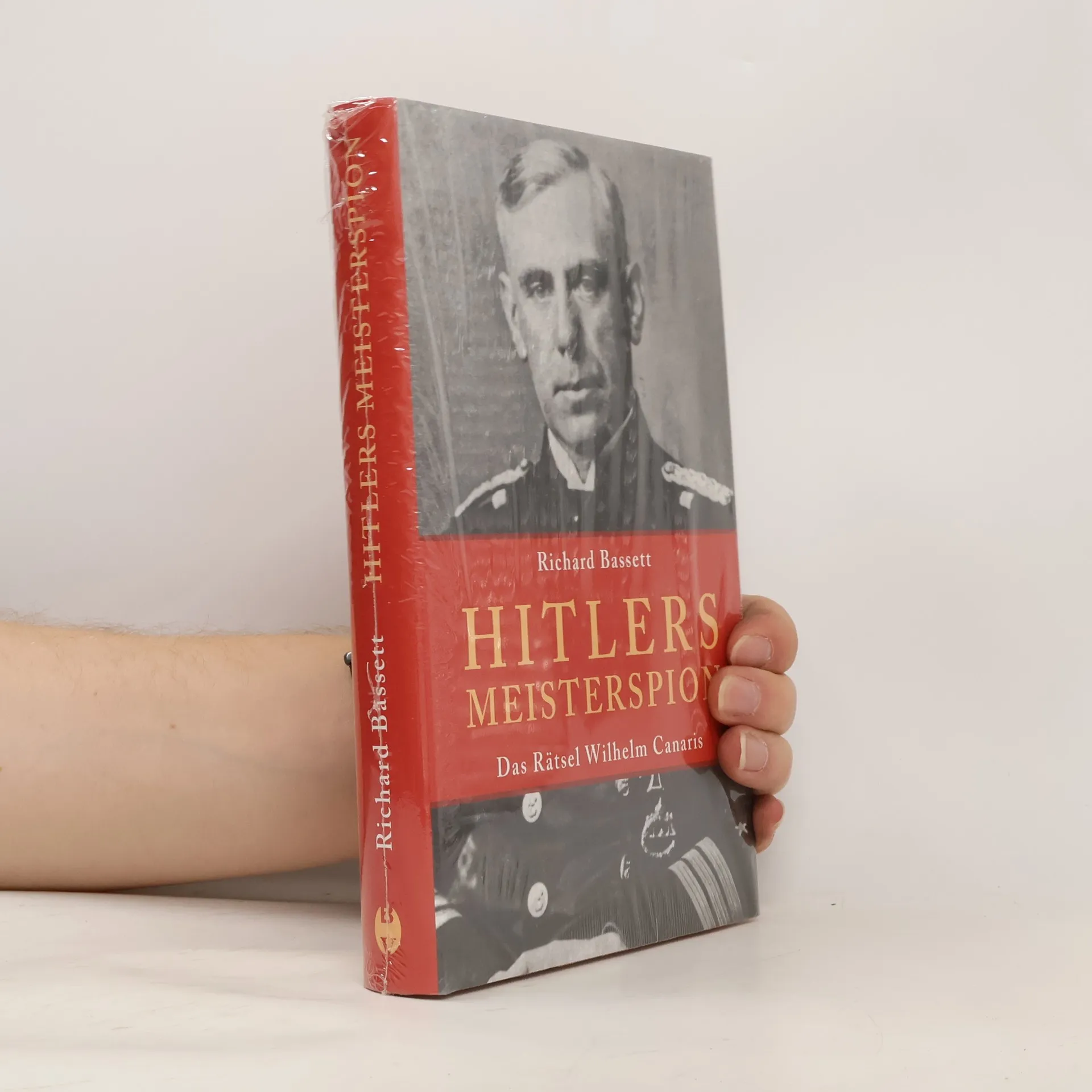
In einer faszinierenden wahren Spionagegeschichte enthüllt Richard Bassett, wie die geheimdienstliche Tätigkeit von Admiral Wilhelm Canaris den Verlauf des Zweiten Weltkriegs beeinflusste. Ina Haag, eine enge Mitarbeiterin von Canaris und letzte lebende Zeitzeugin, beschreibt in ihrem Vorwort ihre Zusammenarbeit mit dem legendären Admiral und die Aushändigung von Pässen an Pariser Juden. Canaris, Chef der deutschen Abwehr, wurde von seinen russischen Gegnern als der gefährlichste Spion der Welt angesehen, doch seine Loyalität galt einem älteren Deutschland, nicht der brutalen Herrschaft Hitlers. Nach der Verschwörung vom 20. Juli 1944 wurde er verhaftet und in den letzten Kriegswochen hingerichtet. Sein tatsächliches Engagement im Attentat auf Hitler blieb unklar; es wird vermutet, dass er zuvor mehrfach Versuche zur Beseitigung Hitlers koordiniert und einen Kompromissfrieden mit den Briten angestrebt hatte. Bassett beleuchtet auch Canaris’ Beziehung zu Großbritannien, die Beweggründe Chamberlains für seinen Flug zu Hitler 1938 und die Münchner Krise als tragisches Kapitel der Diplomatie. Zudem wird das Verhältnis zwischen Stalin und Hitler Ende 1943 eingehend analysiert. Der Autor zeigt die komplexen Spionagedynamiken innerhalb Deutschlands sowie internationale Kontakte auf und untersucht die Widersprüche und die Komplexität von Canaris’ Charakter.

