

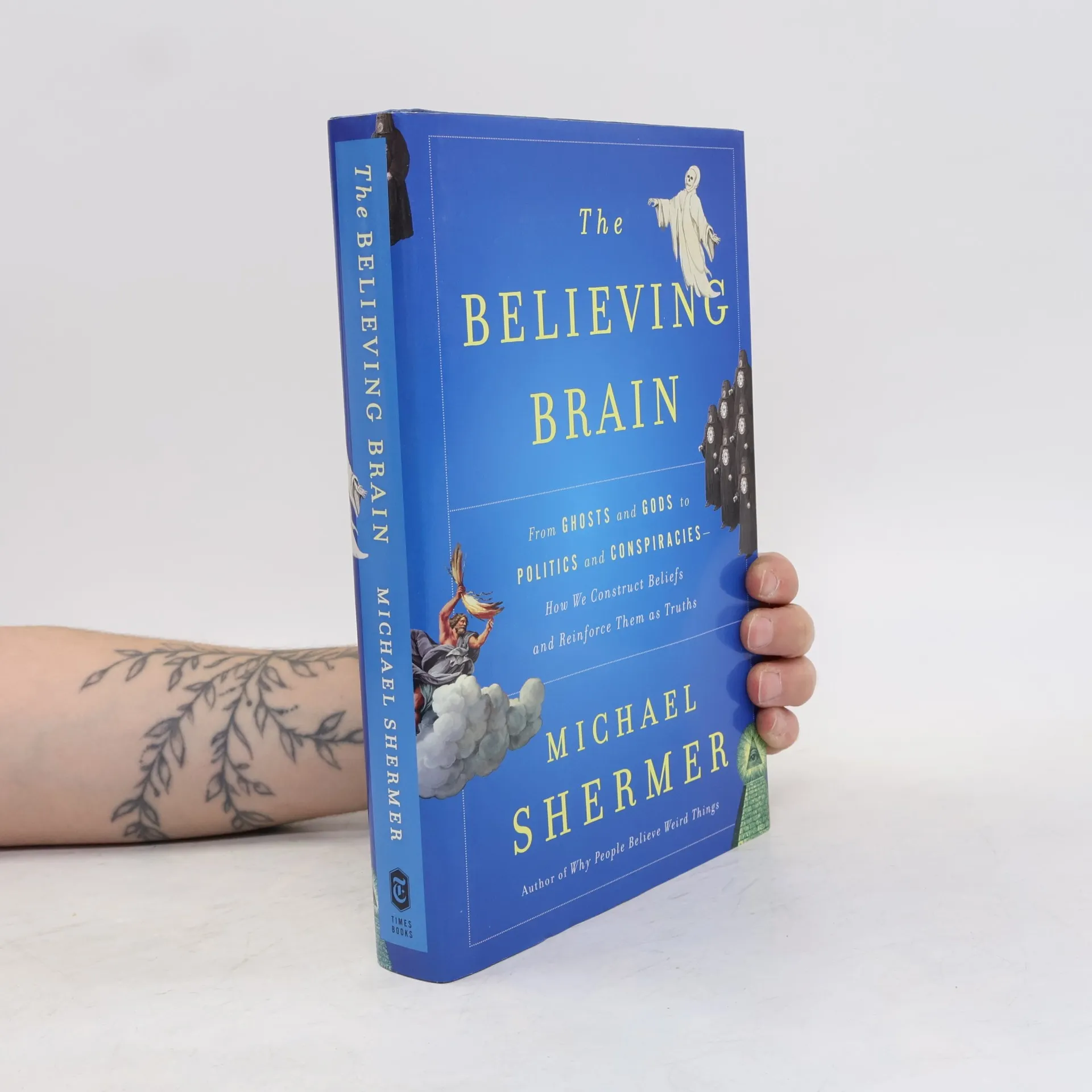


The Believing Brain
From Ghosts and Gods to Politics and Conspiracies How We Construct Beliefs and Reinforce Them as Truths
Autori
Hodnotenie knihy
Viac o knihe
In this comprehensive and provocative work, bestselling author Michael Shermer explores how beliefs are born, formed, reinforced, challenged, changed, and extinguished. Drawing on thirty years of research, Shermer, a psychologist and historian of science, challenges traditional views on belief formation. He posits that beliefs come first, with explanations following. The brain acts as a belief engine, processing sensory data to identify patterns and infusing them with meaning. These patterns evolve into beliefs, which the brain then seeks to confirm, creating a positive-feedback loop that reinforces them. Shermer details the cognitive tools our brains use to treat these beliefs as truths. Throughout the narrative, he offers numerous real-world examples from various domains, including politics, economics, religion, conspiracy theories, the supernatural, and the paranormal. Ultimately, he argues that science is the most effective means of assessing whether a belief aligns with reality.
Nákup knihy
The Believing Brain, Michael Shermer
- Jazyk

- Rok vydania
- 2011
- Väzba
- (pevná),
- Stav knihy
- Dobrá
- Cena
- 5,69 €
Tu nám chýba tvoja recenzia
- Titul
- The Believing Brain
- Podtitul
- From Ghosts and Gods to Politics and Conspiracies How We Construct Beliefs and Reinforce Them as Truths
- Jazyk
- anglicky
- Autori
- Michael Shermer
- Vydavateľ
- Times Books
- Rok vydania
- 2011
- Väzba
- pevná
- Počet strán
- 400
- ISBN10
- 0805091254
- ISBN13
- 9780805091250
- Série
- Štítky
- Náboženské témy, Veda, USA, Neuroveda, Skepticizmus
- Hodnotenie
- 3,9 z 5
- Anotácia
- In this comprehensive and provocative work, bestselling author Michael Shermer explores how beliefs are born, formed, reinforced, challenged, changed, and extinguished. Drawing on thirty years of research, Shermer, a psychologist and historian of science, challenges traditional views on belief formation. He posits that beliefs come first, with explanations following. The brain acts as a belief engine, processing sensory data to identify patterns and infusing them with meaning. These patterns evolve into beliefs, which the brain then seeks to confirm, creating a positive-feedback loop that reinforces them. Shermer details the cognitive tools our brains use to treat these beliefs as truths. Throughout the narrative, he offers numerous real-world examples from various domains, including politics, economics, religion, conspiracy theories, the supernatural, and the paranormal. Ultimately, he argues that science is the most effective means of assessing whether a belief aligns with reality.