





Viac o knihe
Historical folklore indicates that Asklepios (circa 900 BC), the fir t western doctor of ancient Greece, treated many patients with rheumatic diseases of 1 joints,2. Later, Hippocrates (circa 400 BC), who claimed to have learned from Asklepios, used the term arthritis in reference to joint diseases: "When the disease of arthritis strikes, acute inflammation and pain attacks the joints of the body ... ." Indeed, arthritic joint disease dates much farther back into antiquity than Asklepios. Many modern anthropologists have noted degenerative joint disease in the fossils of Neanderthal man (archanthropus europeus petraloniensis) and even in those of dinosaurs. More recent scientific studies on joints date back to the work of the great English anatomist Hunter who wrote "The Structure and Diseases of Articular Cartilage" in the Philosophical Transactions of London in 1743. The notion that osteoarthritis results from the wearing away of cartilage was copiously documented by the histological observations of the German physician Ecker in 1843. This idea was further supported by Pommer (1927) who felt that mechanical stresses played important roles in the initiation and propagation of cartilage lesions leading to osteoarthritis. This same conclusion was reached by the assembled distinguished experts at a National Institutes of Health Workshop 3 held in 1986 .
Nákup knihy
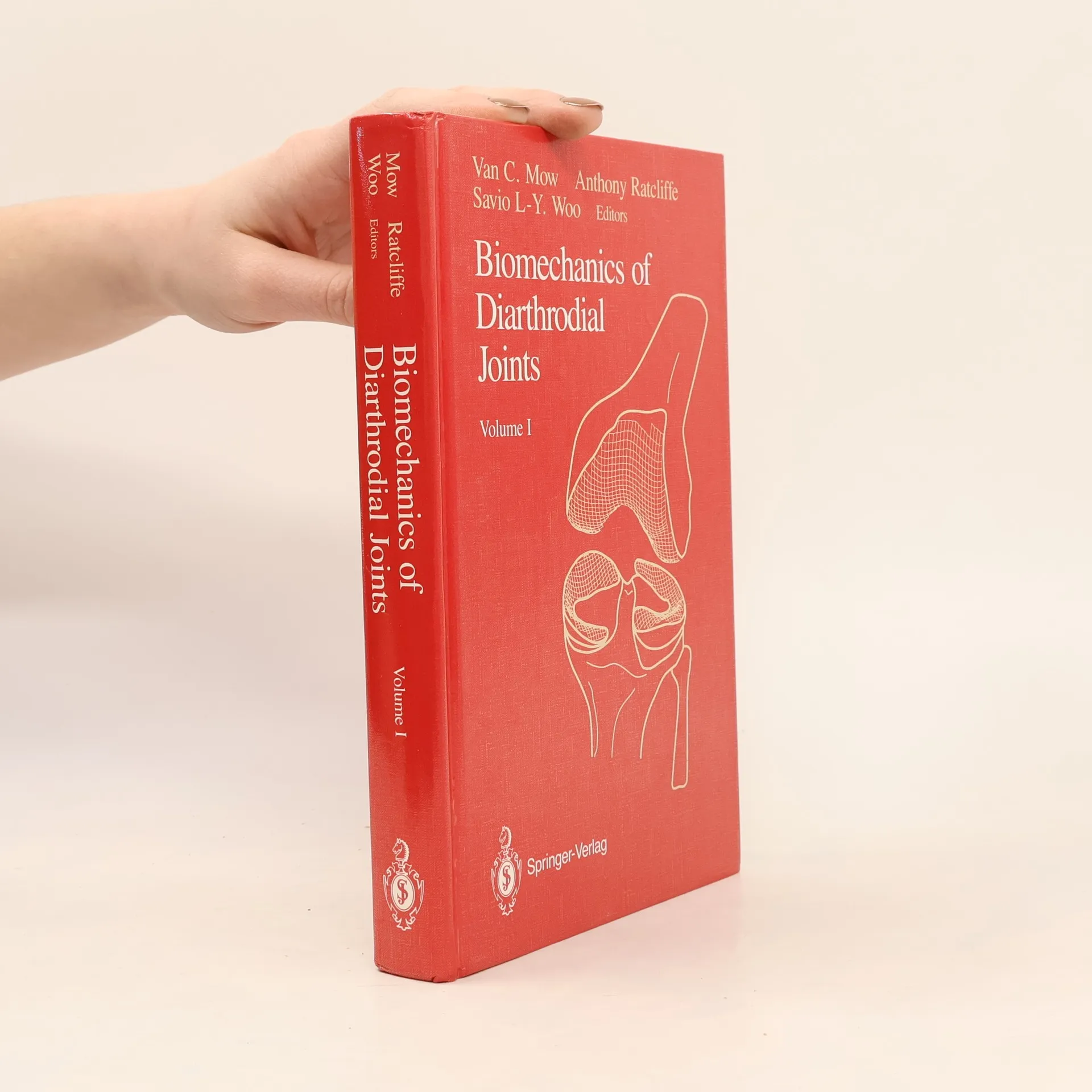
Biomechanics of Diarthrodial Joints, Van C. Mow, Anthony Ratcliffe, Savio L-Y. Woo
- Jazyk

- Rok vydania
- 1990
- product-detail.submit-box.info.binding
- (mäkká),
- Stav knihy
- Poškodená
- Cena
- 5,44 €
Platobné metódy
Nikto zatiaľ neohodnotil.
- Jazyk
- anglicky
- Vydavateľ
- Springer Verlag
- Rok vydania
- 1990
- Väzba
- mäkká
- Počet strán
- 451
- ISBN10
- 0387973788
- ISBN13
- 9780387973784
- Série
- Štítky
- Náučná literatúra, USA, Technológia, Medicína, Odborná literatúra, Knihy, Strojárstvo, Chirurgia, Humanitné vedy, Biotechnológia, Ortopédia, Biomechanika
- Anotácia
- Historical folklore indicates that Asklepios (circa 900 BC), the fir t western doctor of ancient Greece, treated many patients with rheumatic diseases of 1 joints,2. Later, Hippocrates (circa 400 BC), who claimed to have learned from Asklepios, used the term arthritis in reference to joint diseases: "When the disease of arthritis strikes, acute inflammation and pain attacks the joints of the body ... ." Indeed, arthritic joint disease dates much farther back into antiquity than Asklepios. Many modern anthropologists have noted degenerative joint disease in the fossils of Neanderthal man (archanthropus europeus petraloniensis) and even in those of dinosaurs. More recent scientific studies on joints date back to the work of the great English anatomist Hunter who wrote "The Structure and Diseases of Articular Cartilage" in the Philosophical Transactions of London in 1743. The notion that osteoarthritis results from the wearing away of cartilage was copiously documented by the histological observations of the German physician Ecker in 1843. This idea was further supported by Pommer (1927) who felt that mechanical stresses played important roles in the initiation and propagation of cartilage lesions leading to osteoarthritis. This same conclusion was reached by the assembled distinguished experts at a National Institutes of Health Workshop 3 held in 1986 .