Bookbot

Franco Moretti

    1. január 1950

    Franco Moretti je taliansky literárny vedec, ktorý sa zameriava na históriu románu ako „planetárnej formy“. Jeho práca sa vyznačuje inovatívnym prístupom, ktorý do humanitných vied začleňuje kvantitatívne metódy zo spoločenských vied, čím spochybňuje tradičné prístupy k štúdiu literatúry. Morettiho výskum formuje pochopenie románu v globálnom kontexte a skúma jeho vývoj a dopad naprieč kultúrami a časmi.

    Franco Moretti
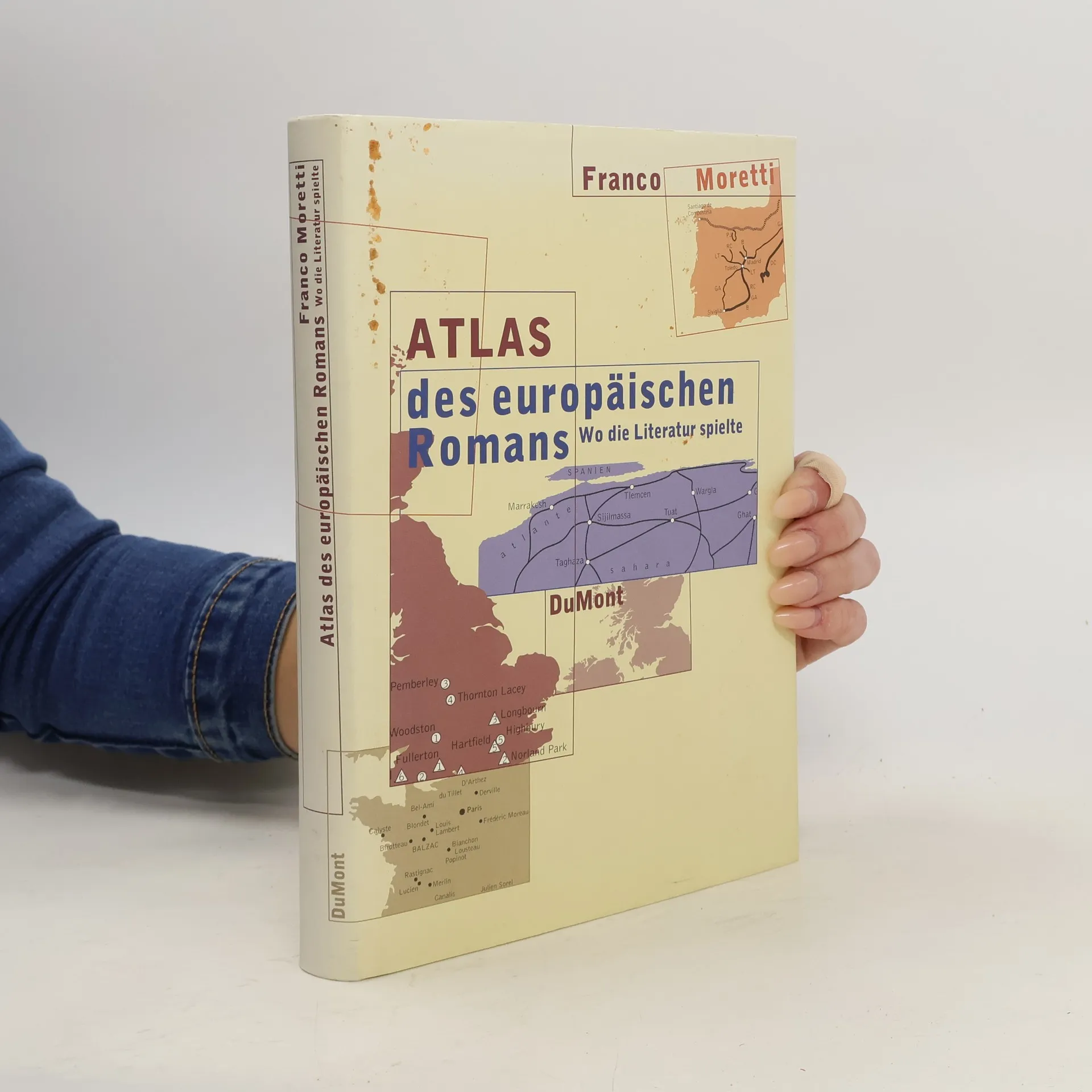
    Atlas of the European Novel
    Modern Epic
    The Way of the World
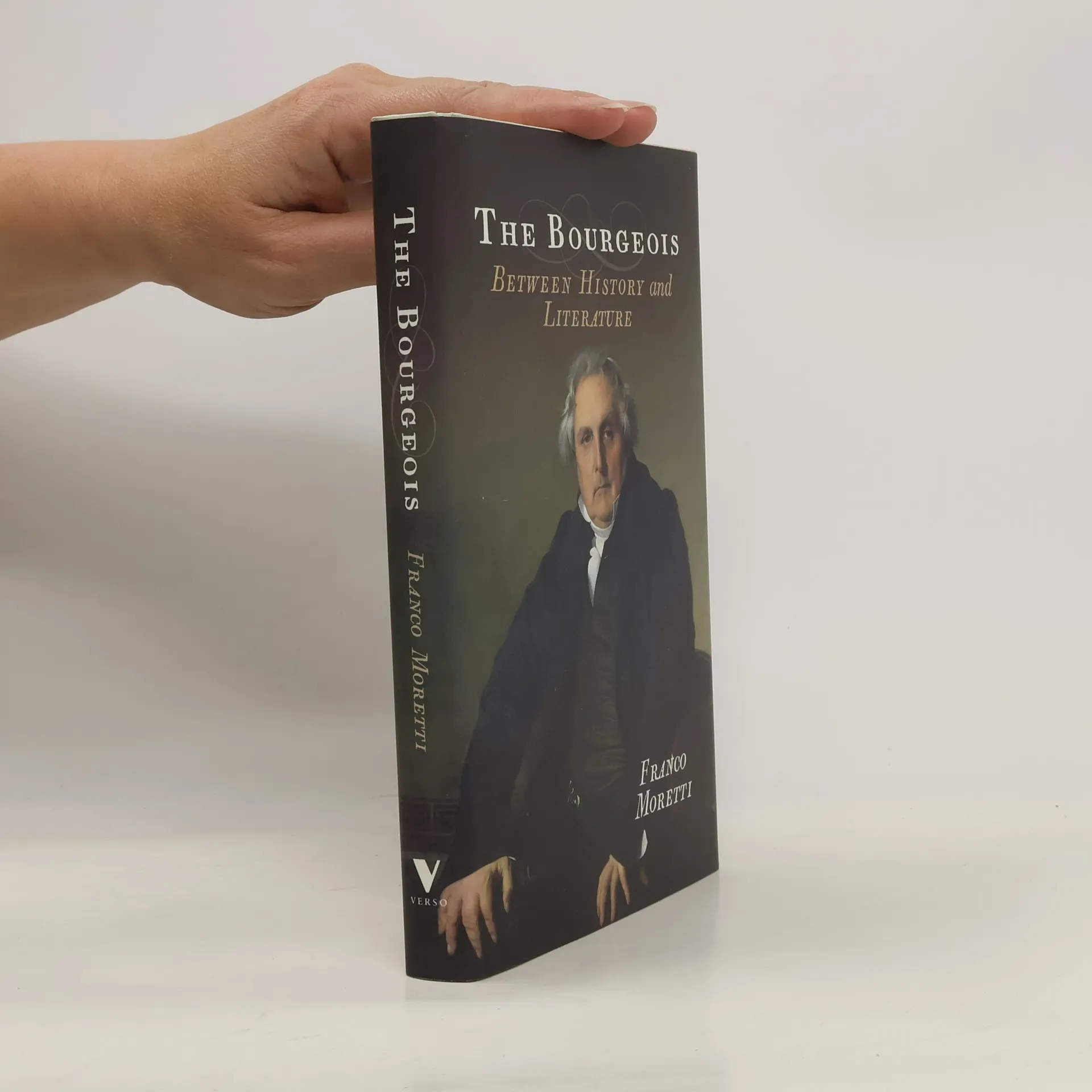
    The Bourgeois: Between History and Literature
    The Bourgeois
    Kurven, Karten, Stammbäume
    • 2025

      Experimental Criticism

      Franco Moretti and Literature

      • 272 stránok
      • 10 hodin čítania

      Exploring the innovative ideas of Franco Moretti, this guide delves into his unique approach to literary criticism, emphasizing the importance of quantitative analysis in understanding literature. It highlights his concepts of "distant reading" and the role of graphs and maps in literary studies, offering fresh perspectives on texts and their cultural contexts. Readers will gain insight into how Moretti's methods challenge traditional close reading and encourage a broader understanding of literary phenomena across different periods and genres.

      Experimental Criticism
    • 2022

      Falsche Bewegung

      Die digitale Wende in den Literatur- und Kulturwissenschaften

      Falsche Bewegung
    • 2020
    • 2019

      Pioneering literary theorist takes cultural history out of the classroom and into the world.

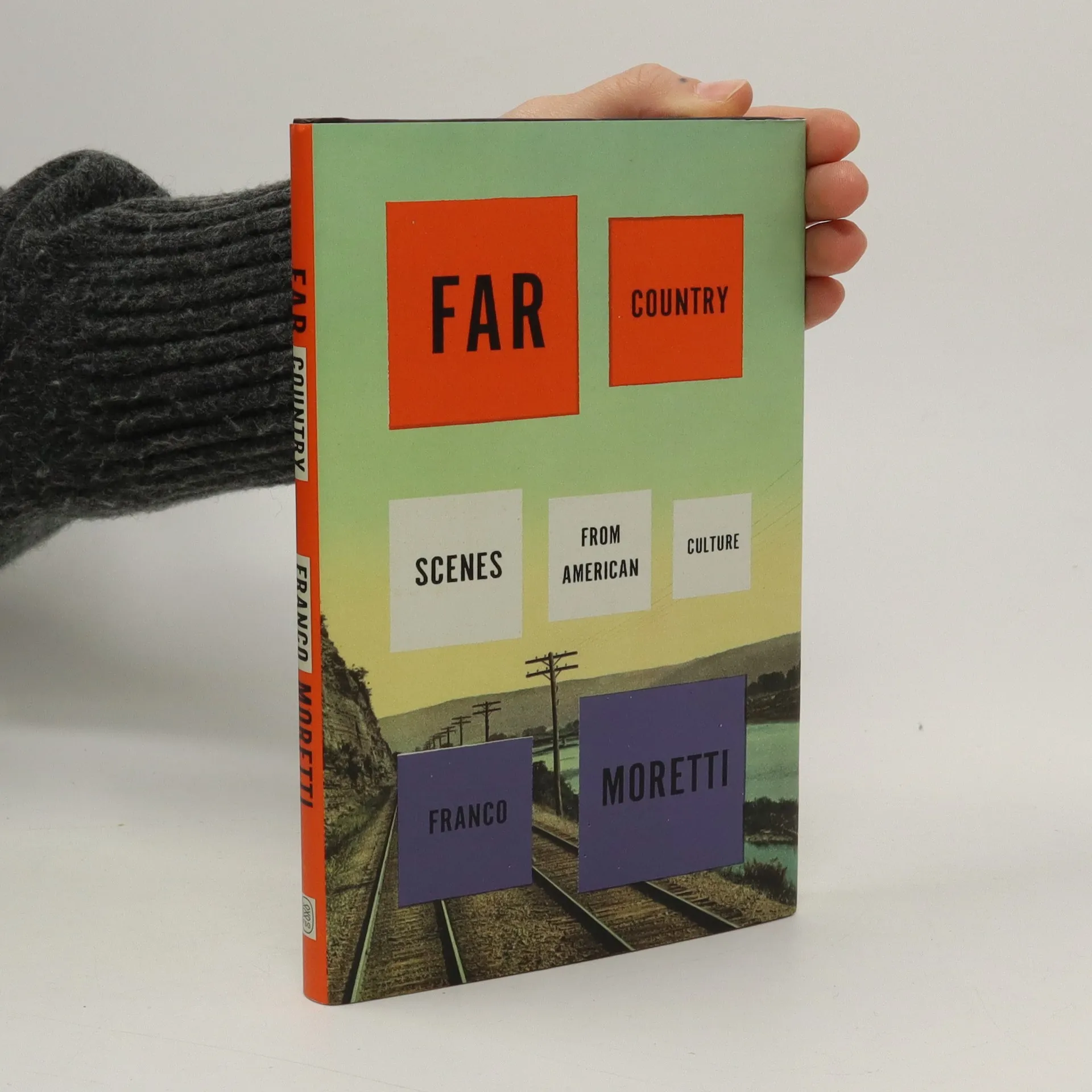
      Far Country
    • 2019

      Far country : scenes from American culture

      • 144 stránok
      • 6 hodin čítania
      3,8(37)Ohodnotiť

      The influential and controversial critic takes literary history out of the classroom and into the publicIn the field of literary history and theory, Franco Moretti is synonymous with innovation. The cofounder of the Stanford Literary Lab, he brought quantitative methods into the study of the novel, enabling a “distant” reading that uses computation to analyze literary production over centuries. But at the same time, he was also teaching undergraduates the history of literature. Knowing Moretti, it’s no surprise that he didn’t teach the course the accepted one author after another, in a long uninterrupted chain. Instead, he put an irregular chessboard in front of his students that was too strange to be taken for granted. Literary history had become a problem, and he offered a solution.In Far Country, Moretti take these lectures out of the classroom and lets us share in the passion and excitement that comes from radical critique. Unconstrained by genre, Moretti juxtaposes Whitman and Baudelaire, the Western and film noir, even Rembrandt and Warhol, illuminating each through their opposition. With his guidance, we revel in the process of transformation―the earthquakes that shook the “how” of artistic form―and begin to shape a new view on American culture.Bracing in its insight and provocative in its conclusions, Far Country is a critical look at the development of American cultural hegemony.

      Far country : scenes from American culture
    • 2017

      Es ist faszinierend, wie eine Reihe quantitativer Messungen in einen Dialog mit Begriffen tritt und diese allmählich verändert. Allmählich. Vergessen Sie den Hype um die Computerisierung, die angeblich alles schneller macht. Ja, Daten können mit unglaublicher Geschwindigkeit erhoben und analysiert werden; doch die Erklärung dieser Ergebnisse - es sei denn, Sie geben sich mit der erstbesten Plattitüde zufrieden, die Ihnen einfällt - ist etwas ganz anderes; hier hilft nur Geduld.

      Literatur im Labor
    • 2014

      “The bourgeois ... Not so long ago, this notion seemed indispensable to social analysis; these days, one might go years without hearing it mentioned. Capitalism is more powerful than ever, but its human embodiment seems to have vanished. ‘I am a member of the bourgeois class, feel myself to be such, and have been brought up on its opinions and ideals,’ wrote Max Weber, in 1895. Who could repeat these words today? Bourgeois ‘opinions and ideals’—what are they?” Thus begins Franco Moretti’s study of the bourgeois in modern European literature—a major new analysis of the once-dominant culture and its literary decline and fall. Moretti’s gallery of individual portraits is entwined with the analysis of specific keywords—“useful” and “earnest,” “efficiency,” “influence,” “comfort,” “roba”—and of the formal mutations of the medium of prose. From the “working master” of the opening chapter, through the seriousness of nineteenth-century novels, the conservative hegemony of Victorian Britain, the “national malformations” of the Southern and Eastern periphery, and the radical self-critique of Ibsen’s twelve-play cycle, the book charts the vicissitudes of bourgeois culture, exploring the causes for its historical weakness, and for its current irrelevance.

      The Bourgeois
    • 2014

      Der Bourgeois

      Eine Schlüsselfigur der Moderne

      Die industrielle Revolution hat keinen Stein auf dem anderen gelassen. Sie hat alle »altehrwürdigen Vorstellungen und Anschauungen« aufgelöst, alles »Ständische und Stehende verdampft, alles Heilige« entweiht, konstatieren Marx und Engels im »Kommunistischen Manifest«. Die Protagonisten dieser Umwälzung sind die Bürger, die Kaufleute und Industriekapitäne. Die Figur des Bourgeois hat nicht nur Max Weber, Werner Sombart und Joseph Schumpeter fasziniert, sie spielt auch eine Hauptrolle in den großen Werken der Weltliteratur: bei Defoe und Goethe, Balzac und Dickens, bei Thomas Mann und Henrik Ibsen. Franco Moretti rekonstruiert die Mentalität dieser Ära durch das Fenster Literatur: Warum hört Robinson Crusoe auch dann nicht auf zu arbeiten, als sein Überleben auf der paradiesischen Insel längst gesichert ist? Was verraten Ton, Schlüsselwörter und Grammatik der großen Romane des 19. Jahrhunderts über den Geist des Kapitalismus? Und was haben uns die Stücke Ibsens heute, das heißt in unseren postbürgerlichen Zeiten, noch zu sagen, in denen die Wachstumsideologie ebenso hinterfragt wird wie die Integrität von Bankern, Beratern und Analysten?

      Der Bourgeois
    • 2013
      4,1(138)Ohodnotiť

      "The bourgeois ... Not so long ago, this notion seemed indispensable to social analysis; these days, one might go years without hearing it mentioned. Capitalism is more powerful than ever, but its human embodiment seems to have vanished. 'I am a member of the bourgeois class, feel myself to be such, and have been brought up on its opinions and ideals,' wrote Max Weber, in 1895. Who could repeat these words today? Bourgeois 'opinions and ideals' -- what are they?" Thus begins Franco Moretti's study of the bourgeois in modern European literature -- a major new analysis of the once-dominant culture and its literary decline and fall. Moretti's gallery of individual portraits is entwined with the analysis of specific keywords -- "useful" and "earnest," "efficiency," "influence," "comfort," "roba"-- and of the formal mutations of the medium of prose. From the "working master" of the opening chapter, through the seriousness of nineteenth-century novels, the conservative hegemony of Victorian Britain, the "national malformations" of the Southern and Eastern periphery, and the radical self-critique of Ibsen's twelve-play cycle, the book charts the vicissitudes of bourgeois culture, exploring the causes for its historical weakness, and for its current irrelevance. -- Publisher's website.

      The Bourgeois: Between History and Literature
    • 2013

      Distant Reading

      • 224 stránok
      • 8 hodin čítania
      3,9(215)Ohodnotiť

      WINNER OF THE NATIONAL BOOK CRITICS CIRCLE AWARD How does a literary historian end up thinking in terms of z-scores, principal component analysis, and clustering coefficients? The essays in Distant Reading led to a new and often contested paradigm of literary analysis. In presenting them here Franco Moretti reconstructs his intellectual trajectory, the theoretical influences over his work, and explores the polemics that have often developed around his positions. From the evolutionary model of “Modern European Literature,” through the geo-cultural insights of “Conjectures of World Literature” and “Planet Hollywood,” to the quantitative findings of “Style, inc.” and the abstract patterns of “Network Theory, Plot Analysis,” the book follows two decades of conceptual development, organizing them around the metaphor of “distant reading,” that has come to define—well beyond the wildest expectations of its author—a growing field of unorthodox literary studies.

      Distant Reading