

A stimulating and inviting tour of modern economics centered on the story of one of its most important breakthroughs.In 1980, the twenty-four-year-old graduate student Paul Romer tackled one of the oldest puzzles in economics. Eight years later he solved it. This book tells the story of what has come to be called the new growth the paradox identified by Adam Smith more than two hundred years earlier, its disappearance and occasional resurfacing in the nineteenth century, the development of new technical tools in the twentieth century, and finally the student who could see further than his teachers.Fascinating in its own right, new growth theory helps to explain dominant first-mover firms like IBM or Microsoft, underscores the value of intellectual property, and provides essential advice to those concerned with the expansion of the economy. Like James Gleick's Chaos or Brian Greene's The Elegant Universe , this revealing book takes us to the frontlines of scientific research; not since Robert Heilbroner's classic work The Worldly Philosophers have we had as attractive a glimpse of the essential science of economics.
David Warsh Knihy
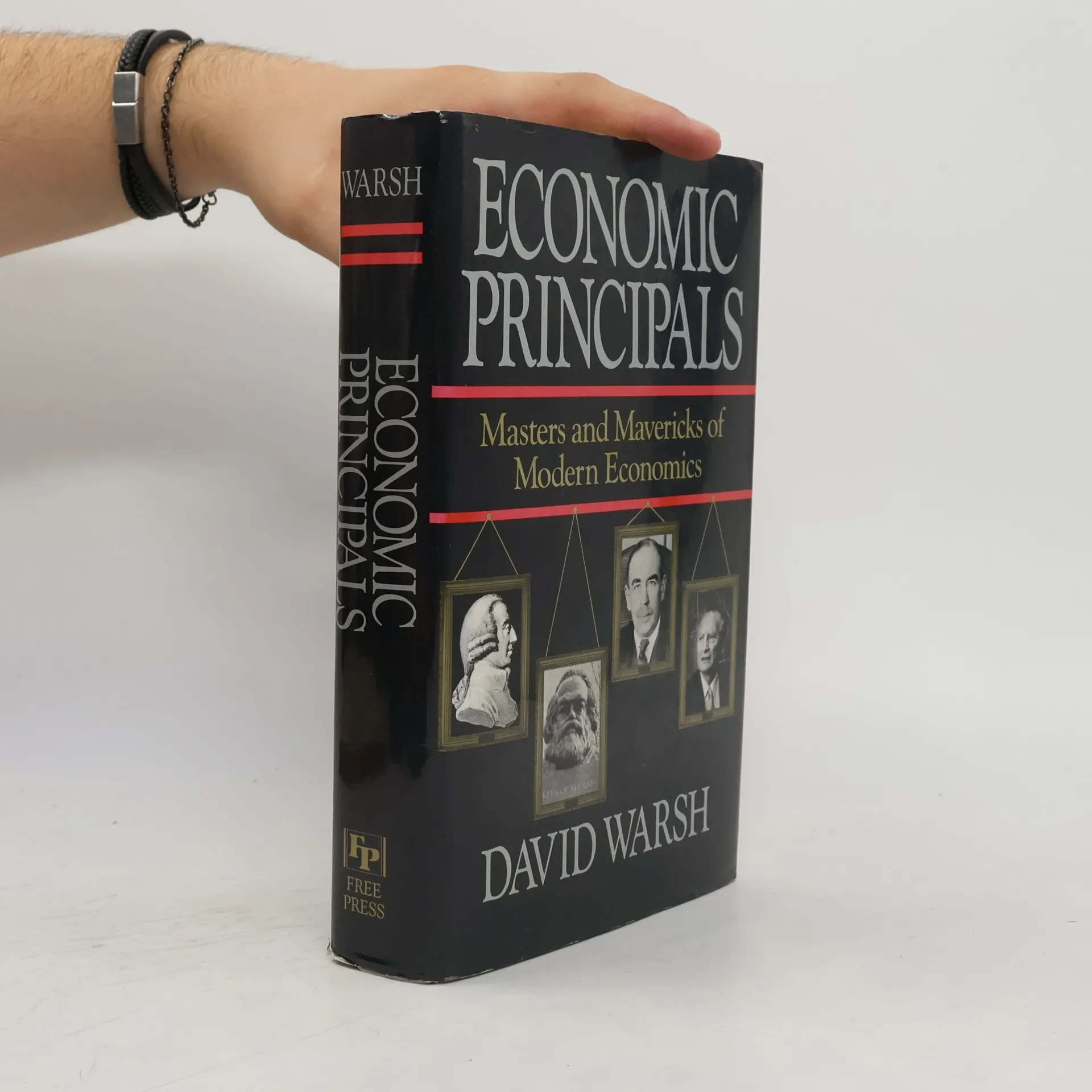

For nearly ten years, readers of the Sunday Boston Globe and other newspapers have enjoyed David Warsh's column, "Economic Principals." This collection showcases the diverse personalities in modern economics, from well-known figures to lesser-known contributors who enrich the field. It serves as both a history of economic controversies and an exploration of the discipline's evolution, highlighting the transformation from moral philosophers to today's mathematical experts, whose ideas significantly impact society. Warsh chronicles the rise of economic thought, emphasizing the rediscovery of Adam Smith and the importance of markets. He discusses the generation of economists who shaped the modern field post-World War II, including notable figures like Paul Samuelson and Milton Friedman, alongside lesser-known scholars like Trygvie Haavelmo and George Dantzig. Moving to the present, he profiles younger economists such as Jeffrey Sachs and Martin Feldstein, who dominate the field today. Warsh also examines how Wall Street's "rocket scientists" and business school innovators are redefining markets and organizations. Lastly, he introduces scholars like Jane Jacobs and critics such as Donald McCloskey and Robert Reich, who reintegrate moral philosophy into economics. Throughout, Warsh provides a detailed map of the field, demonstrating why he is regarded as one of America's most engaging economic journalists.