

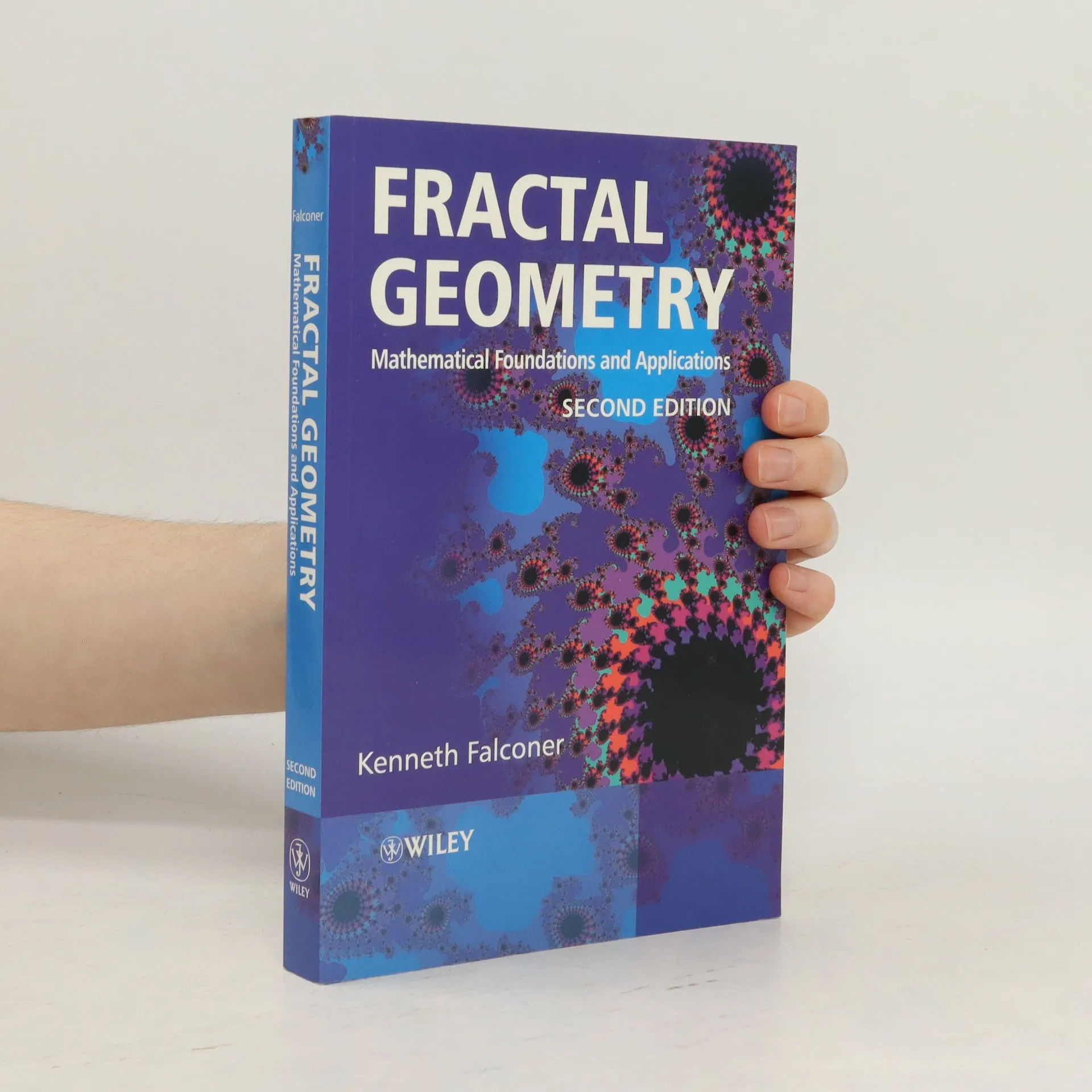
An accessible introduction to fractals, useful as a text or reference. Part I is concerned with the general theory of fractals and their geometry, covering dimensions and their methods of calculation, plus the local form of fractals and their projections and intersections. Part II contains examples of fractals drawn from a wide variety of areas of mathematics and physics, including self-similar and self-affine sets, graphs of functions, examples from number theory and pure mathematics, dynamical systems, Julia sets, random fractals and some physical applications. Also contains many diagrams and illustrative examples, and shows how to produce further drawings for themselves.
Kenneth J. Falconer Knihy
This essential discussion of the popular science and mathematics behind fractals reveals how fractal shapes can be found everywhere in nature from clouds to coastlines, and explains how basic concepts in fractal geometry produced a revolution in mathematical understandings of patterns in the 20th century.