

Parametre
- 386 stránok
- 14 hodin čítania
Viac o knihe
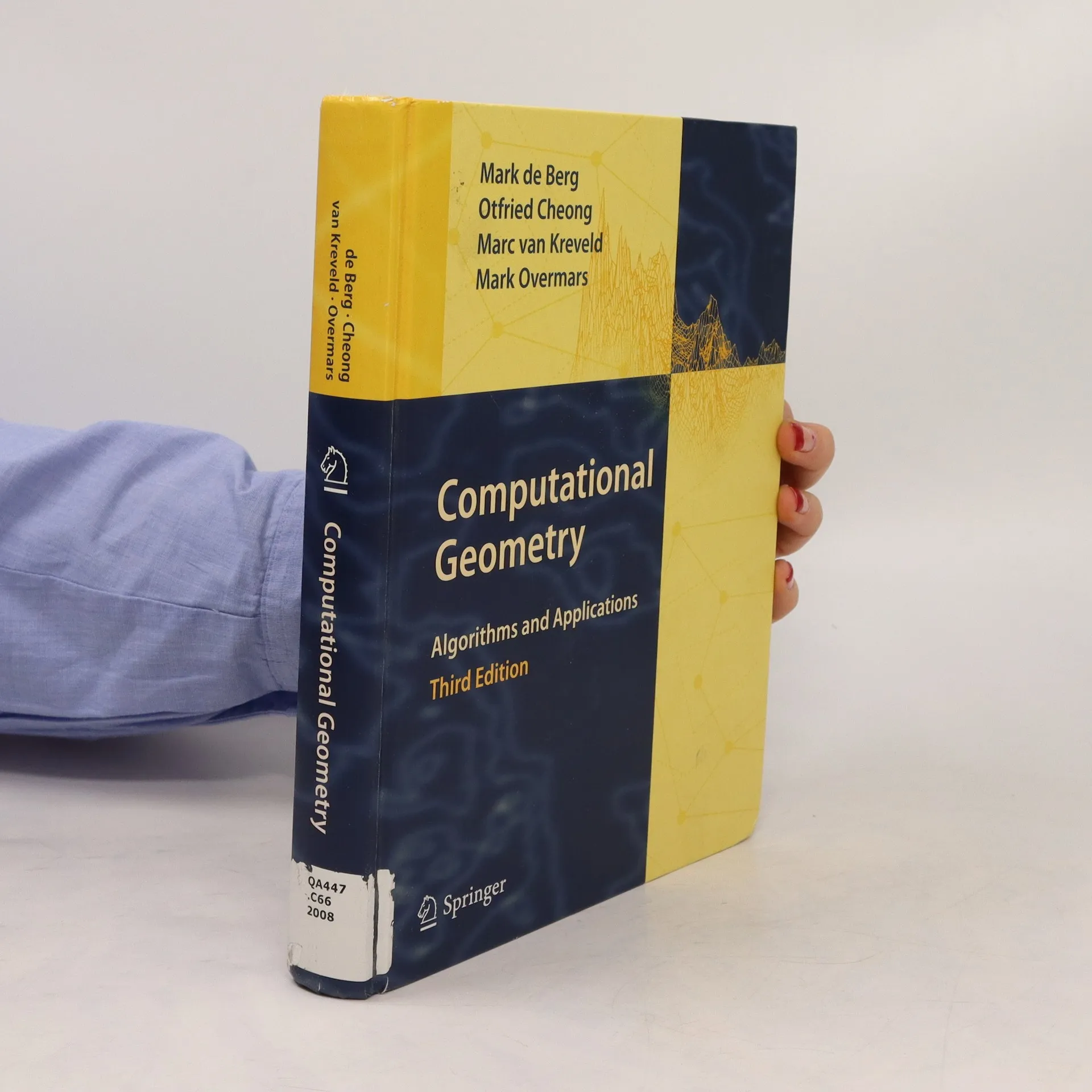
Computational geometry emerged from the ? eld of algorithms design and analysis in the late 1970s. It has grown into a recognized discipline with its own journals, conferences, and a large community of active researchers. The success of the ? eld as a research discipline can on the one hand be explained from the beauty of the problems studied and the solutions obtained, and, on the other hand, by the many application domains—computer graphics, geographic information systems (GIS), robotics, and others—in which geometric algorithms play a fundamental role. For many geometric problems the early algorithmic solutions were either slow or dif? cult to understand and implement. In recent years a number of new algorithmic techniques have been developed that improved and simpli? ed many of the previous approaches. In this textbook we have tried to make these modern algorithmic solutions accessible to a large audience. The book has been written as a textbook for a course in computational geometry, but it can also be used for self-study.


Nákup knihy
Computational geometry, Mark Theodoor de Berg
- Jazyk

- Rok vydania
- 2008
- product-detail.submit-box.info.binding
- (pevná)
Platobné metódy
Tu nám chýba tvoja recenzia
- Jazyk
- anglicky
- Autori
- Mark Theodoor de Berg
- Vydavateľ
- Springer
- Rok vydania
- 2008
- Väzba
- pevná
- Počet strán
- 386
- ISBN10
- 3540779736
- ISBN13
- 9783540779735
- Série
- Štítky
- Náučná literatúra, Učebnice, Technológie & Priemysel, Príručky a návody, Počítače & Internet, Veda, Učebnice matematiky
- Hodnotenie
- 4,1 z 5
- Anotácia
- Computational geometry emerged from the ? eld of algorithms design and analysis in the late 1970s. It has grown into a recognized discipline with its own journals, conferences, and a large community of active researchers. The success of the ? eld as a research discipline can on the one hand be explained from the beauty of the problems studied and the solutions obtained, and, on the other hand, by the many application domains—computer graphics, geographic information systems (GIS), robotics, and others—in which geometric algorithms play a fundamental role. For many geometric problems the early algorithmic solutions were either slow or dif? cult to understand and implement. In recent years a number of new algorithmic techniques have been developed that improved and simpli? ed many of the previous approaches. In this textbook we have tried to make these modern algorithmic solutions accessible to a large audience. The book has been written as a textbook for a course in computational geometry, but it can also be used for self-study.