



Viac o knihe
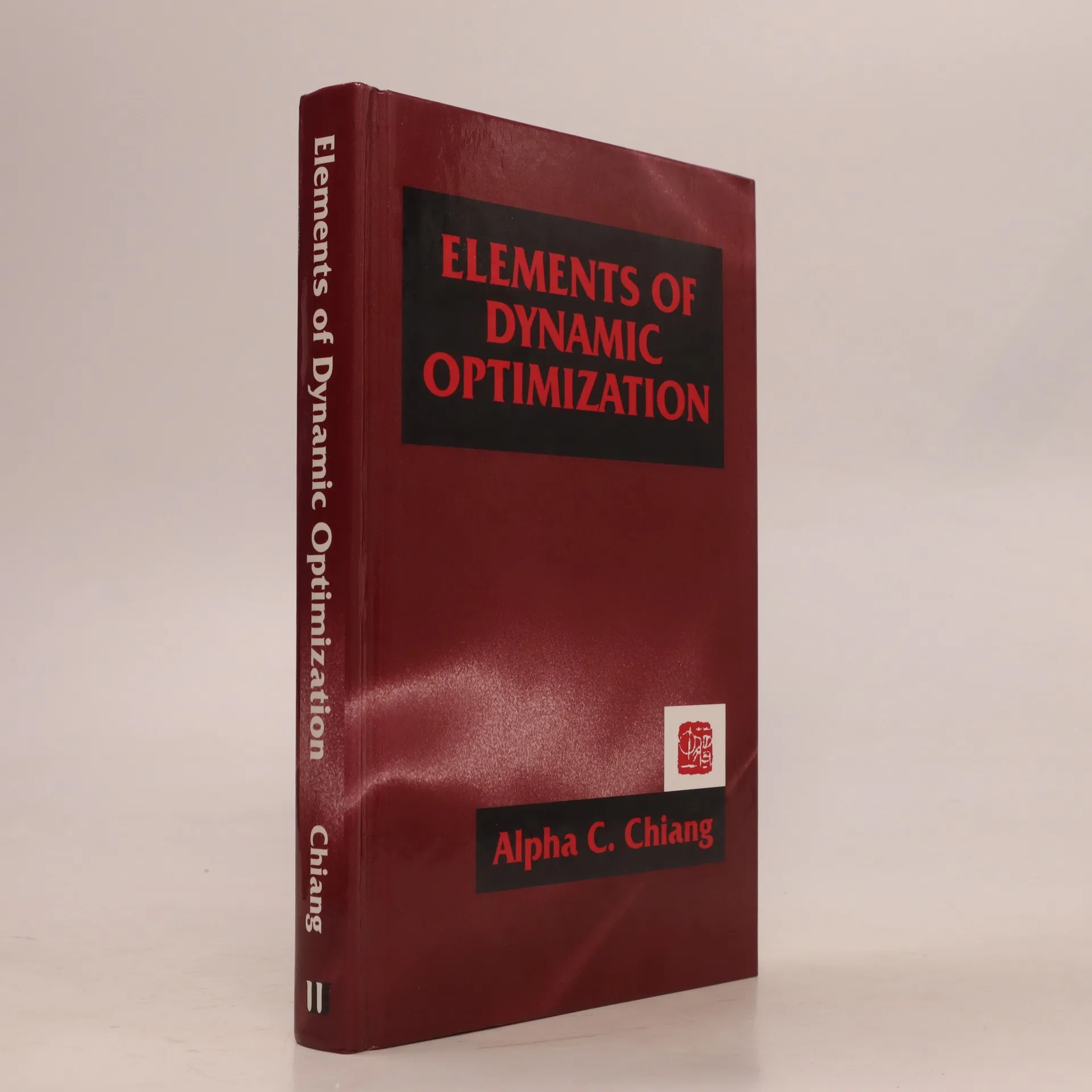
In this volume Dr. Chiang introduces readers to the most important methods of dynamic optimization used in economics. The classical calculus of variations, optimal control theory, and dynamic programming in its discrete form are explained in the usual Chiang fashion--with patience and thoroughness. The economic examples, selected from both classical and recent literature, serve not only to illustrate applications of the mathematical methods, but also to provide a useful glimpse of the development of thinking in several areas of economics. Outstanding features (1) written with clarity and a comparable level of expository patience; (2) reinforces discussions of mathematical techniques with numerical illustrations, economic examples, and exercise problems; (3) presents a simple problem with a well- known solution in several different alternative formulations in the numerical illustrations; and (4) explains economic models in a step-by-step manner (from the initial construction through the intricacies of mathematical analysis to its final solution). Titles of related interest also available from Waveland Ekelund-Hebert, A History of Economic Theory and Method, Fifth Edition (ISBN 9781577664864); and Gramlich, A Guide to Benefit-Cost Analysis, Second Edition (ISBN 9780881339888).
Nákup knihy
Elements of Dynamic Optimization, Alpha C. Chiang
- Jazyk

- Rok vydania
- 2000
- Väzba
- (pevná)
Tu nám chýba tvoja recenzia
- Titul
- Elements of Dynamic Optimization
- Jazyk
- anglicky
- Autori
- Alpha C. Chiang
- Vydavateľ
- Waveland Press
- Rok vydania
- 2000
- Väzba
- pevná
- Počet strán
- 327
- ISBN10
- 157766096X
- ISBN13
- 9781577660965
- Série
- Štítky
- Byznys
- Hodnotenie
- 4,25 z 5
- Anotácia
- In this volume Dr. Chiang introduces readers to the most important methods of dynamic optimization used in economics. The classical calculus of variations, optimal control theory, and dynamic programming in its discrete form are explained in the usual Chiang fashion--with patience and thoroughness. The economic examples, selected from both classical and recent literature, serve not only to illustrate applications of the mathematical methods, but also to provide a useful glimpse of the development of thinking in several areas of economics. Outstanding features (1) written with clarity and a comparable level of expository patience; (2) reinforces discussions of mathematical techniques with numerical illustrations, economic examples, and exercise problems; (3) presents a simple problem with a well- known solution in several different alternative formulations in the numerical illustrations; and (4) explains economic models in a step-by-step manner (from the initial construction through the intricacies of mathematical analysis to its final solution). Titles of related interest also available from Waveland Ekelund-Hebert, A History of Economic Theory and Method, Fifth Edition (ISBN 9781577664864); and Gramlich, A Guide to Benefit-Cost Analysis, Second Edition (ISBN 9780881339888).