

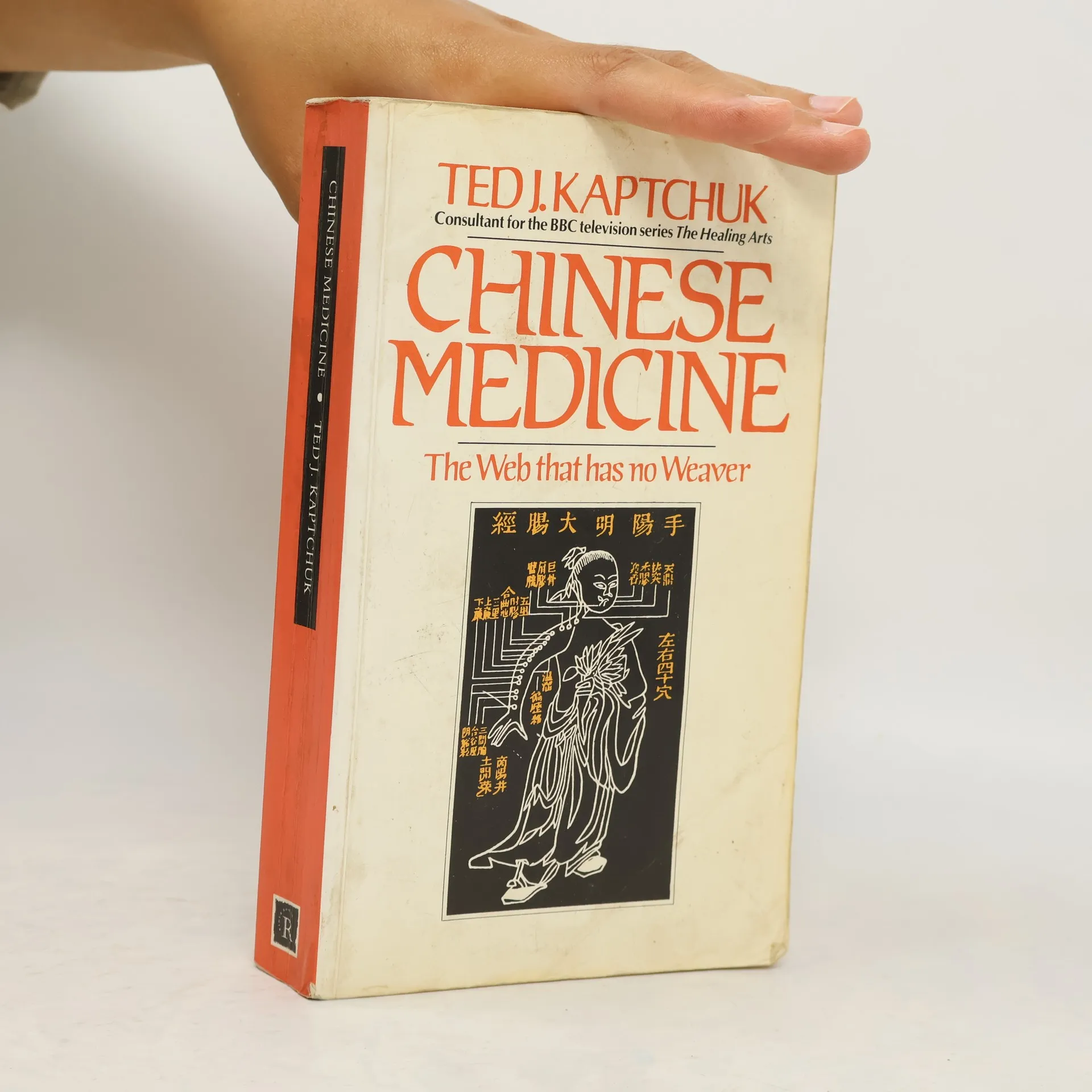
Viac o knihe
In the ancient tradition of Chinese medicine, illness is a disharmony of the whole body. The aim is to restore harmony through herbal medicine, acupuncture, moxibustion and the diagnostic skills of the physician. The governing principle is to balance Yin and Yang and to restore the interconnections between all aspects of the organism. This remarkable book explains the theory and practice of Chinese medicine. More than that, it mixes the most up-to-date knowledge of the oriental approach to healing with cutting-edge scientific research. 'While the book's rich detail makes it of great use to practising healers, it is in its entirety very simply written, enjoyable reading for the layman... An instructive, profound and important work.' Professor Martin Schwartz, University of California, Berkeley






Nákup knihy
Chinese Medicine, Ted J. Kaptchuk
- Jazyk

- Rok vydania
- 1983
- product-detail.submit-box.info.binding
- (mäkká)
Platobné metódy
Tu nám chýba tvoja recenzia
- Titul
- Chinese Medicine
- Podtitul
- The Web that Has No Weaver
- Jazyk
- anglicky
- Autori
- Ted J. Kaptchuk
- Vydavateľ
- Random House (UK)
- Rok vydania
- 1983
- Väzba
- mäkká
- ISBN10
- 071261172X
- ISBN13
- 9780712611725
- Série
- Štítky
- Náučná literatúra, Zdravie & Lekárstvo, Medicína, Spiritualita, Veda, Zdravie, Medicína, Alternatívna medicína, Čína, Čínska medicína
- Pôvodný názov
- The web that has no weaver
- Hodnotenie
- 4,2 z 5
- Anotácia
- In the ancient tradition of Chinese medicine, illness is a disharmony of the whole body. The aim is to restore harmony through herbal medicine, acupuncture, moxibustion and the diagnostic skills of the physician. The governing principle is to balance Yin and Yang and to restore the interconnections between all aspects of the organism. This remarkable book explains the theory and practice of Chinese medicine. More than that, it mixes the most up-to-date knowledge of the oriental approach to healing with cutting-edge scientific research. 'While the book's rich detail makes it of great use to practising healers, it is in its entirety very simply written, enjoyable reading for the layman... An instructive, profound and important work.' Professor Martin Schwartz, University of California, Berkeley