

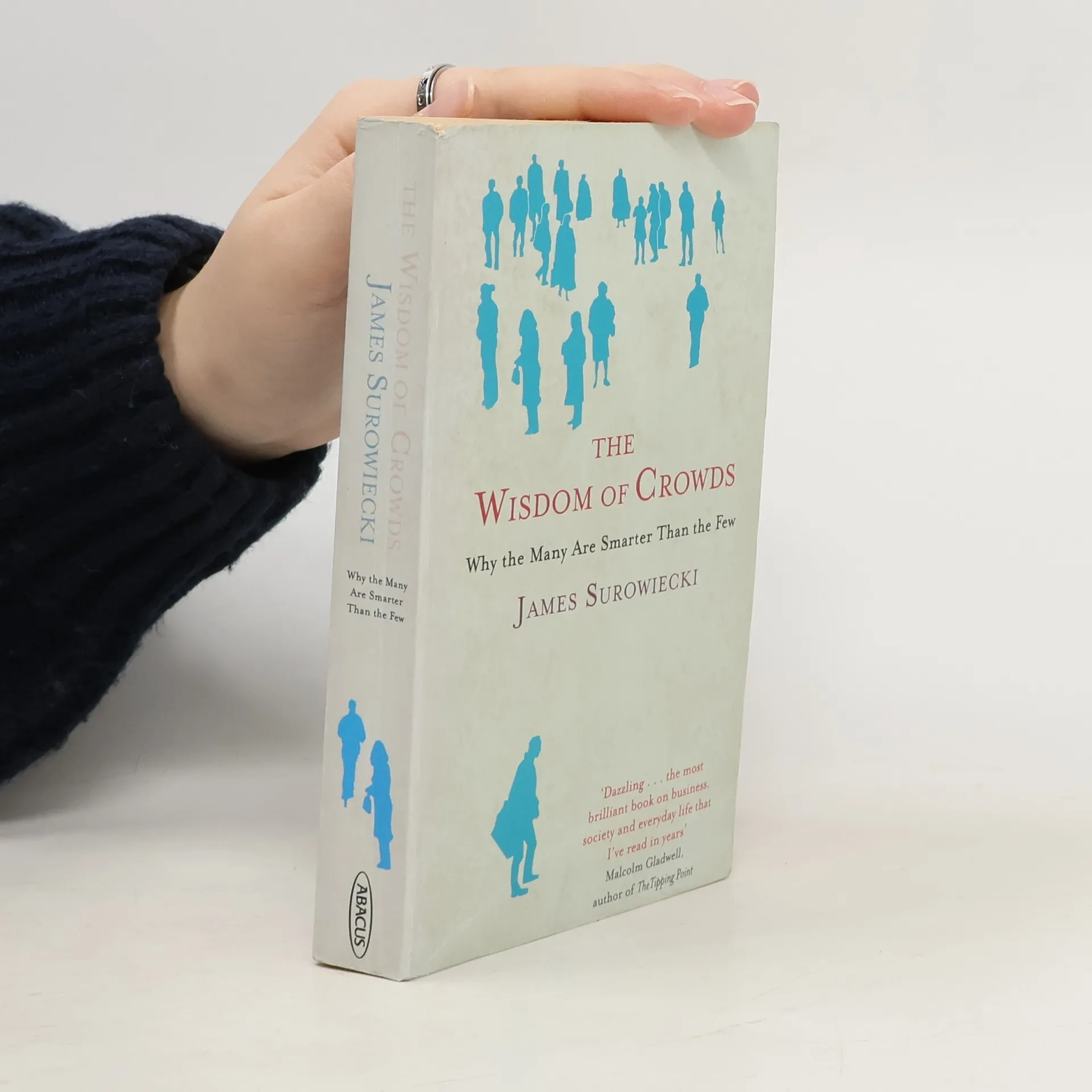


Viac o knihe
In this landmark work, NEW YORKER columnist James Surowiecki explores a seemingly counter-intuitive idea that has profound implications: Decisions take by a large group, even if the individuals within the group aren't smart, are always better than decisions made by small numbers of 'experts'. This seemingly simply notion has endless and major ramifications for how businesses operate, how knowledge is advanced, how economies are (or should be) organised and how nation-states fare. With great erudition, Surowiecki ranges across the disciplines of psychology, economics, statistics and history to show just how this principle operates in the real world. Along the way Surowiecki asks a number of intriguing questions about a subject few of us actually understand - economics. What are prices? How does money work? Why do we have corporations? Does advertising work? His answers, rendered in a delightfully clear prose, demystify daunting prospects. As Surowiecki writes: 'The hero of this book is, in a curious sense, an idea, a hero whose story ends up shedding dramatic new light on the landscapes of business, politics and society'.



Nákup knihy
Wisdom of Crowds, James Surowiecki
- Jazyk

- Rok vydania
- 2005
- Väzba
- (mäkká)
Platobné metódy
Tu nám chýba tvoja recenzia
- Titul
- Wisdom of Crowds
- Jazyk
- anglicky
- Autori
- James Surowiecki
- Vydavateľ
- Non Basic Stock Line
- Rok vydania
- 2005
- Väzba
- mäkká
- Počet strán
- 400
- ISBN10
- 0349117071
- ISBN13
- 9780349117072
- Série
- Štítky
- Náučná literatúra, Spoločenské vedy, Byznys, Biznis & Manažment, Politológia & Politika, Psychologická tematika, Psychológia, Politika, Veda, Ekonómia, Sociológia, Darčeky pre dedka, Štatistika
- Hodnotenie
- 3,8 z 5
- Anotácia
- In this landmark work, NEW YORKER columnist James Surowiecki explores a seemingly counter-intuitive idea that has profound implications: Decisions take by a large group, even if the individuals within the group aren't smart, are always better than decisions made by small numbers of 'experts'. This seemingly simply notion has endless and major ramifications for how businesses operate, how knowledge is advanced, how economies are (or should be) organised and how nation-states fare. With great erudition, Surowiecki ranges across the disciplines of psychology, economics, statistics and history to show just how this principle operates in the real world. Along the way Surowiecki asks a number of intriguing questions about a subject few of us actually understand - economics. What are prices? How does money work? Why do we have corporations? Does advertising work? His answers, rendered in a delightfully clear prose, demystify daunting prospects. As Surowiecki writes: 'The hero of this book is, in a curious sense, an idea, a hero whose story ends up shedding dramatic new light on the landscapes of business, politics and society'.