

Parametre
- 79 stránok
- 3 hodiny čítania
Viac o knihe
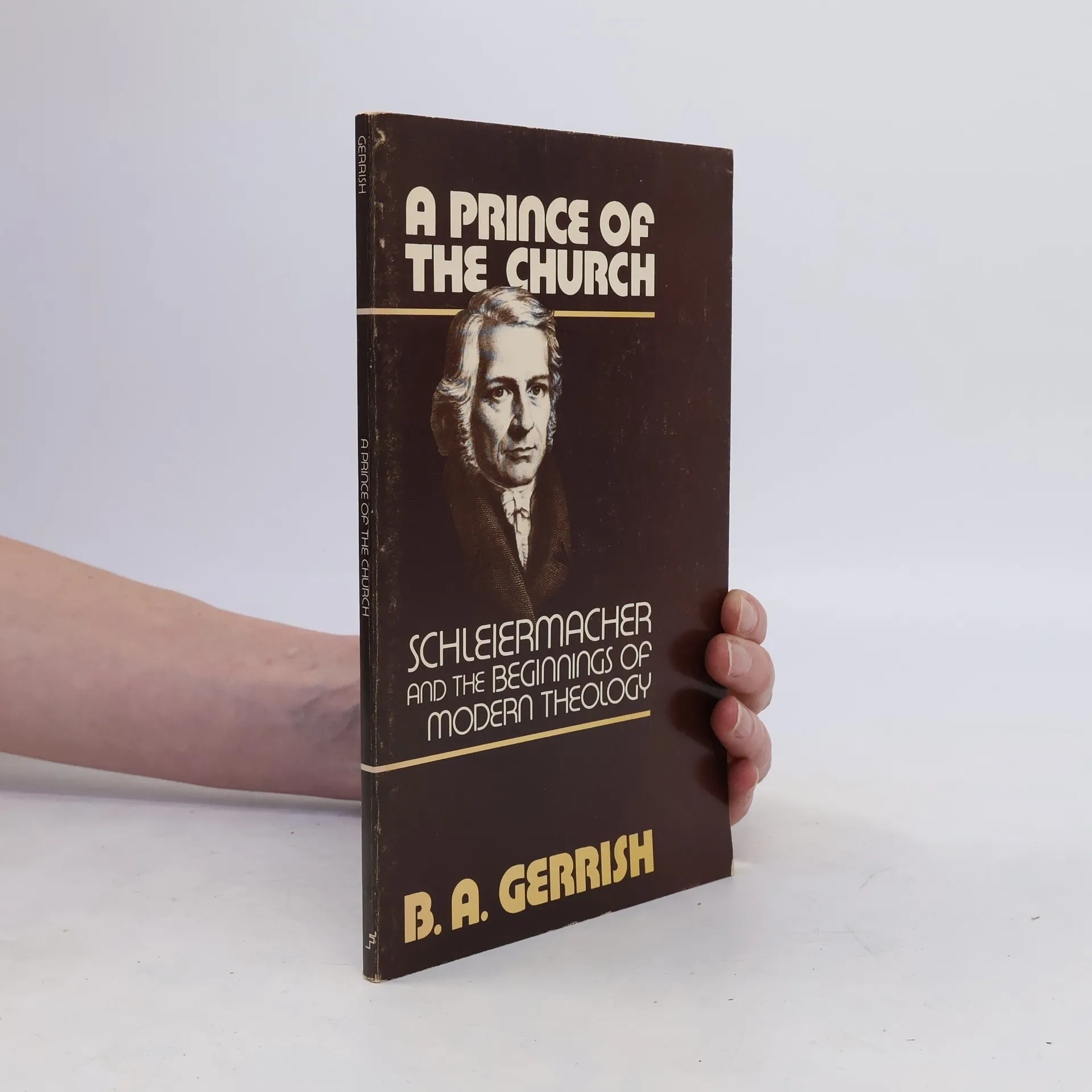
Although Friedrich Schleiermacher (1768-1834) is commonly regarded as the father of modern theology, many contemporary Christians think of him only as a difficult and outmoded German theologian. With this work, B.A. Gerrish offers a fresh view of Schleiermacher that breaks through the stereotypes and places Schleiermacher's work as a theologian into a broader context. Gerrish examines the elements of Schleiermacher's twofold theology - a specifically Christian relationship with Christ and a universally human consciousness of God - in the hope that this view of Schleiermacher's theological enterprise will lead contemporary Christians to reappraise him as a church theologian in the legitimate succession of Luther and Calvin.
Nákup knihy
A Prince of the Church, B. A. Gerrish
- Jazyk

- Rok vydania
- 1984
- product-detail.submit-box.info.binding
- (mäkká)
Platobné metódy
Tu nám chýba tvoja recenzia
- Titul
- A Prince of the Church
- Podtitul
- Schleiermacher and the Beginnings of Modern Theology
- Jazyk
- anglicky
- Autori
- B. A. Gerrish
- Vydavateľ
- Augsburg Fortress Publishing
- Rok vydania
- 1984
- Väzba
- mäkká
- Počet strán
- 79
- ISBN10
- 0800617878
- ISBN13
- 9780800617875
- Série
- Štítky
- Náučná literatúra, Historické téma, História, Skutočné príbehy, Ezoterika & Náboženstvo, Životopisy, Náboženské témy, Náboženstvo, Teológia
- Hodnotenie
- 4,4 z 5
- Anotácia
- Although Friedrich Schleiermacher (1768-1834) is commonly regarded as the father of modern theology, many contemporary Christians think of him only as a difficult and outmoded German theologian. With this work, B.A. Gerrish offers a fresh view of Schleiermacher that breaks through the stereotypes and places Schleiermacher's work as a theologian into a broader context. Gerrish examines the elements of Schleiermacher's twofold theology - a specifically Christian relationship with Christ and a universally human consciousness of God - in the hope that this view of Schleiermacher's theological enterprise will lead contemporary Christians to reappraise him as a church theologian in the legitimate succession of Luther and Calvin.