

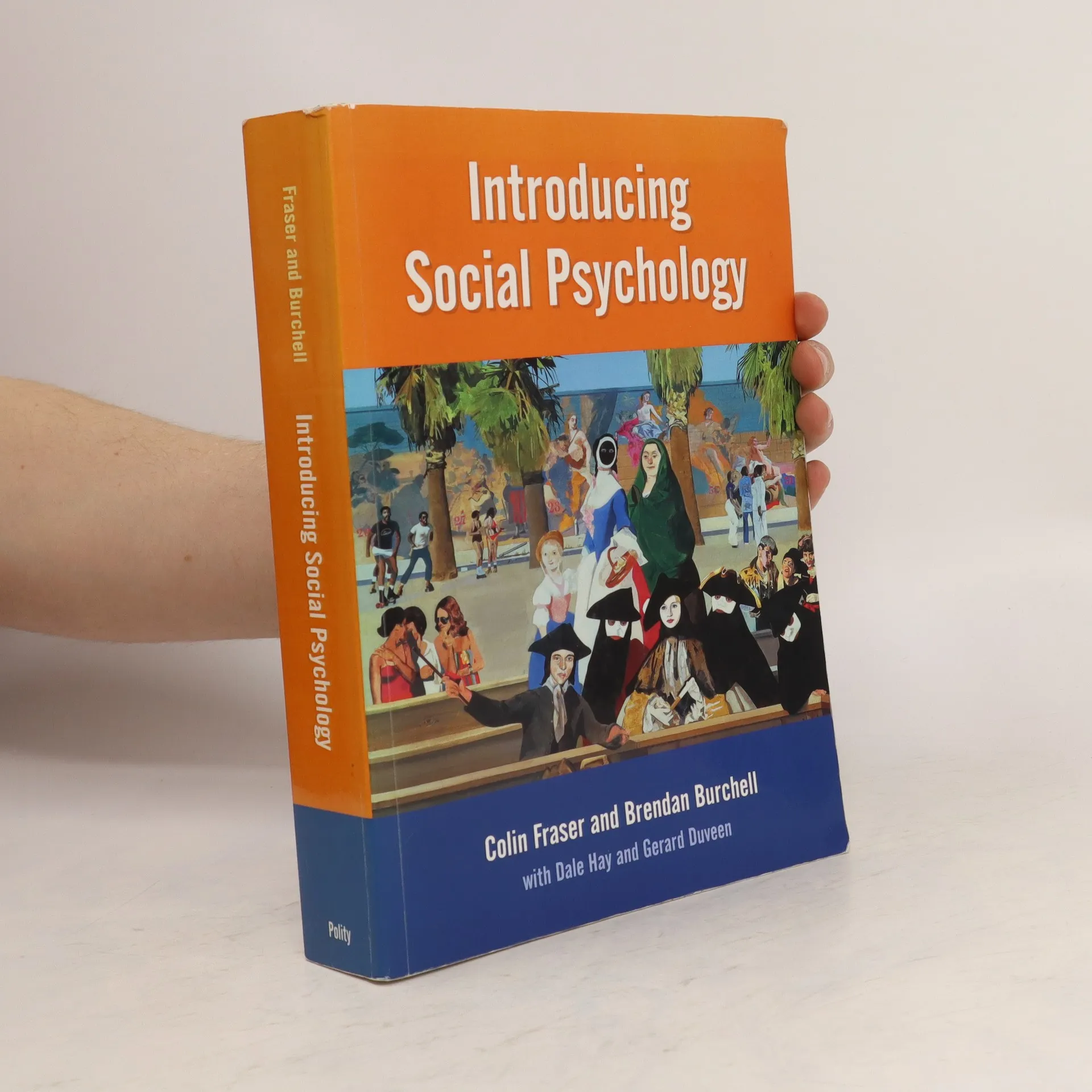


Viac o knihe
This book provides an engaging introduction to social psychology, written in a clear style that requires no prior knowledge. It serves as an ideal textbook for students, addressing key topics such as self and personality, interpersonal relations, language and communication, altruism, aggression, group processes, attitudes, and intergroup relations. Notably, it also explores less conventional subjects often overlooked in similar texts, including emotions, social and moral development, social representations, health and illness, and employment issues, highlighting their relevance to social policy. The presentation is rich and diverse, integrating a variety of methodologies and theories. While the dominant cognitive and psychological approaches are examined, the book consistently connects individual behaviors and interactions to broader social contexts. This is accomplished through cross-cultural and historical comparisons, along with insights from related social sciences. The authors aim to demonstrate that social psychology sheds light on various aspects of social life, addressing everyday challenges we all encounter.


Nákup knihy
Introducing Social Psychology, Colin Fraser, Brendan Burchell, Dale Hay, Gerard Duveen
- Jazyk

- Rok vydania
- 2001
- product-detail.submit-box.info.binding
- (mäkká)
Platobné metódy
Tu nám chýba tvoja recenzia
- Jazyk
- anglicky
- Vydavateľ
- Polity Press
- Rok vydania
- 2001
- Väzba
- mäkká
- Počet strán
- 544
- ISBN10
- 0745610943
- ISBN13
- 9780745610948
- Série
- Hodnotenie
- 3,85 z 5
- Anotácia
- This book provides an engaging introduction to social psychology, written in a clear style that requires no prior knowledge. It serves as an ideal textbook for students, addressing key topics such as self and personality, interpersonal relations, language and communication, altruism, aggression, group processes, attitudes, and intergroup relations. Notably, it also explores less conventional subjects often overlooked in similar texts, including emotions, social and moral development, social representations, health and illness, and employment issues, highlighting their relevance to social policy. The presentation is rich and diverse, integrating a variety of methodologies and theories. While the dominant cognitive and psychological approaches are examined, the book consistently connects individual behaviors and interactions to broader social contexts. This is accomplished through cross-cultural and historical comparisons, along with insights from related social sciences. The authors aim to demonstrate that social psychology sheds light on various aspects of social life, addressing everyday challenges we all encounter.