

Viac o knihe
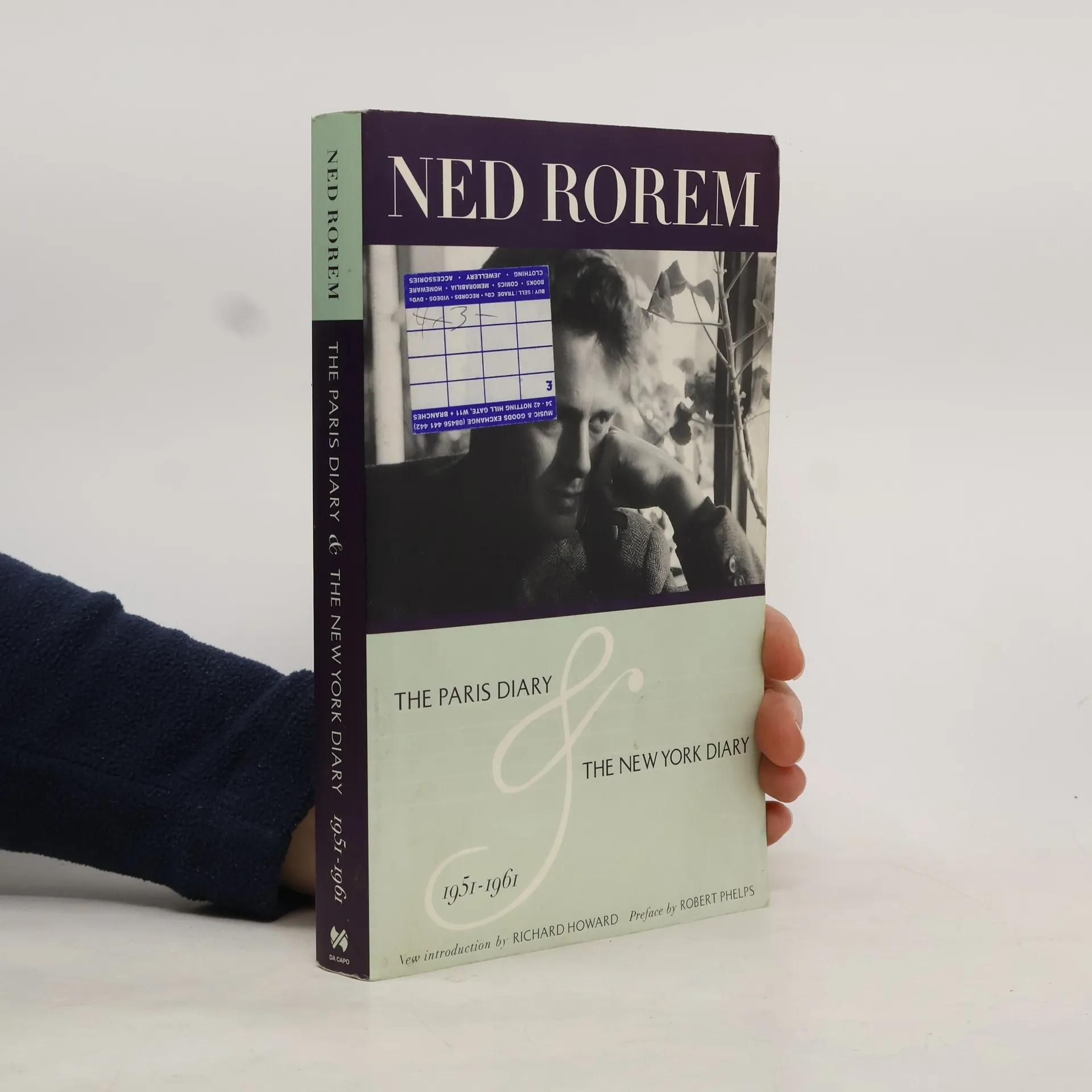
When The Paris Diary exploded on the scene in 1966 there had never been a book in English quite like it: Its intimate combination of personal, literary, and social insights was unprecedented. Rorem's self-portrait of the artist as a young man, written between 1951 and 1955, was also a mirror of the times, depicting the now vanished milieu of Cocteau, Eluard, Gide, Landowska, Boulez, the Vicomtesse de Noailles, and others whose paths crossed with Rorem's in such settings as Paris, Morocco, and Italy. The New York Diary , published the following year, pictured the period between 1956 and 1960, when Rorem had returned to America. The diaries marked the beginnings of Gay Liberation, not because Rorem made a special issue of his sexuality, but because he did not; rather, he wrote of his affairs frankly and unashamedly. A casualness informs each sensual entry, and the overall tone is at once bratty and brilliant, insecure and vain, loving and cultured, but, above all, honest and entertaining.


Nákup knihy
The Paris Diary & The New York Diary 1951-1961, Ned Rorem, Richard Howard, Robert Phelps
- Jazyk

- Rok vydania
- 1998
- Väzba
- (mäkká)
Tu nám chýba tvoja recenzia
- Titul
- The Paris Diary & The New York Diary 1951-1961
- Jazyk
- anglicky
- Autori
- Ned Rorem, Richard Howard, Robert Phelps
- Vydavateľ
- Da Capo Press
- Rok vydania
- 1998
- Väzba
- mäkká
- Počet strán
- 399
- ISBN10
- 0306808382
- ISBN13
- 9780306808388
- Série
- Štítky
- Hodnotenie
- 3,8 z 5
- Anotácia
- When The Paris Diary exploded on the scene in 1966 there had never been a book in English quite like it: Its intimate combination of personal, literary, and social insights was unprecedented. Rorem's self-portrait of the artist as a young man, written between 1951 and 1955, was also a mirror of the times, depicting the now vanished milieu of Cocteau, Eluard, Gide, Landowska, Boulez, the Vicomtesse de Noailles, and others whose paths crossed with Rorem's in such settings as Paris, Morocco, and Italy. The New York Diary , published the following year, pictured the period between 1956 and 1960, when Rorem had returned to America. The diaries marked the beginnings of Gay Liberation, not because Rorem made a special issue of his sexuality, but because he did not; rather, he wrote of his affairs frankly and unashamedly. A casualness informs each sensual entry, and the overall tone is at once bratty and brilliant, insecure and vain, loving and cultured, but, above all, honest and entertaining.