

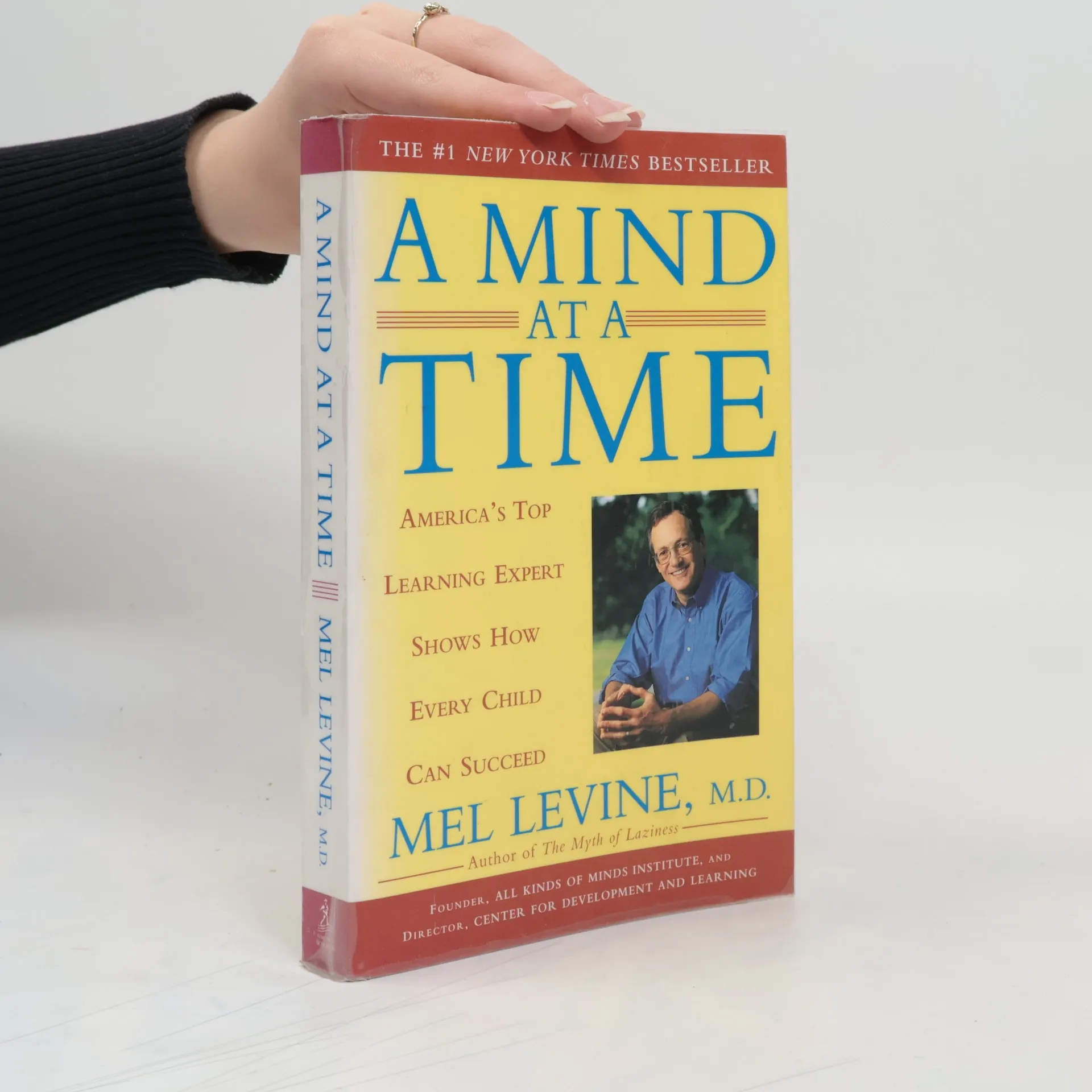
Viac o knihe
Different minds learn differently, notes Dr. Mel Levine, a prominent education expert and pediatrician. This poses a challenge for many children, as schools often adhere to a one-size-fits-all approach, leaving those whose learning patterns diverge struggling. Dr. Levine guides parents and caregivers in recognizing individual learning styles, emphasizing the importance of nurturing a child's strengths while addressing weaknesses. This tailored teaching fosters achievement rather than frustration. He identifies eight fundamental learning systems based on various neurodevelopmental capacities, noting that students excel in different areas. For instance, some may be creatively gifted yet struggle with factual retention in subjects like history due to weak memory skills. Others might have difficulty with sequential ordering, impacting their performance in mathematics. Dr. Levine asserts that these challenges stem not from a lack of intelligence but from mismatched learning styles. Drawing on extensive research and experience, he provides strategies for parents and teachers to navigate these differences. He highlights the unrealistic expectations placed on children to excel in every area, urging a shift in focus toward understanding individual learning styles. By doing so, we can enhance children's learning potential and avoid the long-term repercussions of frustration in their educational journeys.

Nákup knihy
A Mind at a Time, Melvin D. Levine
- Jazyk

- Rok vydania
- 2002
- Väzba
- (mäkká)
Tu nám chýba tvoja recenzia
- Titul
- A Mind at a Time
- Jazyk
- anglicky
- Autori
- Melvin D. Levine
- Vydavateľ
- Simon and Schuster
- Rok vydania
- 2002
- Väzba
- mäkká
- Počet strán
- 352
- ISBN10
- 0743202236
- ISBN13
- 9780743202237
- Série
- Štítky
- Hodnotenie
- 4,05 z 5
- Anotácia
- Different minds learn differently, notes Dr. Mel Levine, a prominent education expert and pediatrician. This poses a challenge for many children, as schools often adhere to a one-size-fits-all approach, leaving those whose learning patterns diverge struggling. Dr. Levine guides parents and caregivers in recognizing individual learning styles, emphasizing the importance of nurturing a child's strengths while addressing weaknesses. This tailored teaching fosters achievement rather than frustration. He identifies eight fundamental learning systems based on various neurodevelopmental capacities, noting that students excel in different areas. For instance, some may be creatively gifted yet struggle with factual retention in subjects like history due to weak memory skills. Others might have difficulty with sequential ordering, impacting their performance in mathematics. Dr. Levine asserts that these challenges stem not from a lack of intelligence but from mismatched learning styles. Drawing on extensive research and experience, he provides strategies for parents and teachers to navigate these differences. He highlights the unrealistic expectations placed on children to excel in every area, urging a shift in focus toward understanding individual learning styles. By doing so, we can enhance children's learning potential and avoid the long-term repercussions of frustration in their educational journeys.