

Parametre
- 259 stránok
- 10 hodin čítania
Viac o knihe
Olivier Roy finds in the modern disconnection between faith communities and sociocultural identities a fertile space for fundamentalism to grow. Instead of freeing the world from religion, secularization has encouraged a kind of holy ignorance to take root, an anti-intellectualism that promises immediate access to the sacred and positions itself in direct opposition to contemporary pagan culture. The secularization of society was supposed to free people from religion, yet individuals are converting en masse to such fundamentalist faiths as Protestant evangelicalism, Islamic Salafism, and Haredi Judaism. These religions either reconnect adherents to their culture through casual referents, like halal fast food, or "deculturate" through "purification" rituals, such as speaking in tongues, which allows believers to utter a language entirely their own. Instead of a return to traditional religious worship, Roy argues we are witnessing the individualization of faith and the disassociation of faith communities from ethnic and national identities. This has placed culturally integrated religions, such as Catholicism and eastern orthodox Christianity, on the defensive, and presents new challenges to state and society. Roy explores the options available to powers that hope to integrate or control these groups, and he considers whether marginalization or homogenization will further divide believers from their culture

Nákup knihy
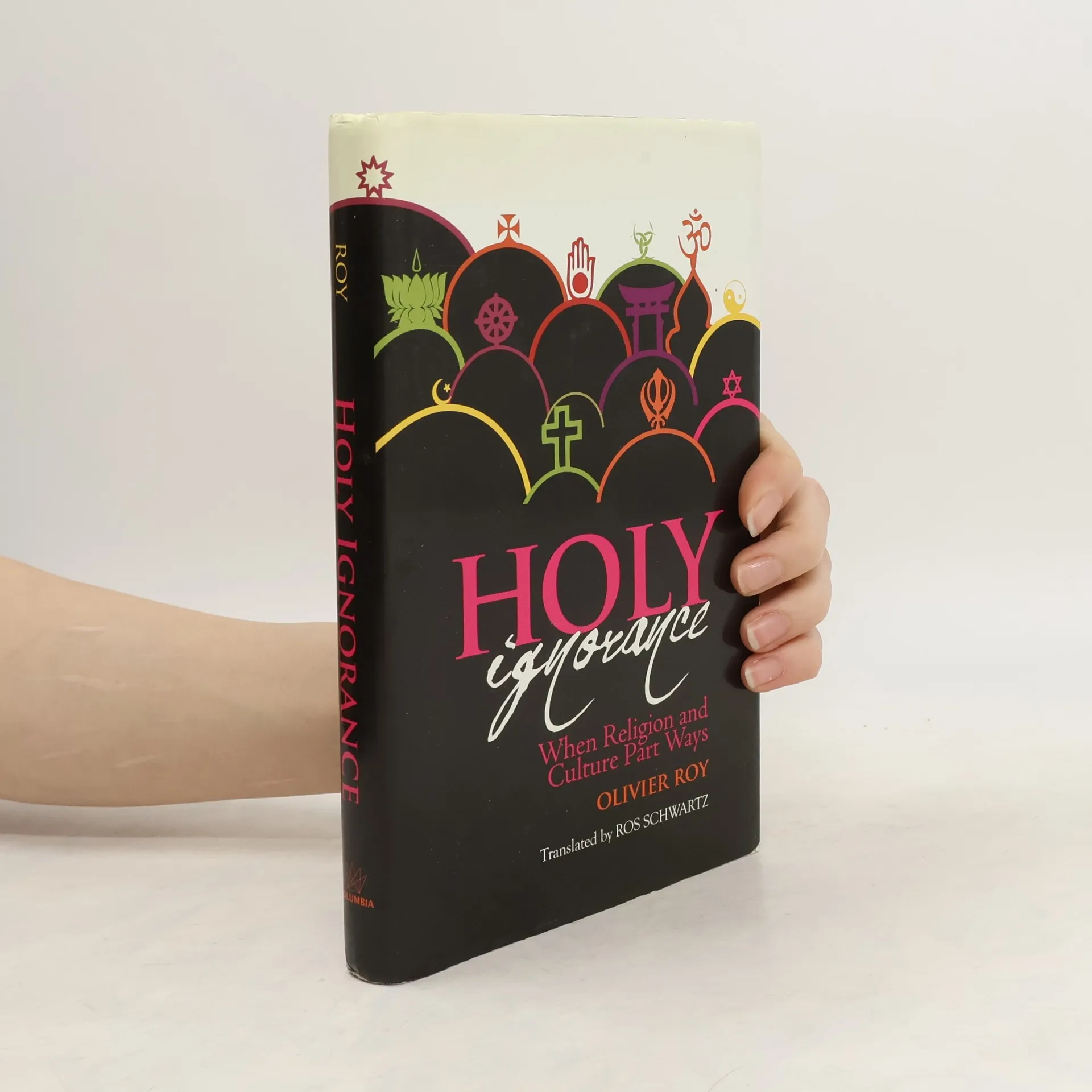
Holy Ignorance, Olivier Roy
- Jazyk

- Rok vydania
- 2010
- Väzba
- (pevná)
Tu nám chýba tvoja recenzia
- Titul
- Holy Ignorance
- Podtitul
- When Religion and Culture Part Ways
- Jazyk
- anglicky
- Autori
- Olivier Roy
- Vydavateľ
- Columbia University Press
- Rok vydania
- 2010
- Väzba
- pevná
- Počet strán
- 259
- ISBN10
- 0231701268
- ISBN13
- 9780231701266
- Série
- Kategórie
- Štítky
- Náboženské témy, Filozofická tematika, Politika, Francúzsko, Spoločnosť, Kultúra, Globalizácia, Religionistika, Fanatizmus
- Pôvodný názov
- La sainte ignorance - le temps de la religion sans culture
- Hodnotenie
- 3,65 z 5
- Anotácia
- Olivier Roy finds in the modern disconnection between faith communities and sociocultural identities a fertile space for fundamentalism to grow. Instead of freeing the world from religion, secularization has encouraged a kind of holy ignorance to take root, an anti-intellectualism that promises immediate access to the sacred and positions itself in direct opposition to contemporary pagan culture. The secularization of society was supposed to free people from religion, yet individuals are converting en masse to such fundamentalist faiths as Protestant evangelicalism, Islamic Salafism, and Haredi Judaism. These religions either reconnect adherents to their culture through casual referents, like halal fast food, or "deculturate" through "purification" rituals, such as speaking in tongues, which allows believers to utter a language entirely their own. Instead of a return to traditional religious worship, Roy argues we are witnessing the individualization of faith and the disassociation of faith communities from ethnic and national identities. This has placed culturally integrated religions, such as Catholicism and eastern orthodox Christianity, on the defensive, and presents new challenges to state and society. Roy explores the options available to powers that hope to integrate or control these groups, and he considers whether marginalization or homogenization will further divide believers from their culture