

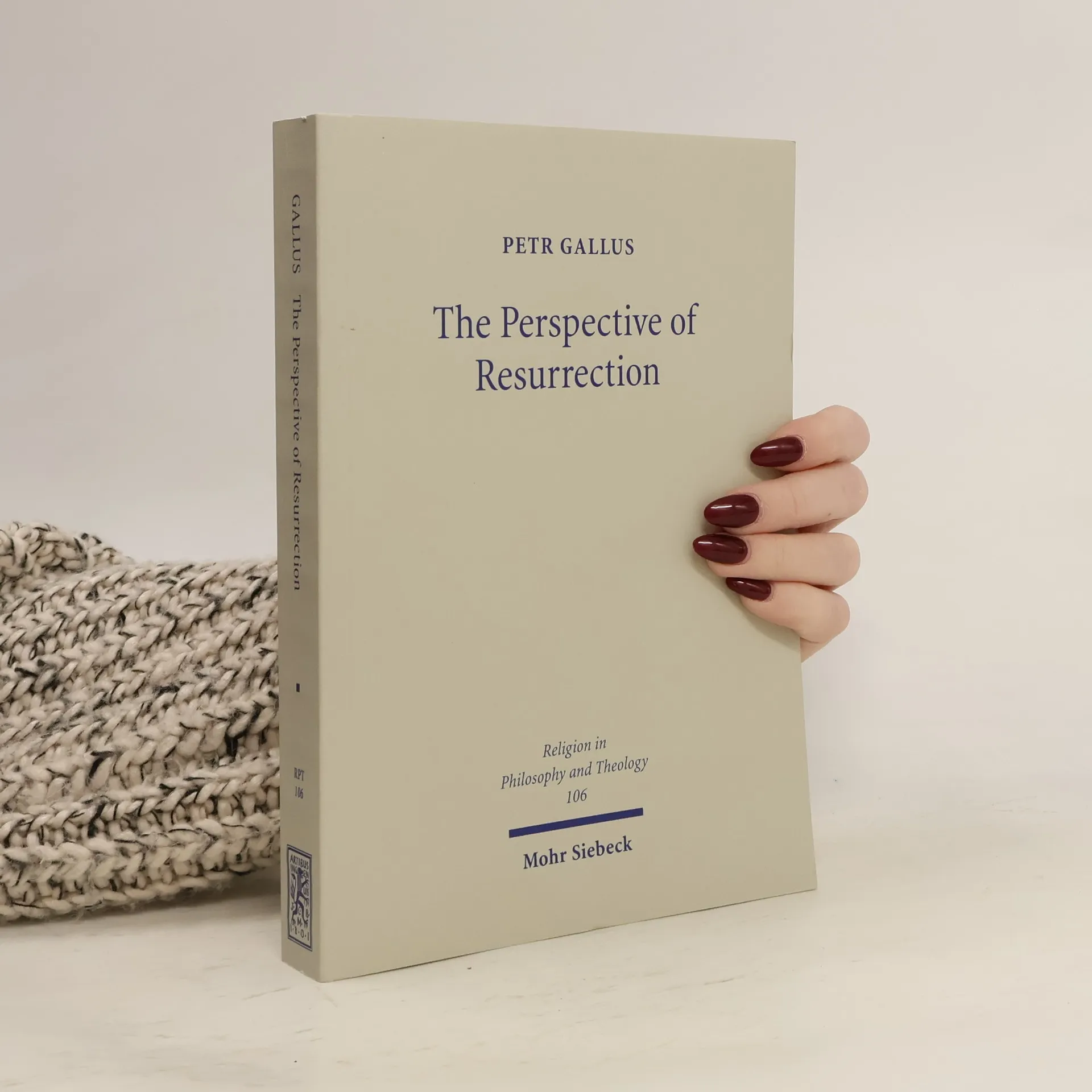


Religion in Philosophy and Theology - 106: The Perspective of Resurrection
A Trinitarian Christology
Autori
Hodnotenie knihy
Viac o knihe
For the Christian faith as well as its theology, the Easter confession of resurrection has always been the fundamental idea. Starting from this elemental perspective and following the notions of internal realism, semiotic and the postmodern paradigm, Petr Gallus reconstructs the central theological locus of Christology as ontological Christology. In so doing, the author examines the traditional Chalcedonian Christology, as well as many Christological concepts of the last decades, following it critically and proposing an original solution. The whole concept is based on the notion that consistent Christology is possible only against the backdrop of the Trinity, which is the necessary framework and, in some points, necessary unloading of Christology.
Nákup knihy
Religion in Philosophy and Theology - 106: The Perspective of Resurrection, Petr Gallus
- Jazyk

- Rok vydania
- 2021
- Väzba
- (mäkká)
Tu nám chýba tvoja recenzia
- Titul
- Religion in Philosophy and Theology - 106: The Perspective of Resurrection
- Podtitul
- A Trinitarian Christology
- Jazyk
- anglicky
- Autori
- Petr Gallus
- Vydavateľ
- Mohr Siebeck
- Rok vydania
- 2021
- Väzba
- mäkká
- Počet strán
- 481
- ISBN10
- 3161601092
- ISBN13
- 9783161601095
- Série
- Kategórie
- Štítky
- Náboženské témy
- Hodnotenie
- 2 z 5
- Anotácia
- For the Christian faith as well as its theology, the Easter confession of resurrection has always been the fundamental idea. Starting from this elemental perspective and following the notions of internal realism, semiotic and the postmodern paradigm, Petr Gallus reconstructs the central theological locus of Christology as ontological Christology. In so doing, the author examines the traditional Chalcedonian Christology, as well as many Christological concepts of the last decades, following it critically and proposing an original solution. The whole concept is based on the notion that consistent Christology is possible only against the backdrop of the Trinity, which is the necessary framework and, in some points, necessary unloading of Christology.