

Viac o knihe
This 1st book by Perls is significant because in addition to criticising Freud, it also lays the groundwork for a new system of psychotherapy. In fact it's the beginning of the gestalt therapy by one of the founding fathers of this therapy.-- Ehrenwald Frederick Perls received his M.D. in Berlin in 1921. Like Wilhelm Reich he started out as a Freudian analyst, but under the influence of Kohler, Wertheimer & Kurt Goldstein developed his own school of analysis: Gestalt Therapy. His principles of gestalt therapy have been adopted by countless encounter & sensitivity groups. He aims in this book to examine some psychological & psychopathological reactions of the human organism within its environment. The author is criticsl of orthodox psychoanalysis, & claims that the use of the new intellectual tools holism (field conception) & semantics (the meaning of meaning) can greatly improve our theoretical outlook.




Nákup knihy
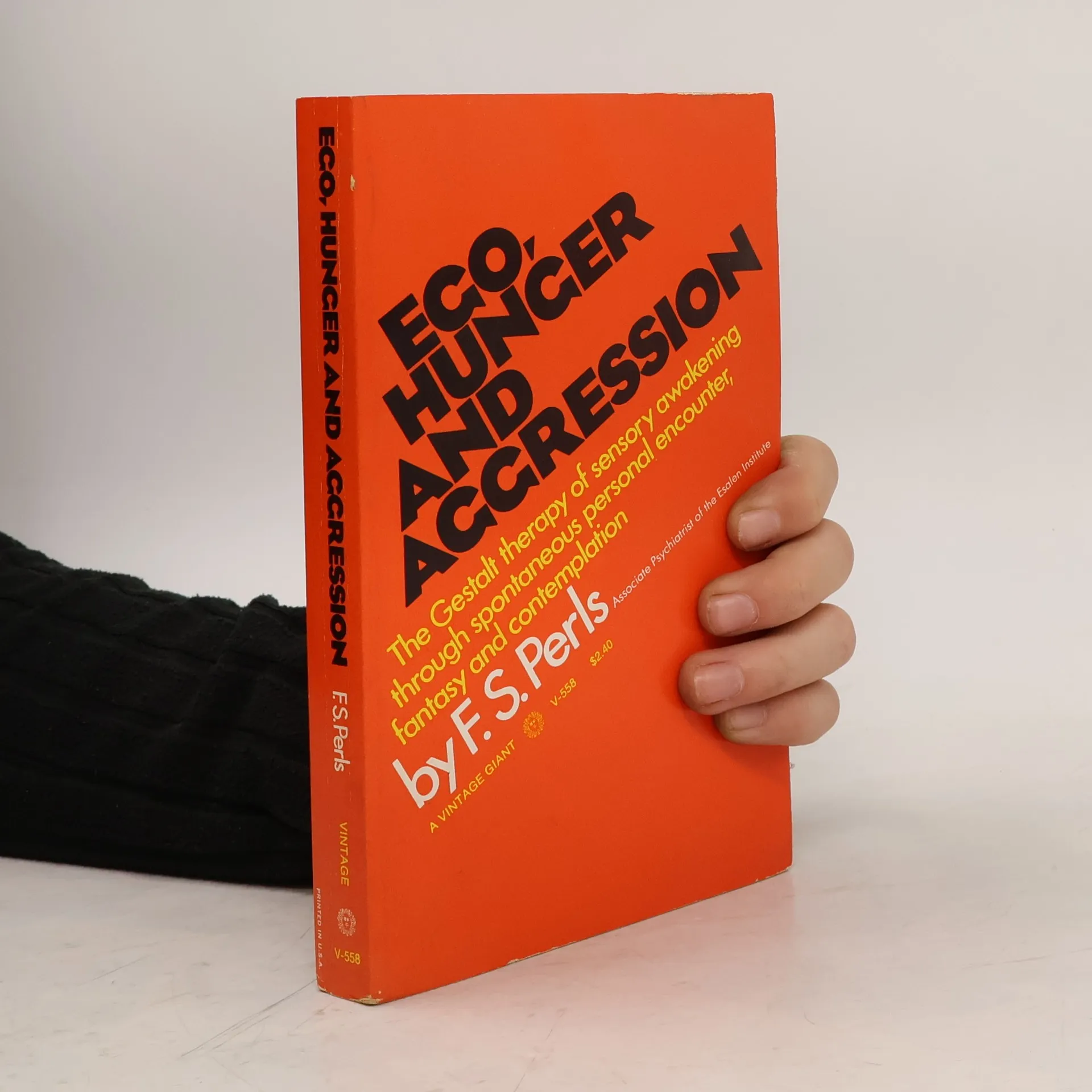
Ego, Hunger and Aggression, Frederick Salomon Perls
- Jazyk

- Rok vydania
- 1969
- Väzba
- (mäkká)
Platobné metódy
Tu nám chýba tvoja recenzia
- Jazyk
- anglicky
- Autori
- Frederick Salomon Perls
- Vydavateľ
- Vintage Giant
- Rok vydania
- 1969
- Väzba
- mäkká
- Série
- Pôvodný názov
- Ego, hunger, and aggression
- Hodnotenie
- 4,1 z 5
- Anotácia
- This 1st book by Perls is significant because in addition to criticising Freud, it also lays the groundwork for a new system of psychotherapy. In fact it's the beginning of the gestalt therapy by one of the founding fathers of this therapy.-- Ehrenwald Frederick Perls received his M.D. in Berlin in 1921. Like Wilhelm Reich he started out as a Freudian analyst, but under the influence of Kohler, Wertheimer & Kurt Goldstein developed his own school of analysis: Gestalt Therapy. His principles of gestalt therapy have been adopted by countless encounter & sensitivity groups. He aims in this book to examine some psychological & psychopathological reactions of the human organism within its environment. The author is criticsl of orthodox psychoanalysis, & claims that the use of the new intellectual tools holism (field conception) & semantics (the meaning of meaning) can greatly improve our theoretical outlook.