

Hodnotenie knihy
Viac o knihe
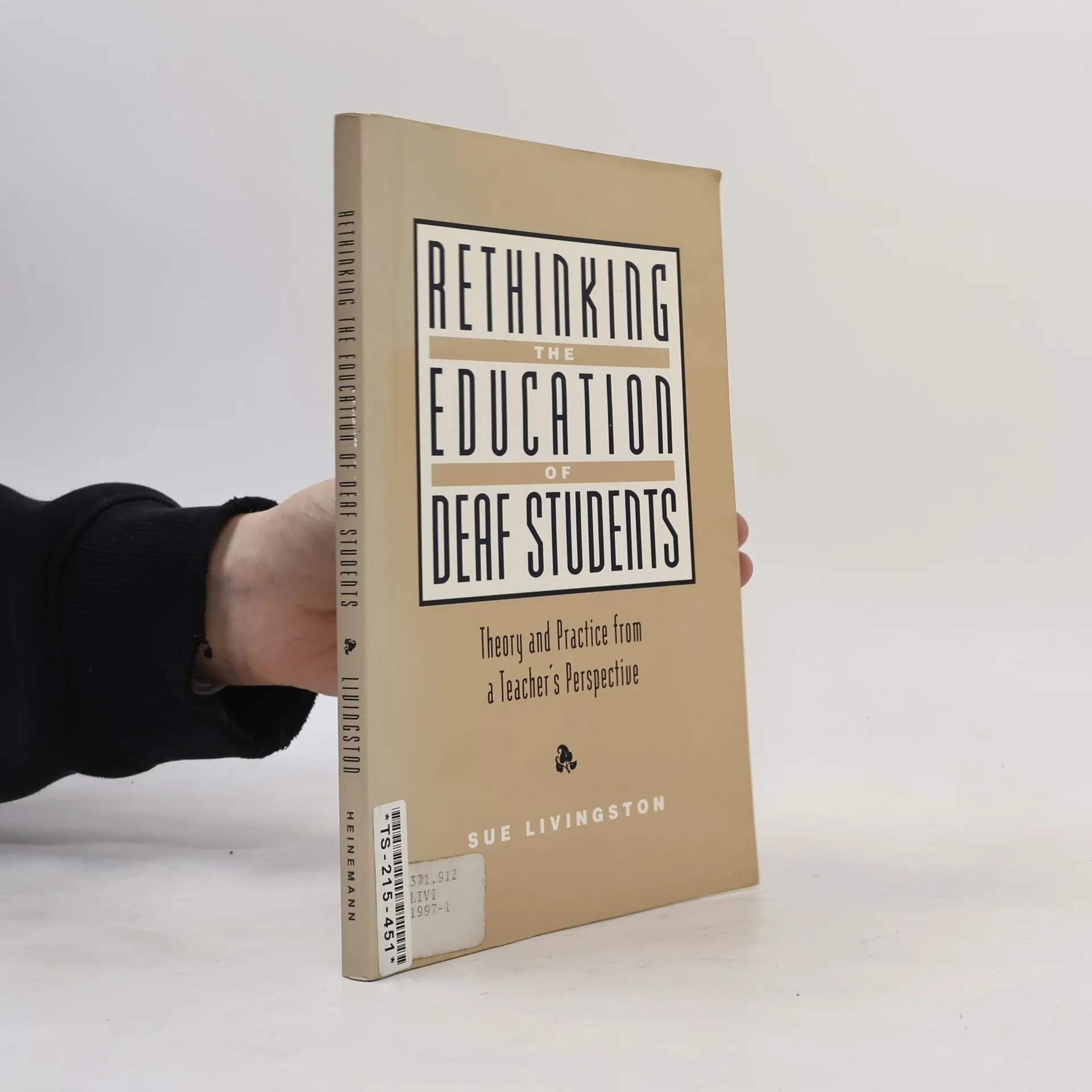
This compelling and controversial text asserts that Deaf students should be treated like their hearing peers. The author, an experienced teacher, challenges the prevailing view that Deaf students require special remediation. She argues that the primary educational goal for all students is the creation and sharing of understanding across subjects, a process that naturally occurs alongside language acquisition, regardless of hearing ability. This perspective conflicts with traditional Deaf education, which often assumes that learning can only begin after mastering a sign system that reconstructs English. Such an approach can lead to diluted curriculums, depriving Deaf students of rich content. The text presents an alternative, showing how American Sign Language (ASL) and English can coexist in the classroom, integrated into the subject matter. Through clear theoretical explanations, proven teaching strategies, authentic student work examples, lesson plans, and assessment methods, the author provides insights on fostering educated language users. Her ideas have significant implications for educators, program developers, and teacher trainers, potentially unlocking the potential of Deaf students to become enthusiastic readers and skilled writers.
Nákup knihy
Rethinking the Education of Deaf Students, Sue Livingston
- Jazyk

- Rok vydania
- 1997
- Väzba
- (mäkká)
Doručenie
Platobné metódy
Tu nám chýba tvoja recenzia
- Titul
- Rethinking the Education of Deaf Students
- Podtitul
- Theory and Practice from a Teacher's Perspective
- Jazyk
- anglicky
- Autori
- Sue Livingston
- Vydavateľ
- Heinemann
- Rok vydania
- 1997
- Väzba
- mäkká
- Počet strán
- 180
- ISBN10
- 0435072366
- ISBN13
- 9780435072360
- Série
- Hodnotenie
- 4,15 z 5
- Anotácia
- This compelling and controversial text asserts that Deaf students should be treated like their hearing peers. The author, an experienced teacher, challenges the prevailing view that Deaf students require special remediation. She argues that the primary educational goal for all students is the creation and sharing of understanding across subjects, a process that naturally occurs alongside language acquisition, regardless of hearing ability. This perspective conflicts with traditional Deaf education, which often assumes that learning can only begin after mastering a sign system that reconstructs English. Such an approach can lead to diluted curriculums, depriving Deaf students of rich content. The text presents an alternative, showing how American Sign Language (ASL) and English can coexist in the classroom, integrated into the subject matter. Through clear theoretical explanations, proven teaching strategies, authentic student work examples, lesson plans, and assessment methods, the author provides insights on fostering educated language users. Her ideas have significant implications for educators, program developers, and teacher trainers, potentially unlocking the potential of Deaf students to become enthusiastic readers and skilled writers.