





Viac o knihe
The book represents a historical overview of the way the topic of gesture and sign language has been treated in the 18th century French philosophy. The texts treated are grouped into several categories based on the view they present of deafness and gesture. While some of those texts obviously view deafness and sign language in negative terms, i.e. as deficiency, others present deafness essentially as difference, i.e. as a set of competences that might provide some insights into how spoken language works. One of the arguments of the book is that these two views of deafness and sign language still represent two dominant paradigms present in the current debates on the issue. The aim of the book, therefore, is not only to provide a historical overview but to trace what might be called a "history of the present".
Nákup knihy
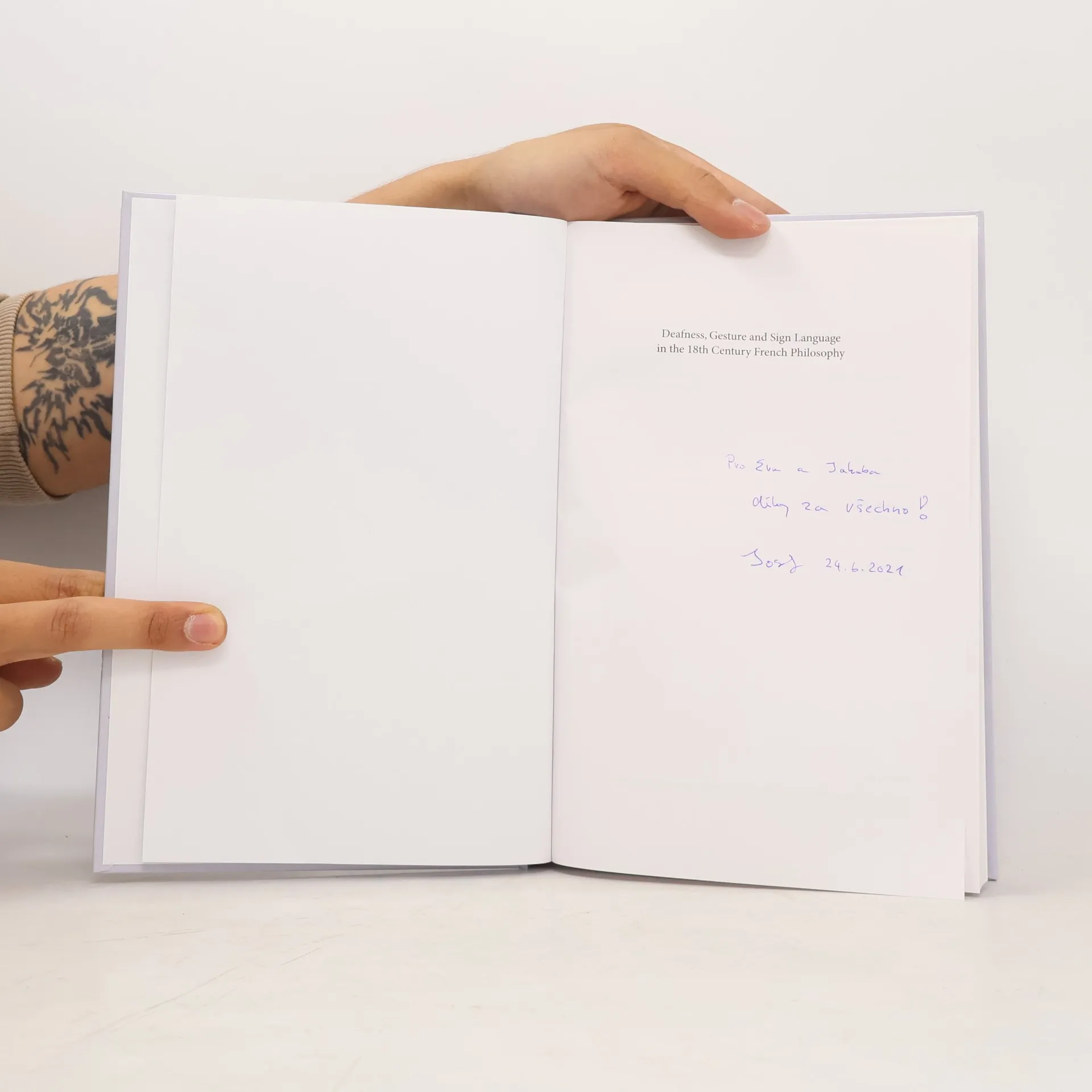
Gesture Studies - 8: Deafness, Gesture and Sign Language in the 18th Century French Philosophy, Josef Fulka
- Jazyk

- Rok vydania
- 2020
- Väzba
- (pevná),
- Stav knihy
- Poškodená
- Cena
- 37,19 €
Platobné metódy
Nikto zatiaľ neohodnotil.
- Jazyk
- anglicky
- Autori
- Josef Fulka
- Vydavateľ
- John Benjamins Publishing Company
- Rok vydania
- 2020
- Väzba
- pevná
- Počet strán
- 174
- ISBN10
- 9027205035
- ISBN13
- 9789027205032
- Série
- Štítky
- Náučná literatúra, Spoločenské vedy, Historické téma, Filozofická tematika, Filozofia, Francúzsko, Lingvistika, Znakový jazyk, Hluchota
- Anotácia
- The book represents a historical overview of the way the topic of gesture and sign language has been treated in the 18th century French philosophy. The texts treated are grouped into several categories based on the view they present of deafness and gesture. While some of those texts obviously view deafness and sign language in negative terms, i.e. as deficiency, others present deafness essentially as difference, i.e. as a set of competences that might provide some insights into how spoken language works. One of the arguments of the book is that these two views of deafness and sign language still represent two dominant paradigms present in the current debates on the issue. The aim of the book, therefore, is not only to provide a historical overview but to trace what might be called a "history of the present".