





Viac o knihe
The Earth's climate is in constant flux, with changes that can be progressive or fluctuate over various time scales. The El Niño-la Niña cycle is a notable fluctuation, occurring roughly every decade, though its frequency and intensity can vary with climate shifts. This cycle's manifestations and effects are highly variable, making it challenging to study due to the interconnected phenomena occurring globally. The importance of understanding these worldwide teleconnections cannot be overstated. Cynthia Rosenzweig and Daniel Hillel detail current efforts to implement a global-to-regional approach to climate-risk management. They highlight the collaboration between atmospheric and social scientists and agricultural practitioners worldwide to maximize the benefits of new climate predictions for farmers. The ability to predict the El Niño-Southern Oscillation (ENSO) cycle has the potential to revolutionize agricultural planning. Biophysical scientists are beginning to grasp the extensive impacts of ENSO on seasonal precipitation and temperature patterns, while social scientists focus on effectively disseminating forecasts within rural communities. As the accuracy of climatic predictions improves, so too does the effectiveness of forecast dissemination. This work delves into the growing recognition of the link between climate predictions and productive agriculture for sustainable development, along with the methods and models use
Nákup knihy
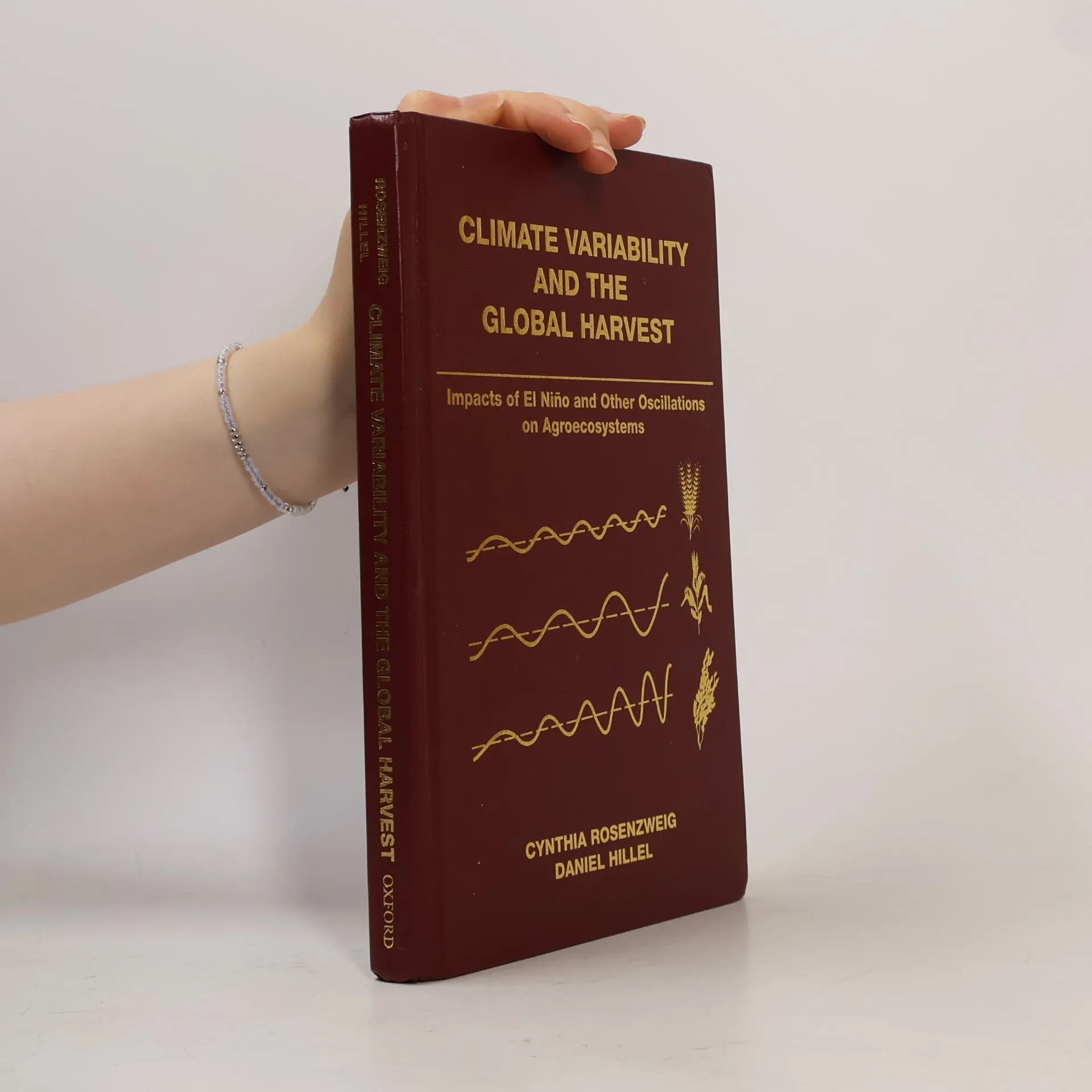
Climate Variability and the Global Harvest, Cynthia Rosenzweig, Daniel Hillel
- Jazyk

- Rok vydania
- 2008
- Väzba
- (pevná),
- Stav knihy
- Poškodená
- Cena
- 77,39 €
Platobné metódy
Nikto zatiaľ neohodnotil.
- Podtitul
- Impacts of El Niño and Other Oscillations on Agro-Ecosystems
- Jazyk
- anglicky
- Autori
- Cynthia Rosenzweig, Daniel Hillel
- Vydavateľ
- Oxford University Press
- Rok vydania
- 2008
- Väzba
- pevná
- Počet strán
- 280
- ISBN10
- 0195137639
- ISBN13
- 9780195137637
- Série
- Štítky
- Veda, Ekonómia, USA, Rastliny, Technológia, Poľnohospodárstvo, Ekológia, Meteorológia a klimatológia, Prognostika, Ekológia rastlín
- Anotácia
- The Earth's climate is in constant flux, with changes that can be progressive or fluctuate over various time scales. The El Niño-la Niña cycle is a notable fluctuation, occurring roughly every decade, though its frequency and intensity can vary with climate shifts. This cycle's manifestations and effects are highly variable, making it challenging to study due to the interconnected phenomena occurring globally. The importance of understanding these worldwide teleconnections cannot be overstated. Cynthia Rosenzweig and Daniel Hillel detail current efforts to implement a global-to-regional approach to climate-risk management. They highlight the collaboration between atmospheric and social scientists and agricultural practitioners worldwide to maximize the benefits of new climate predictions for farmers. The ability to predict the El Niño-Southern Oscillation (ENSO) cycle has the potential to revolutionize agricultural planning. Biophysical scientists are beginning to grasp the extensive impacts of ENSO on seasonal precipitation and temperature patterns, while social scientists focus on effectively disseminating forecasts within rural communities. As the accuracy of climatic predictions improves, so too does the effectiveness of forecast dissemination. This work delves into the growing recognition of the link between climate predictions and productive agriculture for sustainable development, along with the methods and models use