

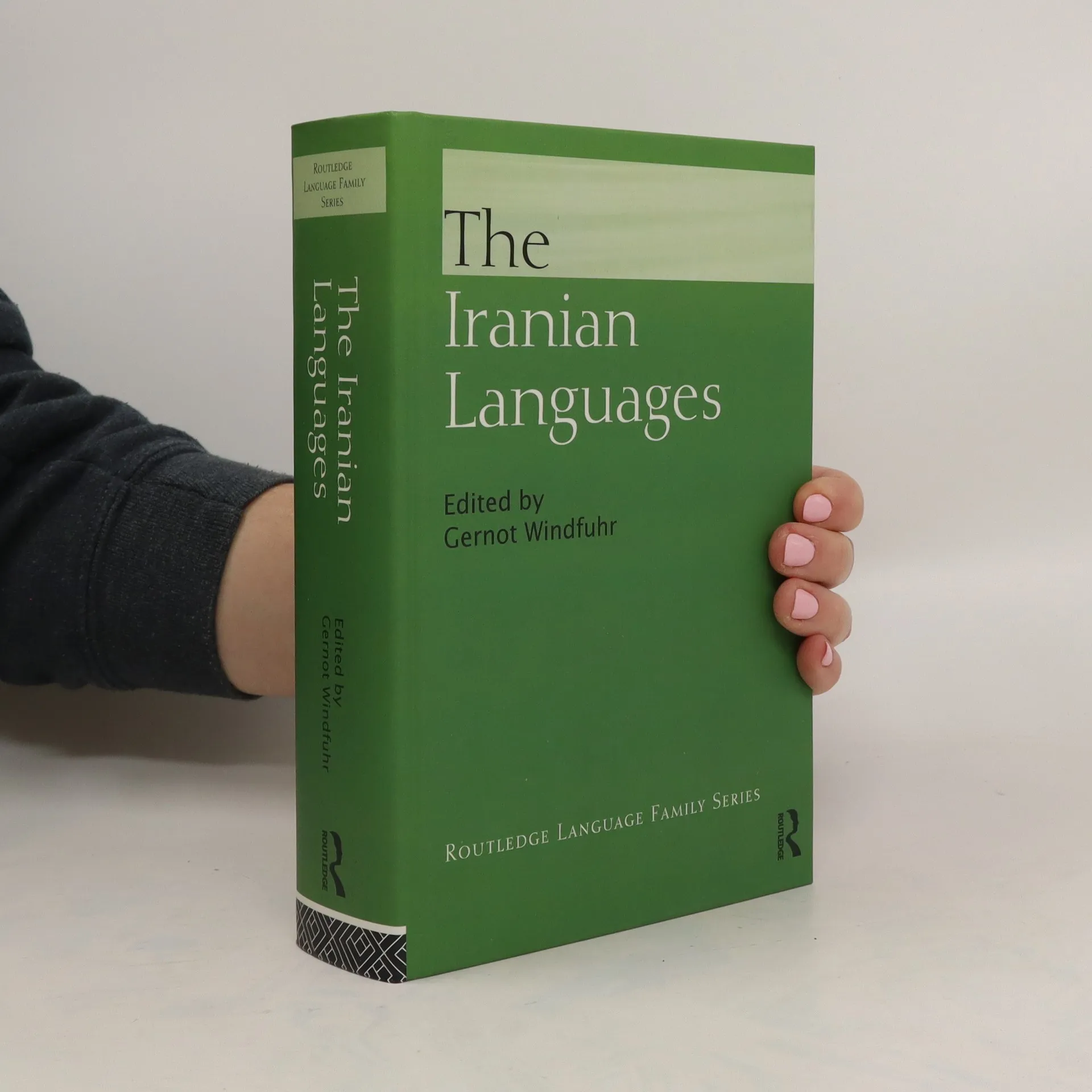
'This is the volume I wish I'd had when Iranian languages first aroused my interest nearly 40 years ago!' - Bernard Comrie, Max Planck Institute for Evolutionary Anthropology, Germany The Iranian Languages is divided into 15 chapters. The introductory chapters by the editor present a general overview and a detailed discussion of the linguistic typology of Iranian. The individual chapters which follow are written by leading experts in the field. These provide the reader with concise, non-technical descriptions of a range of Iranian languages. Each chapter follows the same pattern and sequence of topics, taking the reader through the significant features not only of phonology and morphology but also of syntax; from phrase level to complex sentences and pragmatics. This unique resource is the ideal companion for undergraduate and postgraduate students of linguistics and language. It will also be of interest to researchers or anyone with an interest in historical linguistics, linguistics anthropology and language development.
Jazykové rodiny Routledge Séria
Táto séria sa ponorí do hlbín svetových jazykových rodín a skúma ich členov s detailnou lingvistickou analýzou. Každá kniha, napísaná odborníkmi, systematicky pokrýva fonológiu, morfológiu, syntax, lexikológiu, sémantiku, dialektológiu a sociolingvistiku. Čitatelia ocenia rozsiahle bibliografie, registre, tabuľky a mapy, ktoré podporujú porovnávacie štúdium naprieč jazykmi. Ide o neoceniteľný zdroj pre každého, kto sa zaujíma o štruktúru a históriu jazykov.

The Mayan Languages
- 790 stránok
- 28 hodin čítania
This comprehensive survey explores the language family linked to the Classic Mayan civilization (AD 200-900), with languages still spoken by over six million indigenous Maya in Mexico, Guatemala, Belize, and Honduras. It serves as an essential reference for advanced undergraduate and postgraduate students of Mayan languages and linguistics. Authored by experts, it offers in-depth accounts of the linguistic features of thirty-one languages, their historical evolution, and the social contexts in which they are used. The resource includes detailed grammatical sketches of about a third of the languages, covering most branches of the family, and features a section on the historical development of the family, alongside a new grammar sketch of "Classic Maya" as seen in hieroglyphics. It discusses significant advances in grammatical analysis and explores the languages' use in social, conversational, and poetic contexts. With topical chapters on typology, history, sociolinguistics, phonology, morphology, syntax, semantics, and language acquisition, this book is invaluable for researchers and readers interested in historical linguistics, linguistic anthropology, and typology.