




Viac o knihe
In 1983, Gao Xingjian, a Chinese playwright and artist, faced a terminal lung cancer diagnosis, only to discover weeks later that he had been misdiagnosed and was free from the disease. This reprieve propelled him to flee Beijing, escaping a repressive regime and the threat of imprisonment. He embarked on a transformative journey through the remote mountains and ancient forests of Sichuan, covering fifteen thousand kilometers in five months. The resulting narrative is a bold, lyrical exploration of the human soul. Interwoven with a multitude of stories and memorable characters, including Daoist masters, Buddhist nuns, and mythical beings, the narrator embarks on an inner journey toward freedom. As he escapes the social conformity imposed by the Communist government, he delves into the diverse traditions and landscapes of the Qiang, Miago, and Yi peoples, reconstructing his past through memory and sensory experiences. He reflects on the Cultural Revolution's devastating impact on China's ecology and culture. The novel features a polyphony of voices, with the narrator's perspective branching into various selves, each offering distinct insights. Storytelling becomes a refuge from profound loneliness, leading the narrator to question the meaning of life and the journey itself. The elusive Lingshan, or "Soul Mountain," symbolizes the quest for understanding, remaining shrouded in mystery. Ultimately, the narrative is a rich, str





Nákup knihy
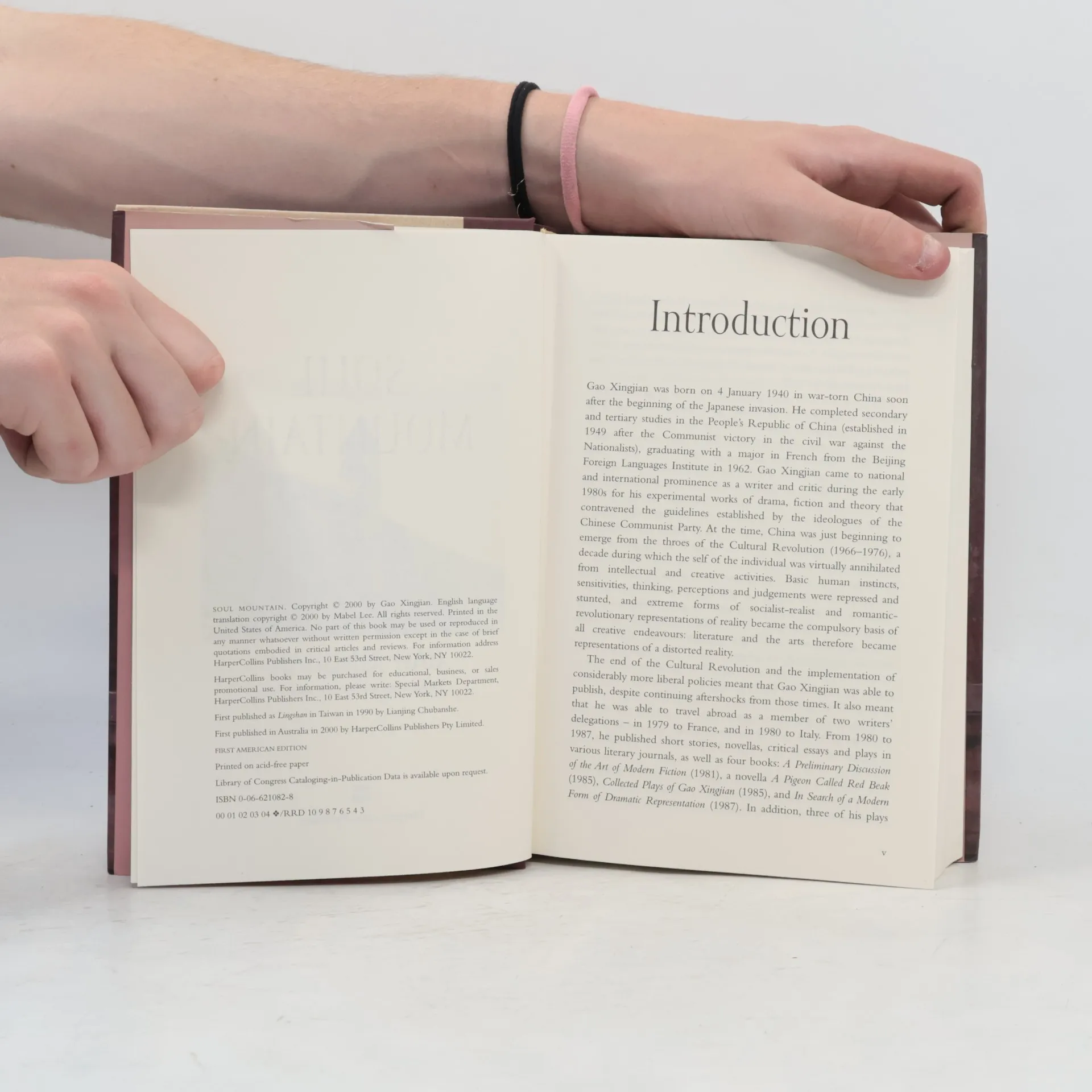
Soul Mountain, Sing-ťien Kao, Mabel Lee
- Jazyk

- Rok vydania
- 2000
- Väzba
- (pevná)
Platobné metódy
Tu nám chýba tvoja recenzia
- Titul
- Soul Mountain
- Jazyk
- anglicky
- Autori
- Sing-ťien Kao, Mabel Lee
- Vydavateľ
- HarperCollins Publishers
- Rok vydania
- 2000
- Väzba
- pevná
- Počet strán
- 510
- ISBN10
- 0066210828
- ISBN13
- 9780066210827
- Série
- Štítky
- Beletria, Cestovanie, Poviedky, Čína, Nobelova cena, Čínska literatúra
- Prvé vydanie
- 2000
- Pôvodný názov
- Ling-šan (灵山 ; língshān)
- Hodnotenie
- 3,6 z 5
- Anotácia
- In 1983, Gao Xingjian, a Chinese playwright and artist, faced a terminal lung cancer diagnosis, only to discover weeks later that he had been misdiagnosed and was free from the disease. This reprieve propelled him to flee Beijing, escaping a repressive regime and the threat of imprisonment. He embarked on a transformative journey through the remote mountains and ancient forests of Sichuan, covering fifteen thousand kilometers in five months. The resulting narrative is a bold, lyrical exploration of the human soul. Interwoven with a multitude of stories and memorable characters, including Daoist masters, Buddhist nuns, and mythical beings, the narrator embarks on an inner journey toward freedom. As he escapes the social conformity imposed by the Communist government, he delves into the diverse traditions and landscapes of the Qiang, Miago, and Yi peoples, reconstructing his past through memory and sensory experiences. He reflects on the Cultural Revolution's devastating impact on China's ecology and culture. The novel features a polyphony of voices, with the narrator's perspective branching into various selves, each offering distinct insights. Storytelling becomes a refuge from profound loneliness, leading the narrator to question the meaning of life and the journey itself. The elusive Lingshan, or "Soul Mountain," symbolizes the quest for understanding, remaining shrouded in mystery. Ultimately, the narrative is a rich, str