



Parametre
- 350 stránok
- 13 hodin čítania
Viac o knihe
The administration has squandered the chance to eliminate al Qaeda, leading to the emergence of a new, stronger threat partly due to our own actions and inactions. Richard Clarke, the former counterterrorism czar for both Bill Clinton and George W. Bush, asserts that we are not adequately addressing this danger. With two decades of experience combating terrorism, Clarke served seven presidents and worked in the White House until March 2003. He possesses unparalleled insight into the successes and failures of the Clinton years, the reasons behind the failure to prevent 9/11, and the Bush administration's response to the attacks. Clarke reveals the administration's disinterest in al Qaeda before September 11, as he struggled to convince officials to take the threat seriously. He encountered key figures who seemed unaware of al Qaeda, fixated instead on Iraq and even promoted discredited conspiracy theories about Saddam's involvement in past attacks. As the crisis manager on 9/11, Clarke witnessed the aftermath with dismay, noting that after initially ignoring plans to combat al Qaeda, President Bush made disastrous decisions when he finally acknowledged the threat. This work serves as both a powerful history of our long confrontation with terrorism and a sharp critique of the current administration's actions.


Nákup knihy
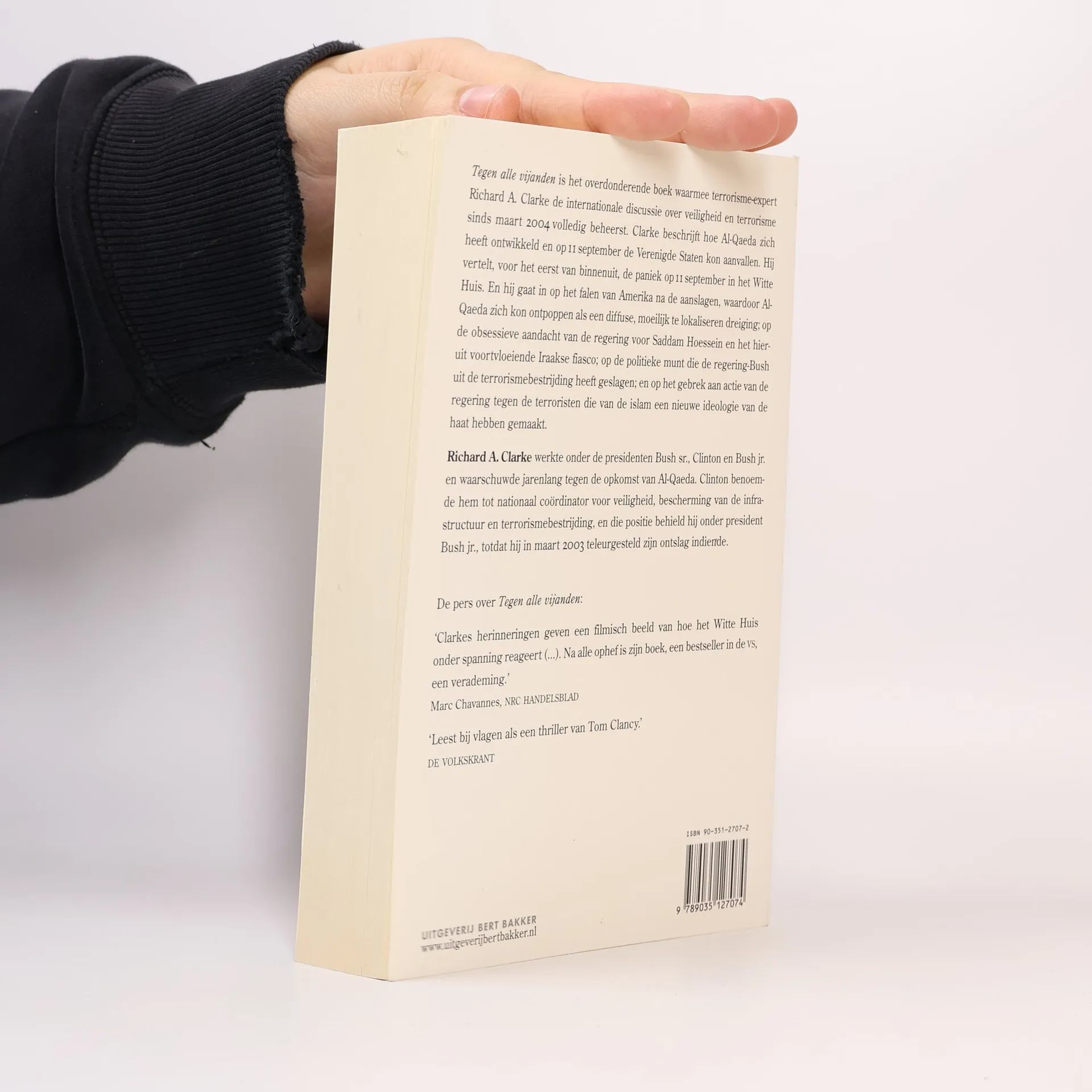
Tegen alle vijanden, Richard A. Clarke, Hans van Cuijlenborg
- Jazyk

- Rok vydania
- 2004
- Väzba
- (mäkká)
Tu nám chýba tvoja recenzia
- Titul
- Tegen alle vijanden
- Podtitul
- Hoe Amerika Al-Qaeda onderschatte
- Jazyk
- holandsky
- Vydavateľ
- Uitgeverij Bert Bakker
- Rok vydania
- 2004
- Väzba
- mäkká
- Počet strán
- 350
- ISBN10
- 9035127072
- ISBN13
- 9789035127074
- Série
- Kategórie
- Štítky
- Historické téma, Politika, Vojnová próza, Vojny, Terorizmus
- Pôvodný názov
- Against all enemies
- Hodnotenie
- 3,9 z 5
- Anotácia
- The administration has squandered the chance to eliminate al Qaeda, leading to the emergence of a new, stronger threat partly due to our own actions and inactions. Richard Clarke, the former counterterrorism czar for both Bill Clinton and George W. Bush, asserts that we are not adequately addressing this danger. With two decades of experience combating terrorism, Clarke served seven presidents and worked in the White House until March 2003. He possesses unparalleled insight into the successes and failures of the Clinton years, the reasons behind the failure to prevent 9/11, and the Bush administration's response to the attacks. Clarke reveals the administration's disinterest in al Qaeda before September 11, as he struggled to convince officials to take the threat seriously. He encountered key figures who seemed unaware of al Qaeda, fixated instead on Iraq and even promoted discredited conspiracy theories about Saddam's involvement in past attacks. As the crisis manager on 9/11, Clarke witnessed the aftermath with dismay, noting that after initially ignoring plans to combat al Qaeda, President Bush made disastrous decisions when he finally acknowledged the threat. This work serves as both a powerful history of our long confrontation with terrorism and a sharp critique of the current administration's actions.